Seared Scallops and Spring Asparagus with Shallot-Lemon Butter Sauce
Golden-crusted scallops and tender spring asparagus meet a glossy shallot butter sauce sharpened with white wine and lemon. Parsley keeps the finish fresh, while the sauce catches in the asparagus tips and around the sweet, juicy scallops.
By Jonathan Katzman · Cooked and photographed · Recipe updated
Serves: 4 servings
Tags: gluten-free, nut-free, pescatarian
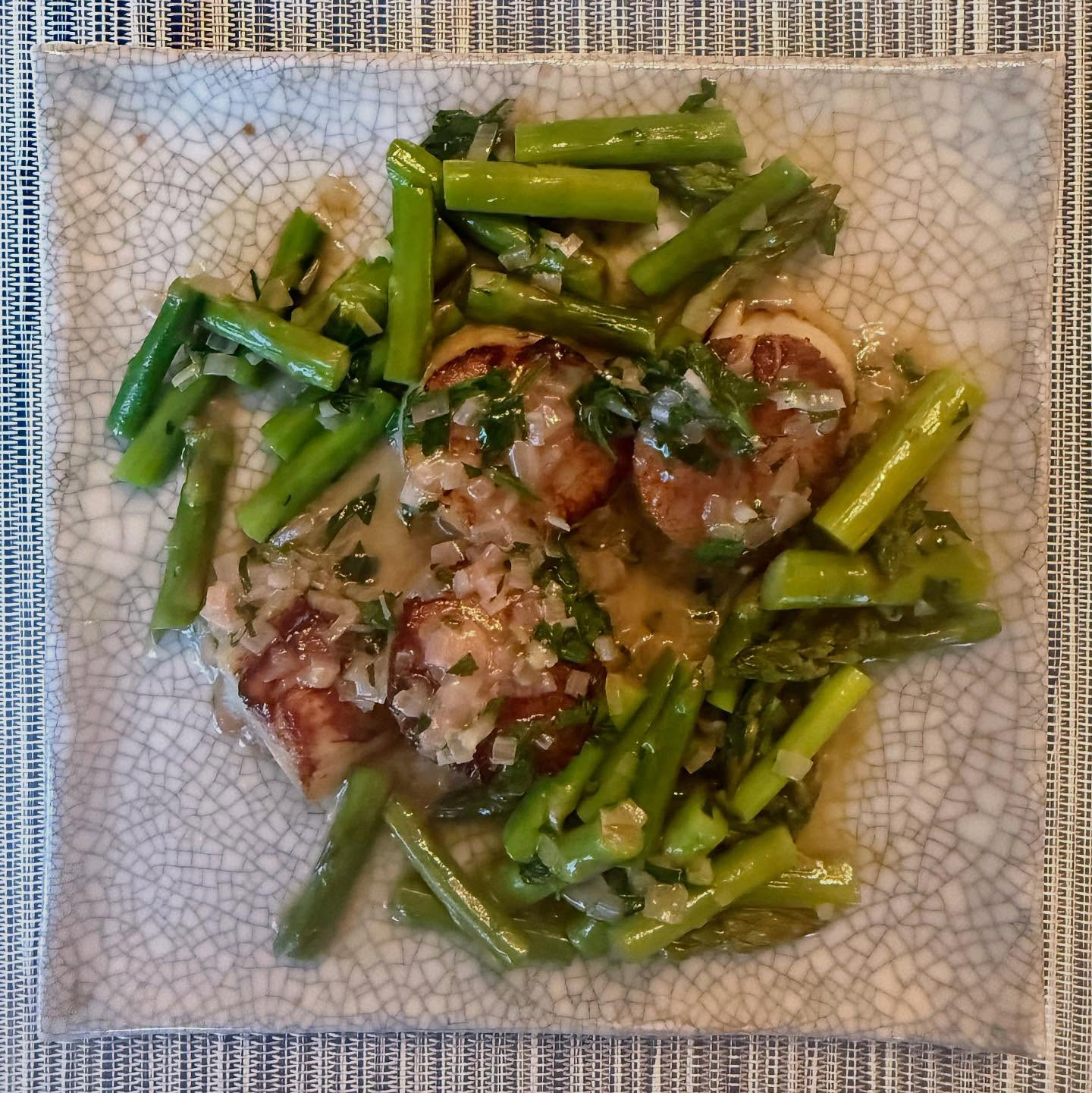
Pan-Seared Sea Scallops
Dry scallops and an uncrowded hot pan produce a browned crust without overcooking the centers. Ghee handles the searing heat without burning.
Ingredients
- 16 large dry-packed sea scallops, about 1 3/4–2 pounds
- 2 tablespoons ghee
- 1/2 teaspoon fine sea salt, or to taste
- 1/4 teaspoon freshly ground black pepper
Instructions
- Remove the small, tough side muscle from each scallop. Pat thoroughly dry, then set on fresh paper towels while preparing the other components.
- Heat a large stainless-steel or cast-iron skillet over medium-high heat. Season the scallops just before cooking.
- Add half the ghee. When shimmering, add half the scallops with space between them. Sear undisturbed for 2–3 minutes, until a deep golden crust forms and they release readily.
- Turn and cook for another 1–2 minutes, adjusting for thickness. For food-safe doneness, the center should reach 145°F; remove promptly so the scallops remain moist.
- Transfer to a warm plate without tightly covering. Repeat with the remaining ghee and scallops, reducing the heat if the pan begins to smoke. Serve immediately with the asparagus and finished sauce.
Notes
- Choose scallops labeled dry-packed or untreated; phosphate-treated scallops release water and brown poorly.
- Two skillets let you cook all four portions at once and avoid holding the first batch.
Bright Green Spring Asparagus
Brief blanching keeps the asparagus juicy and green, with enough structure to contrast with the tender scallops. Short lengths make it easy to arrange around the seafood and catch the sauce.
Ingredients
- 1 1/2 pounds medium-to-thick asparagus
- 1 tablespoon salt, for 3 quarts blanching water
Instructions
- Trim the woody asparagus ends. Peel the lower portion of particularly thick stalks, then cut the spears into 2–3-inch lengths.
- Bring 3 quarts of water and the salt to a boil. Add the stalk pieces, then add the tips about 1 minute later.
- Cook until bright green and just tender, about 3–5 minutes total depending on thickness. Drain thoroughly.
- If serving immediately, keep warm briefly. If preparing ahead, chill in ice water, drain, and dry; rewarm in simmering water for 30–60 seconds just before plating.
- Toss the warm, well-drained asparagus with a few spoonfuls of the finished shallot-lemon butter sauce.
Notes
- Drain well so blanching water does not dilute the butter sauce.
Shallot-Lemon Butter Sauce with Parsley
Reducing wine with shallots builds acidity and sweetness before cold butter gives the sauce its glossy texture. Lemon and parsley brighten the rich scallops without masking their flavor.
Ingredients
- 2 medium shallots, finely diced, about 1/2 cup
- 1/2 cup dry white wine
- 2 tablespoons water, plus more as needed
- 6 tablespoons cold unsalted butter, cut into small cubes
- 1 tablespoon fresh lemon juice, plus more to taste
- 1/4 cup roughly chopped flat-leaf parsley
- to taste fine sea salt and freshly ground black pepper
Instructions
- Combine the shallots, wine, and water in a small saucepan. Simmer over medium heat for 7–10 minutes, until the shallots are tender and about 2 tablespoons of liquid remain. Add a splash of water if the pan dries before the shallots soften.
- Set the reduction aside while cooking the scallops. Just before serving, return it to low heat until steaming, then remove from the heat.
- Whisk in the cold butter a few cubes at a time, adding more as each addition emulsifies. Return briefly to very low heat only if the butter stops melting; do not boil.
- Stir in the lemon juice and parsley. Season with salt and pepper, tasting with a piece of asparagus if possible.
- Adjust with a little warm water until the sauce flows easily from a spoon and lightly coats the vegetables. Use immediately.
Notes
- If the sauce looks oily or begins to separate, remove it from the heat and whisk in 1–2 teaspoons of cool water.
- Keep the shallot pieces in the sauce rather than straining them out.
Overall Timing / Workflow
Preparing the vegetables and sauce reduction first leaves only the quick scallop sear and butter emulsion for the last few minutes.
Instructions
- 0:00 — Trim and cut the asparagus, dice the shallots, chop the parsley, and cube the butter. Bring the asparagus water to a boil.
- 0:10 — Start the wine-shallot reduction. Remove the scallop side muscles and dry the scallops thoroughly.
- 0:18 — Blanch and drain the asparagus. Set the finished sauce reduction aside and warm the serving plates.
- 0:23 — Sear the scallops, using two skillets if available. Keep the asparagus warm without continuing to cook it.
- 0:30 — Whisk the butter into the sauce reduction, then add lemon and parsley. Toss a little sauce with the asparagus and plate everything immediately.
Plating
Keeping the scallops visible preserves their browned appearance, while a shallow pool of sauce ties them to the asparagus.
Instructions
- Arrange four scallops on each warm plate with their best browned sides facing up.
- Distribute the asparagus around and between the scallops rather than hiding it underneath.
- Spoon the remaining sauce, shallots, and parsley around the scallops and lightly over their edges, leaving most of the browned crust exposed.
Leftover Path
Gentle reheating limits further tightening of the scallops, and a little water helps loosen the chilled butter sauce.
Instructions
- Refrigerate leftovers in shallow airtight containers within 2 hours, keeping the sauce separate if practical. Use within 1–2 days for best quality.
- Warm the asparagus and scallops gently in a covered skillet with a splash of water over low heat. For reheated leftovers, bring the scallops to 165°F and stop heating immediately.
- Warm the sauce separately over very low heat, whisking in a little water as needed. It may not regain its original emulsion; spoon it over the warmed seafood and vegetables regardless.
Notes
- Cook only the scallops you expect to eat when possible; their texture is best immediately after searing.