Braised Short Ribs with Paleo Vegetable Tzimmes and Roasted Asparagus
Slow-braised short ribs and their savory jus meet caramelized root vegetables, soft prunes, and just enough orange to brighten the plate. Roasted asparagus brings a green, lightly charred counterpoint—a spring Seder meal that is especially good the next day.
By Jonathan Katzman · Cooked and photographed · Recipe updated
Serves: 4 servings
Tags: gluten-free, paleo, nut-free
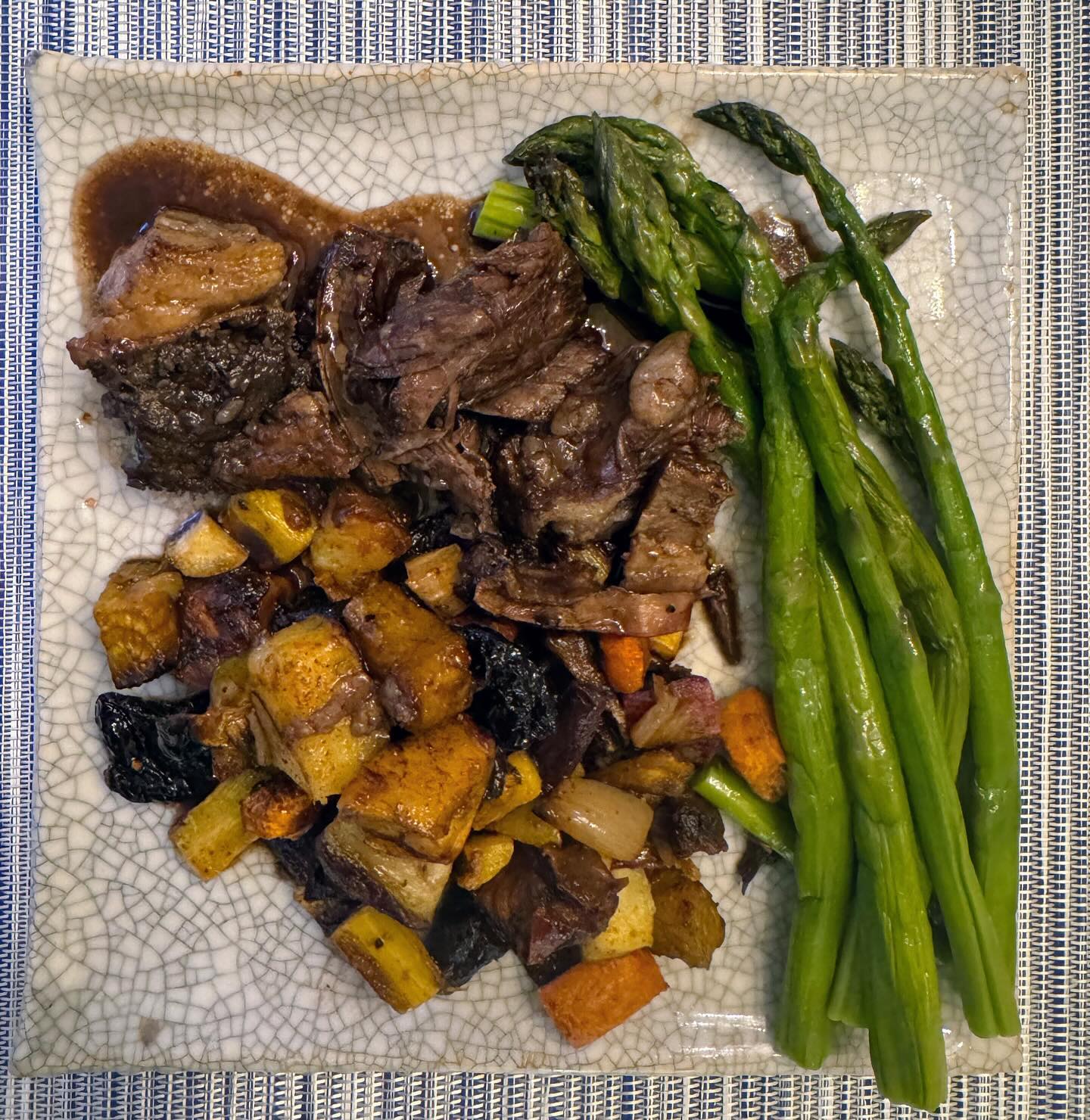
Red Wine–Braised Short Ribs
A slow, covered braise melts the connective tissue while keeping the meat succulent. Chilling the ribs in their liquid makes them easy to defat and especially good for a leftovers meal.
Ingredients
- 4 lb English-cut bone-in beef short ribs
- 2 tsp Diamond Crystal kosher salt, plus more to taste
- ½ tsp freshly ground black pepper
- 2 tbsp ghee
- 1 large yellow onion, diced
- 1 carrot, diced
- 2 stalks celery, diced
- 4 cloves garlic, crushed
- 1 tbsp tomato paste
- 1½ cups dry red wine
- 2½ cups unsalted gluten-free beef stock, plus more if needed
- 4 sprigs thyme
- 1 bay leaf
Instructions
- Heat the oven to 300°F. Pat the ribs very dry and season with the salt and pepper.
- Heat the ghee in a Dutch oven over medium-high heat. Brown the ribs in batches, allowing 3–4 minutes on each broad side to develop a dark crust. Transfer to a plate.
- Leave about 2 tablespoons fat in the pot. Lower the heat to medium, add the onion, carrot, and celery, and cook for 8–10 minutes until softened and beginning to brown. Add the garlic and tomato paste and cook for 1–2 minutes.
- Pour in the wine, scrape up the browned bits, and simmer for 5 minutes. Return the ribs and their juices to the pot; add stock, thyme, and bay. The liquid should reach halfway to two-thirds up the meat, not cover it completely.
- Cover tightly and braise for 3–3½ hours, turning the ribs once, until a skewer slides into the thickest meat with almost no resistance and the meat releases readily from the bone. Allow another 30 minutes if still firm.
- Rest in the liquid for 20 minutes. Lift out the ribs, discard loose bones and tough connective tissue, and keep the meat in generous pieces. Reserve all braising liquid for the jus.
Notes
- For a make-ahead meal, cool the ribs in their liquid in shallow containers and refrigerate within 2 hours. Remove the solidified fat before reheating.
- For strict Passover observance, choose ingredients certified for your household's practice; the default recipe uses the house searing fat, ghee.
Reduced Short Rib Jus
Defatting and reducing the braising liquid concentrates the beef flavor without making the plate greasy. A small splash of vinegar balances the rich meat and sweet vegetables.
Ingredients
- reserved braising liquid from the short ribs
- 1–2 tsp red wine vinegar, to taste
- to taste kosher salt and freshly ground black pepper
Instructions
- Strain the braising liquid through a fine-mesh sieve, pressing lightly on the vegetables. Skim thoroughly or use a fat separator.
- Simmer in a wide saucepan until reduced to about 1–1½ cups and glossy enough to lightly coat a spoon, usually 15–25 minutes. Taste as it reduces so it does not become too salty.
- Add 1 teaspoon vinegar, taste, and add more only if needed. Adjust salt and pepper.
- Spoon some jus over the ribs and warm them gently, covered, keeping the remaining sauce for serving.
Notes
- If the sauce becomes too concentrated, loosen with water or unsalted stock. It should pool lightly on the plate rather than behave like a thick gravy.
Roasted Paleo Vegetable Tzimmes
Roasting keeps the roots distinct and browned rather than softening them into a mash. Prunes, orange, and a little honey provide the sweet-savory character of tzimmes without refined sugar.
Ingredients
- 1 lb sweet potatoes, orange or purple, cut into 1-inch pieces
- ¾ lb rainbow carrots, cut into ¾-inch pieces
- ½ lb parsnips, cored if woody and cut into ¾-inch pieces
- 1 medium red onion, cut into 1-inch chunks
- 3 tbsp extra-virgin olive oil
- 1 tsp Diamond Crystal kosher salt
- ¼ tsp freshly ground black pepper
- ½ tsp ground cinnamon
- ½ cup pitted prunes, halved
- ⅓ cup fresh orange juice
- 1 tsp finely grated orange zest
- 1 tbsp honey
- 2 tsp fresh lemon juice, plus more to taste
Instructions
- Heat the oven to 425°F. Toss the sweet potatoes, carrots, parsnips, and onion with the olive oil, salt, pepper, and cinnamon.
- Spread across two rimmed baking sheets in a single layer with space between the pieces. Roast for 25 minutes, turning once, until browned at the edges but not fully tender.
- Combine the prunes, orange juice, zest, and honey in a small bowl. Divide among the trays, toss gently, and roast for another 15–25 minutes, until the roots are tender and the liquid has reduced to a light glaze. Add a splash of water if the fruit starts to scorch.
- Finish with the lemon juice and adjust salt. Fold gently to preserve the browned chunks.
Notes
- Keep the vegetables spread out; crowded trays will steam rather than caramelize.
- To reheat, spread in a baking dish and warm at 400°F for 15–20 minutes, adding a small splash of water only if the prunes look dry.
Roasted Spring Asparagus
High heat lightly blisters the spears while preserving a juicy interior. Lemon keeps this simple side fresh against the braise.
Ingredients
- 1½ lb thick asparagus, woody ends trimmed
- 1½ tbsp extra-virgin olive oil
- ½ tsp Diamond Crystal kosher salt
- ¼ tsp freshly ground black pepper
- 2 tsp fresh lemon juice
Instructions
- Heat the oven to 425°F. Dry the asparagus well; peel the bottom third of particularly thick or fibrous stalks.
- Toss with olive oil, salt, and pepper on a rimmed baking sheet and arrange in one layer.
- Roast for 10–15 minutes, turning once, until the tips are lightly browned and the thickest stems are tender with a little resistance.
- Drizzle with lemon juice just before serving.
Notes
- Thin asparagus may need only 6–9 minutes. Roast it last so it reaches the table hot.
Overall Timing / Workflow
Making the braise ahead improves both flavor and fat removal. The vegetables can share a hot oven while the ribs reheat gently on the stove.
Instructions
- Preferably the day before: brown and braise the short ribs, then cool and refrigerate them in their liquid.
- About 60 minutes before serving: lift off the chilled fat, strain the braising liquid, and begin reducing the jus. Heat the oven to 425°F and prepare the tzimmes.
- About 50 minutes before serving: put the root vegetables in the oven. Reheat the ribs gently in a covered pan with some strained braising liquid; refrigerated leftovers should reach 165°F in the center.
- After 25 minutes of roasting: add the prune-orange mixture to the tzimmes and continue cooking.
- About 15 minutes before serving: roast the asparagus on a separate tray. Finish the jus, glaze the ribs, and season the vegetables with their final citrus.
- For a same-day cook, complete the braise first, then raise the oven temperature for the vegetables while reducing the jus and keeping the ribs covered and warm.
Plating
Keeping the components in distinct sections preserves the vegetables' texture and lets the jus stay concentrated around the beef.
Instructions
- Place a generous portion of tzimmes toward one side of each warm plate.
- Arrange the short ribs beside it in large, tender pieces and spoon the jus over and around the meat.
- Lay the asparagus in a neat bundle along the other side, keeping the tips clear of the sauce.
Leftover Path
Storing the beef with sauce protects it from drying out, while keeping the vegetables separate allows better reheating.
Instructions
- Refrigerate the ribs with their jus and the vegetables in separate shallow airtight containers within 2 hours. Use within 3–4 days of their original cooking, not 3–4 additional days after reheating.
- Reheat only the portions needed. Warm the ribs covered over low heat with a splash of water or stock until they reach 165°F.
- Reheat tzimmes in a 400°F oven until hot throughout. Add the asparagus only for the last few minutes to avoid making it limp.
- Freeze the ribs and jus for up to 3 months. Thaw overnight in the refrigerator before reheating.