Sesame-Crusted Seared Tuna with Summer Tomato–Avocado Salad, Caramelized Cabbage, and Japanese Sweet Potato Fries
A little 1990s dinner nostalgia: sesame-crusted tuna, seared outside and ruby within, alongside chunky heirloom tomatoes and avocado dressed with lemon and plenty of herbs. Caramelized cabbage catches the juices of roasted Early Girls, while Japanese sweet potato fries bring browned edges and sweet, fluffy centers.
By Jonathan Katzman · Cooked and photographed · Recipe updated
Serves: 4 servings
Tags: gluten-free, paleo, dairy-free, nut-free, pescatarian
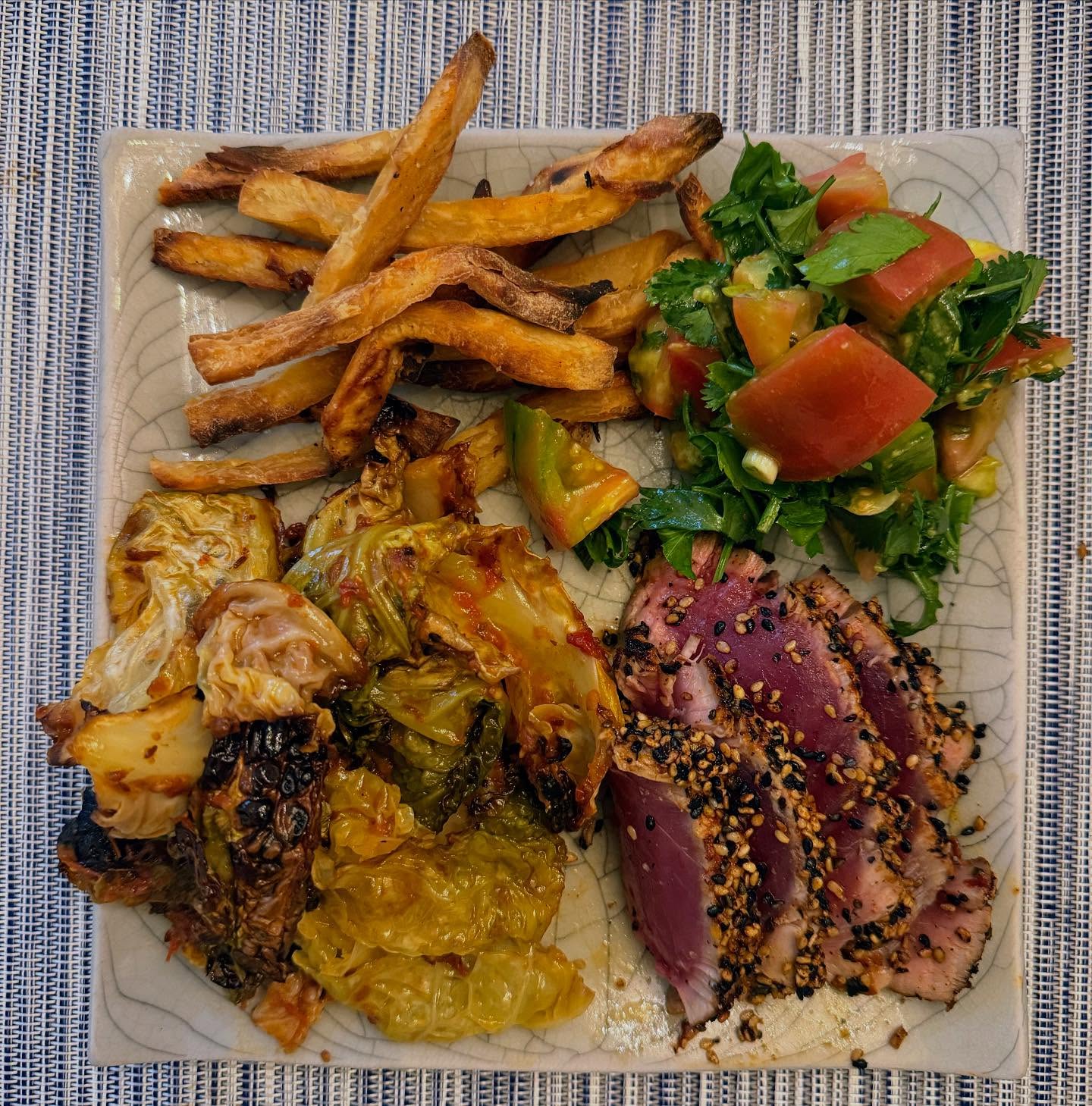
Sesame-Crusted Seared Tuna Loin
A dry surface and brief, hot sear toast the sesame crust without cooking far into the tuna. Thick slices keep the contrast between the browned exterior and cool center.
Ingredients
- 1½ lb trimmed tuna loin suitable for raw preparation, cut into two evenly thick logs
- 3 tbsp white sesame seeds
- 2 tbsp black sesame seeds
- ¾ tsp kosher salt
- ¼ tsp freshly ground black pepper
- 1½ tbsp avocado oil, divided
Instructions
- Keep the tuna refrigerated until the sides are nearly ready. Pat thoroughly dry and season with salt and pepper.
- Combine the sesame seeds on a plate. Rub the tuna with ½ tablespoon avocado oil, then press the broad surfaces and sides into the seeds.
- Heat a heavy skillet over medium-high heat. Add the remaining tablespoon avocado oil; when shimmering, lay in the tuna without crowding.
- Sear the broad faces for 45–60 seconds each and the narrow sides for 15–30 seconds each, adjusting the heat if the seeds begin to blacken. The outside should be golden, with only a thin opaque band beneath the crust and a cool, deeply pink center.
- Transfer to a clean board, rest for 3 minutes, then slice across the grain about ½ inch thick with a sharp knife.
Notes
- This preparation leaves the center raw. Buy fish from a trusted supplier who confirms its suitability and handling for raw consumption; searing does not make a raw center safe. For pregnant, older, immunocompromised, or other at-risk diners, cook fish to 145°F rather than serving rare.
Heirloom Tomato and Avocado Salad
Juicy tomatoes and ripe avocado need only bright acid and good olive oil. Large herb leaves add freshness against the rich tuna and sweet roasted vegetables.
Ingredients
- 1¼ lb ripe mixed heirloom tomatoes
- 2 medium ripe avocados
- 2 scallions, thinly sliced
- ½ cup loosely packed cilantro leaves and tender stems
- ½ cup loosely packed flat-leaf parsley leaves
- 2 tbsp extra-virgin olive oil
- 1½ tbsp fresh lemon juice
- ½ tsp kosher salt, plus more to taste
- ¼ tsp freshly ground black pepper
Instructions
- Cut the tomatoes into generous, roughly 1-inch chunks. Place in a bowl with the scallions and salt; let stand for 5 minutes.
- Cut the avocados into similarly sized chunks and add to the tomatoes with the cilantro and parsley.
- Add the olive oil, lemon juice, and pepper. Fold gently just until coated, leaving the avocado mostly intact.
- Taste and adjust the salt or lemon juice. Serve promptly, spooning up some dressing but leaving excess tomato liquid in the bowl.
Caramelized Cabbage with Early Girl Tomatoes
Roasting cabbage on a hot metal surface creates browned edges while the thicker leaves turn tender. Adding tomatoes after the initial browning keeps their moisture from steaming the cabbage.
Ingredients
- 1 small green cabbage, about 1½ lb
- ¾ lb Early Girl tomatoes, cut into wedges
- 3 tbsp extra-virgin olive oil, divided
- 2 garlic cloves, thinly sliced
- ¾ tsp kosher salt, divided
- ¼ tsp freshly ground black pepper
- 1 tsp red wine vinegar, plus more to taste
Instructions
- Heat the oven to 425°F. Cut the cabbage through the core into 8 wedges, leaving enough core to hold each wedge loosely together. Dry well.
- Coat the cabbage with 2 tablespoons olive oil, ½ teaspoon salt, and the pepper. Arrange a broad cut face down on a large, unlined rimmed metal baking sheet.
- Roast for 22–25 minutes, until the undersides are deeply browned. Turn the wedges carefully.
- Toss the tomato wedges and garlic with the remaining tablespoon olive oil and ¼ teaspoon salt. Add around the cabbage and roast for another 18–25 minutes, until the cabbage is tender through the thickest part and the tomatoes have collapsed.
- Splash the vinegar over the hot vegetables. Gently turn the cabbage through the tomato juices, allowing some wedges to separate into large pieces. Taste and adjust seasoning.
Notes
- Use a large enough tray to leave space between the wedges; crowding prevents caramelization. If the tomato juices dry out before the cabbage is tender, add 1–2 tablespoons water.
Japanese Sweet Potato Fries
Evenly cut, well-spaced batons develop browned edges while keeping the dense, chestnut-like interior of Japanese sweet potatoes. A restrained coating of oil prevents a greasy finish.
Ingredients
- 1½ lb Japanese sweet potatoes, scrubbed, skin on
- 2 tbsp avocado oil
- ¾ tsp kosher salt, divided
- ¼ tsp freshly ground black pepper
Instructions
- Heat the oven to 425°F. Cut the sweet potatoes into batons about ⅜–½ inch thick, keeping their thickness consistent.
- Dry the batons thoroughly. Toss with the avocado oil, ½ teaspoon salt, and pepper.
- Spread on a large rimmed baking sheet in a single layer with space between pieces. Roast for 20 minutes, then turn with a thin spatula.
- Continue roasting for 15–25 minutes, until browned in spots, dry at the edges, and tender inside. When sharing the oven with the cabbage, rotate the trays between racks halfway through cooking.
- Season with the remaining salt to taste and serve immediately, without covering or piling them deeply.
Notes
- These are oven fries with browned edges and fluffy centers, not uniformly crisp deep-fried fries.
Overall Timing / Workflow
The two roasted sides share one oven, leaving the stovetop free for a last-minute tuna sear. Dressing the salad near serving keeps the herbs fresh and avocado intact.
Instructions
- 0:00 — Heat the oven to 425°F and position racks in the upper and lower thirds. Prepare the cabbage and sweet potato fries.
- 0:10 — Put both trays in the oven. Prepare the tomatoes and garlic for the cabbage, wash and dry the salad herbs, and measure the sesame seeds.
- 0:30–0:35 — Turn the fries and cabbage, add the Early Girl tomatoes and garlic to the cabbage tray, and rotate the trays between racks.
- 0:40 — Cut the salad tomatoes and scallions. Check both roasted sides and remove individual pieces if they brown faster than the rest.
- 0:45–0:55 — When the vegetables are almost ready, coat and sear the tuna. During its brief rest, finish the cabbage with vinegar and fold the avocado, herbs, oil, and lemon into the salad.
- 0:55–1:05 — Slice the tuna and plate immediately with the hot vegetables and freshly dressed salad.
Plating
Four distinct areas preserve the original composed-dinner feel and keep tomato juices from softening the fries or sesame crust.
Instructions
- Arrange overlapping slices of tuna in one quadrant of each plate, showing the pink centers and sesame edges.
- Place the cabbage beside the tuna with a little of its reduced tomato juices.
- Mound the tomato–avocado salad in another quadrant and place the fries in the remaining space, keeping them out of the salad dressing.
- Serve immediately while the tuna is freshly seared, the salad is cool, and the fries are hot.
Leftover Path
Separate storage protects textures and lets the roasted vegetables be reheated without overcooking the tuna or wilting the salad.
Instructions
- Refrigerate leftovers within 2 hours in separate covered containers. Keep the rare tuna especially cold and use within 24 hours; do not save fish that has been held warm or whose handling is uncertain.
- Eat leftover salad within 24 hours; the avocado will soften and discolor. Drain excess liquid before serving.
- Refrigerate cabbage and fries for up to 3–4 days. Reheat on separate trays at 400°F until hot, about 10–15 minutes; spread the fries well apart.
- Serve properly handled leftover tuna cold, or cook it fully to 145°F and flake it over the warm cabbage rather than trying to recreate the original rare sear.