Fresh Anchovy Buchu-Jeon and Seared Ahi Tuna Ssam with Banchan
Fresh anchovies fry into a crisp-edged garlic-chive pancake, their silver skins left visible against the golden crust. Seared ahi, cool lettuce, green chile, and a little ssamjang make a fresh counterpoint, with tart pickles and kimchi tying the whole plate together.
By Jonathan Katzman · Cooked and photographed · Recipe updated
Serves: 4 servings
Tags: gluten-free, dairy-free, nut-free, pescatarian
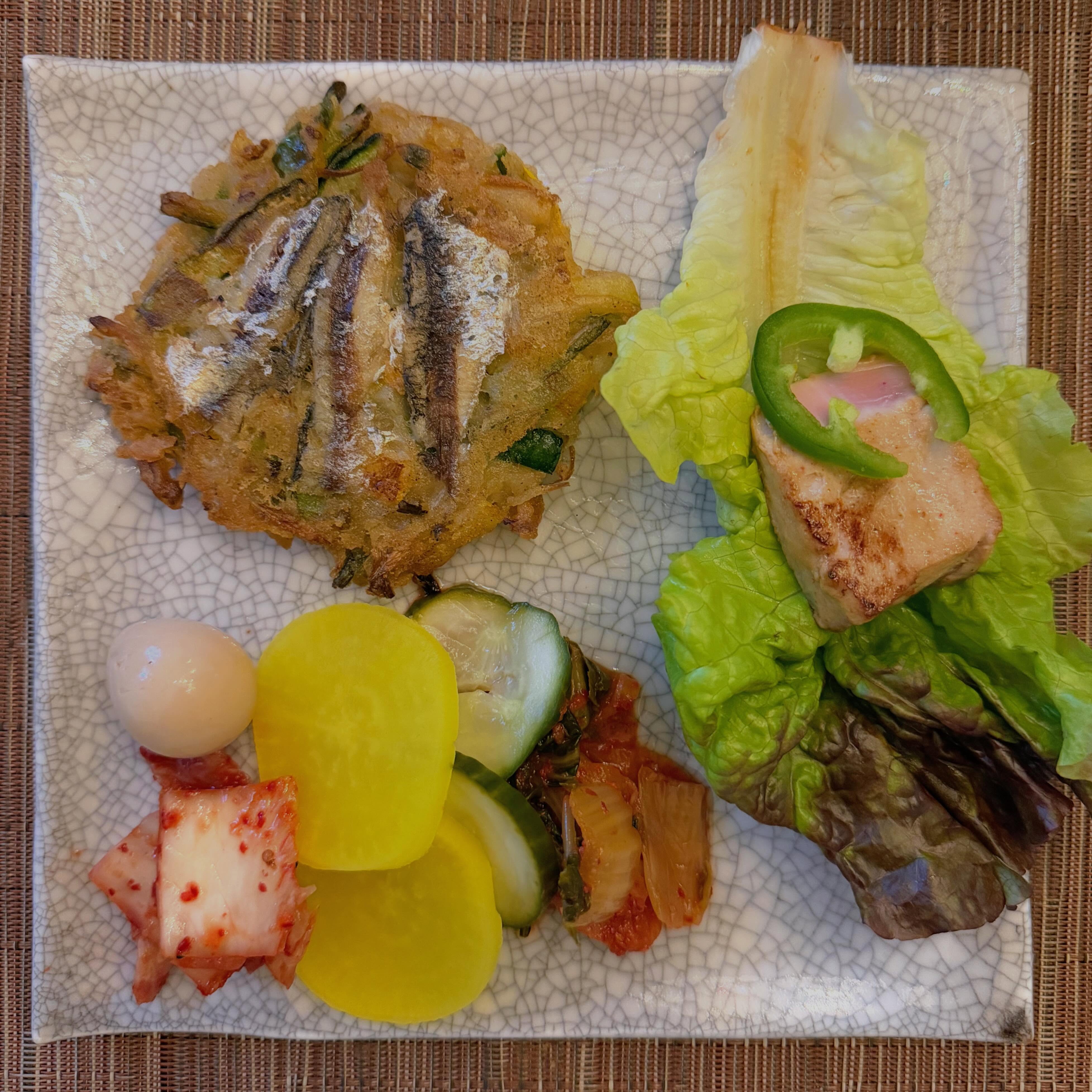
Fresh Anchovy Buchu-Jeon
A thin layer of batter holds the chives and anchovies together without burying them. Enough oil and an undisturbed first side give the pancake crisp edges and a tender center.
Ingredients
- 12 oz fresh anchovies, about 8 oz after cleaning
- 1 bunch garlic chives, about 4 oz, cut into 2-inch lengths
- 1/2 small yellow onion, very thinly sliced
- 3/4 cup cassava flour
- 1/4 cup tapioca starch
- 1 large egg
- 1 cup ice-cold water, plus more as needed
- 1/2 tsp fine sea salt
- 4 tbsp avocado oil, plus more as needed
Instructions
- Remove the anchovy heads and guts. Open each fish along the belly, gently lift out the backbone and tail, and unfold into a butterfly fillet, leaving the skin intact. Rinse briefly if necessary and pat thoroughly dry. Refrigerate until needed.
- Whisk the cassava flour, tapioca starch, egg, cold water, and salt into a loose batter. Fold in the chives and onion. Add water a tablespoon at a time if needed: the batter should coat the vegetables lightly and spread readily in the pan.
- Heat a 9- to 10-inch nonstick or well-seasoned skillet over medium-high heat. Add 1 tablespoon avocado oil. Spread one-quarter of the vegetable batter into a thin pancake about 7 inches across.
- Immediately lay one-quarter of the anchovy fillets over the wet surface, skin-side up, pressing gently so the flesh contacts the batter. Cook for 3–4 minutes, until the underside is deeply golden and the edges are set.
- Flip with a wide spatula, adding a little more avocado oil around the edge if the pan looks dry. Cook the fish side for 2–3 minutes, until the batter is cooked through and the anchovy flesh is opaque and flakes easily; fish should reach 145°F.
- Transfer to a wire rack and repeat with the remaining batter and fish. Keep finished pancakes in a 200°F oven, uncovered, for no more than 15 minutes.
Notes
- Use fresh anchovies, not salt-cured or canned anchovies.
- Avoid making the pancakes thick: excess batter produces a gummy center. Stir the batter between batches because the starch settles.
Seared Ahi Tuna Ssam
A hot, brief sear gives tuna a savory crust while preserving its delicate center. Dry lettuce, fresh chile, and scallion keep each wrap crisp and bright.
Ingredients
- 1 1/4 lb ahi tuna loin, about 1 1/4 inches thick, suitable for raw or rare service
- 1/2 tsp fine sea salt
- 1 tbsp avocado oil
- 1 large head red or green leaf lettuce, leaves separated, washed, and dried
- 1 jalapeño or Korean green chile, thinly sliced
- 2 scallions, thinly sliced
Instructions
- Keep the tuna refrigerated while preparing the lettuce and garnishes. Pat the tuna very dry and season with salt just before searing.
- Heat a heavy skillet over high heat until very hot. Add the avocado oil, then sear the tuna for 45–60 seconds per broad side and briefly on the edges. Aim for a browned exterior with a cool pink-red center; timing depends on thickness.
- Transfer to a clean board, rest for 2 minutes, then slice across the grain into pieces about 1/2 inch thick.
- Arrange the tuna on lettuce leaves and top with green chile and scallion. Serve immediately with ssamjang and banchan, letting diners fold their own wraps.
Notes
- Rare tuna is undercooked. Use a trusted supplier who can confirm suitability for raw service and maintain the cold chain; searing does not make the center fully cooked. For higher-risk diners, cook to 145°F, accepting a firmer texture.
- Keep the lettuce completely dry so the wraps hold their shape.
Quick Ssamjang
Doenjang supplies fermented depth, gochujang adds gentle heat, and rice vinegar loosens and brightens the paste. A small amount is enough alongside already-seasoned banchan.
Ingredients
- 2 tbsp gluten-free doenjang
- 1 tbsp gluten-free gochujang
- 2 tsp unseasoned rice vinegar
- 1 tsp toasted sesame oil
- 1/2 tsp honey
- 1 small clove garlic, finely grated
- 1–2 tbsp water, as needed
Instructions
- Stir together the doenjang, gochujang, rice vinegar, sesame oil, honey, and garlic.
- Add water gradually until the mixture is a soft, spreadable paste. Taste and add a few drops more vinegar if it needs brightness.
- Serve on the side, using about 1/2 teaspoon per lettuce wrap.
Notes
- Saltiness varies by paste; thin with water rather than adding more sweetener to correct an overly salty sauce.
Leftover Banchan Assortment
Fermented cabbage and crisp pickles cut through the fried pancake and enrich the simply seared tuna. Keeping them separate preserves their individual textures.
Ingredients
- 3/4 cup prepared gluten-free napa cabbage kimchi
- 1/2 cup prepared gluten-free yellow pickled radish, sliced
- 1/2 cup prepared gluten-free cucumber pickles
- 1/4 cup prepared gluten-free pickled small onions
Instructions
- Use clean utensils to portion the banchan from their containers. Drain excess liquid without squeezing the vegetables.
- Cut any large kimchi leaves or radish pieces into easy bites.
- Arrange in separate small dishes or distinct piles on each plate, keeping pickle liquid away from the pancakes.
Notes
- Use the banchan you have rather than making a new batch for this meal. Confirm gluten-free ingredients, including any seasoning sauces, for the stated dietary tag.
Overall Timing / Workflow
Preparing the cold accompaniments first lets both seafood components reach the table promptly. The pancakes tolerate a brief rack hold better than the tuna tolerates sitting.
Instructions
- 0:00 — Clean and butterfly the anchovies; return them to the refrigerator. Wash and thoroughly dry the lettuce.
- 0:20 — Cut the chives, onion, chile, and scallions. Mix the ssamjang and portion the banchan.
- 0:30 — Heat the oven to 200°F and set a rack over a sheet pan. Mix the pancake batter and begin frying.
- 0:45 — As the final pancake cooks, heat a separate skillet for the tuna.
- 0:50 — Sear and slice the tuna, then assemble the plates and serve immediately.
Plating
A spacious plate keeps the pancake crisp while giving the lettuce wraps room to fold. Visible silver anchovy skins and green chile make the two seafood preparations distinct.
Instructions
- Place one pancake, anchovy-side up, on each plate; cut into wedges if preferred.
- Set lettuce leaves beside the pancake and divide the sliced tuna among them. Finish with chile and scallion.
- Add small, separate piles of banchan without letting their juices run under the pancake. Pass the ssamjang separately.
Leftover Path
Separating fish, lettuce, sauce, and pickles prevents sogginess and makes the remaining components useful for another meal.
Instructions
- Refrigerate seafood within 2 hours in separate shallow containers. Store dry lettuce and sauce separately, and keep unserved banchan in their original containers.
- Reheat pancakes on a rack in a 400°F oven for 8–10 minutes, until crisp and heated through to 165°F. Eat within 2 days.
- Use leftover rare tuna by the next day, cooking it through to 165°F for a hot lettuce-wrap filling rather than serving it rare again.
- Do not return plated banchan or sauce that has contacted fish or used utensils to the original containers.