Lemon-Za’atar Chicken, Roasted Cabbage with Zhug, Butternut Squash with Dukkah, and Tahini Panna Cotta
Lemony za’atar chicken shares the plate with deeply roasted cabbage, fiery green zhug, and sweet butternut squash under a generous crunch of dukkah. A softly set tahini panna cotta finishes the meal with bittersweet kumquats and cocoa nibs—a bright, sesame-rich ending to a winter Shabbat dinner.
By Jonathan Katzman · Cooked and photographed · Recipe updated
Serves: 4 servings
Tags: gluten-free
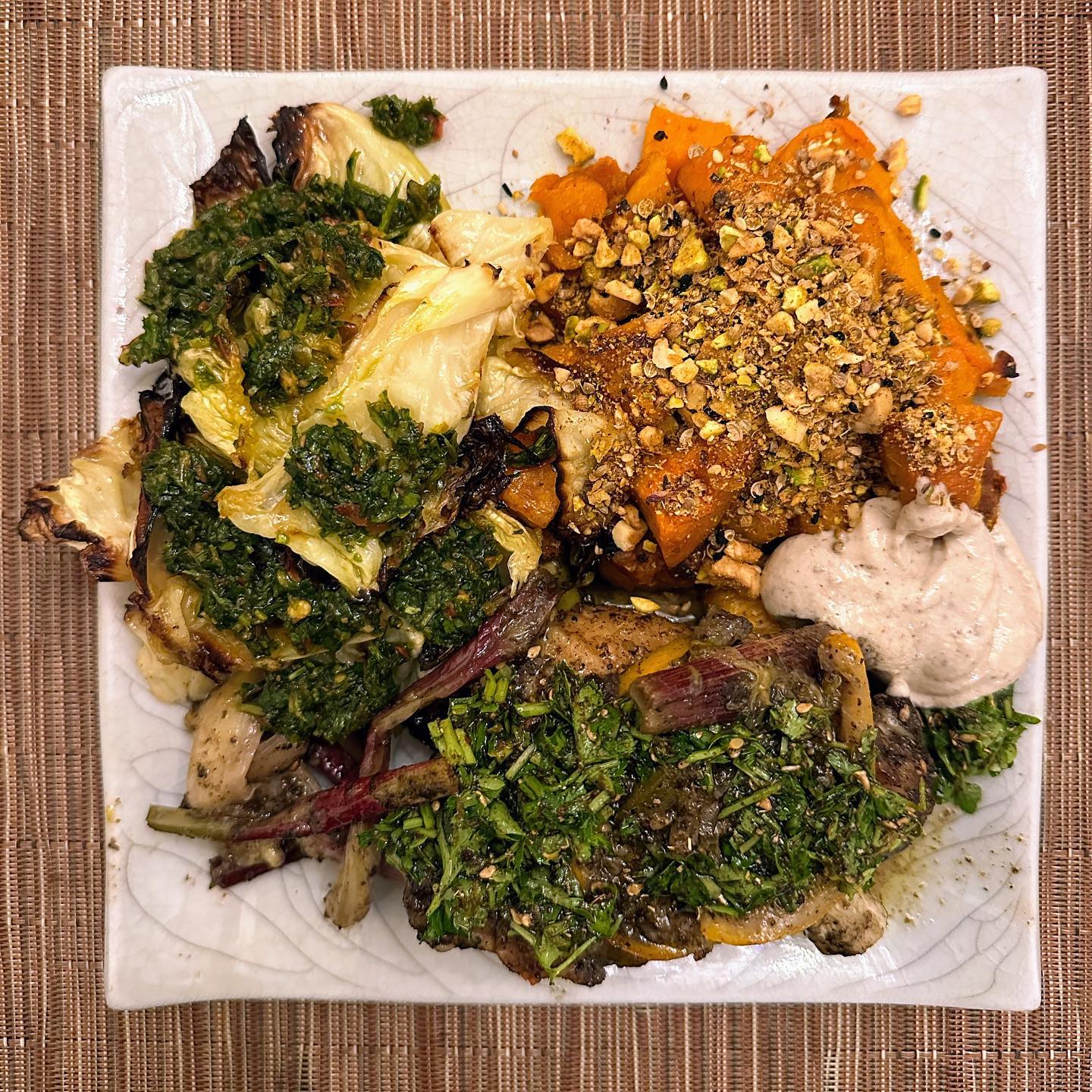
Lemon-Za’atar Roast Chicken
Roasting chicken over lemon and red onion builds a tart, savory pan sauce. Adding some za’atar and fresh herbs after roasting preserves their fragrance.
Ingredients
- 8 bone-in, skin-on chicken thighs, about 3 lb
- 2 lemons
- 2 medium red onions, cut into thick wedges
- 4 garlic cloves, crushed
- 3 tbsp extra-virgin olive oil
- 3 tbsp gluten-free za’atar, divided
- 1 tsp ground allspice
- 1 1/2 tsp fine sea salt
- 1/2 tsp black pepper
- 1/3 cup water
- 1/2 cup roughly chopped flat-leaf parsley
- 1/2 cup roughly chopped cilantro, including tender stems
Instructions
- Zest and juice one lemon; cut the other into thin rounds and remove the seeds. Combine the zest, juice, lemon rounds, onions, garlic, olive oil, 2 tablespoons za’atar, allspice, salt, and pepper with the chicken. Refrigerate for 2–12 hours.
- Heat the oven to 425°F. Spread the onions and lemon in a large shallow roasting pan and arrange the chicken skin-side up without crowding. Pour the water around, not over, the chicken.
- Roast for 40–50 minutes, rotating the pan if necessary, until the skin is deeply browned and the thickest part of each thigh reaches 175–185°F without touching bone. Add a splash of water if the pan juices threaten to scorch.
- Rest for 10 minutes. Skim excess fat from the juices, then spoon the juices and softened onions around the chicken.
- Scatter with the remaining tablespoon of za’atar, parsley, and cilantro just before serving.
Notes
- Use a za’atar blend containing thyme or oregano, sumac, and sesame; reduce the added salt if the blend is salted.
Deeply Roasted Cabbage
Thick wedges develop dark, crisp edges while their cores become sweet and tender. Zhug adds the fresh acidity and heat that roasted cabbage needs.
Ingredients
- 1 medium green cabbage, about 2 lb
- 3 tbsp extra-virgin olive oil
- 3/4 tsp fine sea salt
- 1/4 tsp black pepper
- 1 tbsp lemon juice
Instructions
- Heat the oven to 425°F. Cut the cabbage through the core into 8 wedges, retaining enough core to hold each wedge together.
- Coat with olive oil, salt, and pepper. Arrange cut-side down on a heavy rimmed baking sheet with space between the wedges.
- Roast for 20 minutes, turn carefully, and roast another 15–25 minutes, until a knife passes easily through the core and the outer leaves are deeply browned.
- Sprinkle with lemon juice and transfer to a warm platter. Spoon the zhug over the cabbage at serving time.
Notes
- If the edges darken before the cores soften, loosely cover with foil for the last 10 minutes.
Fresh Green Zhug
Cilantro, chile, and warm spices make a vivid counterpoint to the cabbage’s sweetness. A coarse texture keeps the sauce lively rather than pasty.
Ingredients
- 1 cup packed cilantro leaves and tender stems
- 1/2 cup packed flat-leaf parsley leaves
- 2 serrano chiles, stems removed
- 2 garlic cloves, chopped
- 1/2 tsp ground cumin
- 1/2 tsp ground coriander
- 1/8 tsp ground cardamom
- 1/2 tsp fine sea salt
- 2 tbsp lemon juice
- 1/3 cup extra-virgin olive oil
Instructions
- Roughly chop the herbs and chiles. Remove some chile seeds and membranes for a milder sauce.
- Pulse the herbs, chiles, garlic, spices, salt, and lemon juice in a food processor until finely chopped but not puréed.
- Stir in the olive oil by hand. Let stand for 15 minutes, then adjust the salt and lemon juice to taste.
Notes
- Keep covered and chilled if making ahead; bring to room temperature before spooning over the hot cabbage.
Roasted Butternut Squash
High heat concentrates the squash’s sweetness and browns its edges. Lemon and a coarse dukkah topping prevent the dish from feeling heavy.
Ingredients
- 1 medium butternut squash, about 2 1/2 lb
- 2 tbsp extra-virgin olive oil
- 3/4 tsp fine sea salt
- 1/4 tsp black pepper
- 1 tbsp lemon juice
Instructions
- Heat the oven to 425°F. Peel and seed the squash, then cut into wedges or half-moons about 3/4 inch thick.
- Toss with olive oil, salt, and pepper. Spread on a rimmed baking sheet in one layer.
- Roast for 30–40 minutes, turning once, until browned at the edges and tender without falling apart.
- Sprinkle with lemon juice. Add the dukkah only when ready to serve so it stays crisp.
Pistachio-Hazelnut Dukkah
Coarsely crushed nuts and toasted whole spices supply the crunchy, aromatic layer that makes the squash more than a simple roasted side.
Ingredients
- 1/4 cup raw hazelnuts
- 1/4 cup shelled unsalted pistachios
- 2 tbsp sesame seeds
- 1 tbsp coriander seeds
- 1 tsp cumin seeds
- 1/2 tsp nigella seeds
- 1/2 tsp flaky sea salt
- 1/4 tsp black pepper
Instructions
- Toast the hazelnuts in a dry skillet over medium-low heat for 5–7 minutes, stirring often. Add the pistachios for the final 2–3 minutes. Transfer to a plate and cool; rub away loose hazelnut skins.
- Toast the coriander and cumin in the skillet for 1–2 minutes, until fragrant. Transfer to a mortar.
- Toast the sesame and nigella seeds for about 1 minute, until the sesame is lightly golden, then remove from the heat.
- Coarsely crush the coriander and cumin. Chop or pulse the nuts into uneven small pieces, not a meal. Combine with all the seeds, salt, and pepper.
- Scatter about 1/2 cup over the squash, offering the remainder at the table.
Notes
- Cool completely before storing airtight; keep for up to 2 weeks in a cool cupboard or refrigerate for longer freshness.
Optional Tahini Yogurt
A cool, tangy spoonful softens the heat of the zhug and echoes the sesame in the za’atar and dukkah.
Ingredients
- 1/2 cup plain full-fat Greek yogurt
- 2 tbsp well-stirred tahini
- 1 tbsp lemon juice
- 1/4 tsp fine sea salt
- 1–2 tbsp cold water, as needed
Instructions
- Whisk the yogurt, tahini, lemon juice, and salt together.
- Add enough cold water to make a soft, spoonable sauce. Refrigerate until serving.
Tahini Panna Cotta
Tahini gives the custard a toasted sesame flavor and a little savory depth. A restrained amount of gelatin gives it enough structure to unmold while retaining a gentle wobble.
Ingredients
- 6 g unflavored powdered gelatin
- 2 tbsp cold water
- 1 1/2 cups heavy cream
- 1 cup whole milk
- 1/3 cup well-stirred smooth tahini, about 80 g
- 1/4 cup mild honey
- 1 tsp vanilla extract
- 1/4 tsp fine sea salt
- 1/2 tsp neutral oil, for the molds
- 1/4 cup unsweetened cocoa nibs, for serving
Instructions
- Lightly oil four 7–8 fl oz panna cotta molds or ramekins, wiping away any excess. Sprinkle the gelatin over the cold water in a small bowl and let bloom for 5–10 minutes.
- Warm the cream, milk, and honey in a saucepan over medium-low heat until steaming, about 160–170°F; do not boil. Remove from the heat.
- Whisk in the bloomed gelatin until fully dissolved. Whisk the tahini, vanilla, and salt in a separate bowl, then gradually whisk in the warm cream mixture until smooth.
- Strain through a fine sieve. Set the bowl over an ice bath and stir gently until the mixture is cool and just beginning to thicken but still pours freely; this helps prevent tahini settling.
- Divide among the molds, cover, and refrigerate for at least 6 hours or overnight.
- To unmold, dip the outside of each mold briefly in warm water, loosen the top edge, and invert onto a shallow dessert plate. Keep cold until ready to add the kumquats and cocoa nibs.
Notes
- Use smooth, pourable tahini and stir the jar thoroughly before measuring.
- For a simpler presentation, set the mixture in glasses and serve without unmolding.
Honey-Caramelized Kumquats
Browning the fruit before glazing creates bitter-caramel edges without burying its acidity. Cool kumquats contrast with the rich, softly set panna cotta.
Ingredients
- 8 oz kumquats
- 1 tbsp ghee
- 2 tbsp honey
- 2 tbsp water, plus more if needed
- 1 pinch fine sea salt
Instructions
- Slice the kumquats into thick rounds or lengthwise quarters, removing the seeds.
- Heat the ghee in a wide skillet over medium-high heat. Add the kumquats in a single layer and leave undisturbed for 2–3 minutes, until the cut surfaces develop brown patches.
- Turn the fruit and reduce the heat to medium-low. Add the honey, water, and salt; simmer for 4–6 minutes, gently turning, until the peel is tender and the syrup lightly coats the fruit.
- Add a little water if the glaze tightens before the peel softens. Transfer to a shallow bowl and cool completely before topping the panna cotta.
Notes
- Keep some texture in the peel; the aim is tender glazed fruit, not marmalade.
Overall Timing / Workflow
Making the dessert and marinading the chicken ahead leaves only roasting and finishing for dinner. Roasting the squash first keeps a two-rack home oven from becoming overcrowded.
Instructions
- The day before or morning of dinner: make the panna cotta and refrigerate for at least 6 hours. Marinate the chicken for 2–12 hours.
- Up to a day ahead: make the dukkah and caramelized kumquats. Refrigerate the kumquats separately.
- 0:00 — Heat the oven to 425°F. Prepare and start roasting the squash.
- 0:10 — Make the zhug and optional tahini yogurt. Cut and season the cabbage; arrange the chicken in its roasting pan.
- 0:35–0:40 — Remove the tender squash. Put the chicken and cabbage on separate oven racks, with the chicken below the cabbage. Roast for 40–50 minutes, turning the cabbage and rotating pans as needed.
- 1:15–1:30 — Check cabbage tenderness and chicken temperature independently; remove each when ready. Rest the chicken for 10 minutes. Return the squash to the oven for 5–8 minutes to warm through.
- Finish the vegetables with lemon, add dukkah and zhug, and finish the chicken with herbs and za’atar.
- After dinner, unmold the panna cotta and top with cooled kumquats and cocoa nibs.
Notes
- Allow additional roasting time if your oven loses heat with two pans inside; use texture and internal temperature rather than the clock alone.
Plating
Keeping the vegetables in distinct sections preserves their contrasting textures and lets the sauces remain vivid. Adding dessert toppings at the last moment protects the panna cotta’s shape and the nibs’ crunch.
Instructions
- Arrange two chicken thighs per person with roasted red onions, lemon slices, and a little pan juice. Scatter the fresh herbs over the chicken.
- Place the cabbage alongside and spoon zhug generously over its folds.
- Pile the squash in a separate section and cover with a coarse shower of dukkah. Add a small spoonful of tahini yogurt alongside, if using.
- Serve each panna cotta in a shallow bowl with a mound of cooled kumquats on top. Spoon over a little glaze and scatter cocoa nibs around the base.
Leftover Path
Storing the sauces and crunchy toppings separately keeps reheated vegetables from becoming soggy. The roast chicken and vegetables also make a satisfying warm salad the next day.
Instructions
- Refrigerate chicken and roasted vegetables in separate covered containers within 2 hours; use within 3–4 days. Keep zhug and tahini yogurt refrigerated separately and use within 3 days.
- Reheat chicken, covered with a spoonful of its juices, in a 350°F oven until it reaches 165°F. Uncover briefly to refresh the skin. Reheat vegetables on a separate tray.
- Alternatively, shred the chicken and combine with warmed squash and cabbage, fresh herbs, lemon juice, and a little tahini yogurt. Add zhug and dukkah just before eating.
- Keep panna cotta covered and refrigerated for up to 3 days. Store kumquats separately for up to 5 days and add them, with cocoa nibs, only at serving time.