Lamb Chops with Parsley Sauce, Za’atar Sweet Potato Fries, and Hazelnut Dukkah Cauliflower
Deeply browned lamb chops get a bright lift from a generous spoonful of lemony parsley sauce. Za’atar sweet potato wedges bring sweetness and tang, while char-edged cauliflower and coarse hazelnut dukkah add a toasted crunch—a generous Friday-night dinner with plenty to pass around.
By Jonathan Katzman · Cooked and photographed · Recipe updated
Serves: 4 servings
Tags: gluten-free, paleo
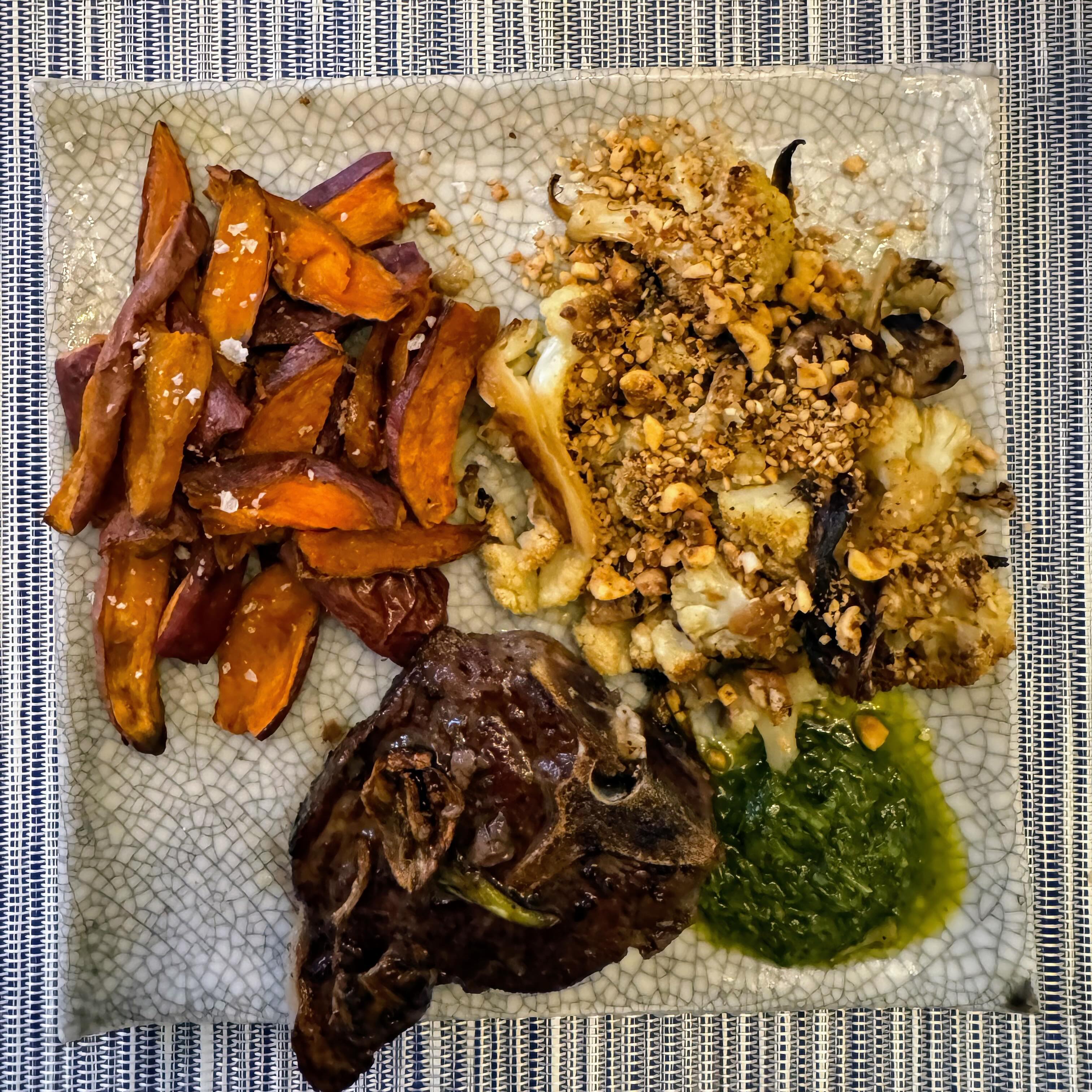
Pan-Seared Lamb Chops
A dry surface and a hot skillet develop a dark crust without a heavy marinade. Cooking the chops last keeps them juicy and lets the vegetables arrive hot.
Ingredients
- 2½–3 lb bone-in lamb shoulder chops, about ¾–1 inch thick
- 1 tsp fine sea salt, plus more to taste
- ¾ tsp freshly ground black pepper
- 2 tbsp ghee
Instructions
- Pat the chops dry, season with salt and pepper, and refrigerate uncovered for at least 30 minutes, or up to overnight.
- Heat a large cast-iron skillet over medium-high heat. Pat away any surface moisture from the chops and add half the ghee to the skillet.
- Sear the chops in a single uncrowded layer, working in batches and adding the remaining ghee as needed. Cook about 3–5 minutes per side, until deeply browned; briefly hold any thick fat edges against the pan to render them.
- Reduce the heat if the crust is darkening before the center is ready. Cook to 145°F in the thickest meat, avoiding bone, then rest at least 3 minutes before serving. Check each chop separately because thickness and bone placement affect cooking time.
Notes
- Shoulder chops have a little more chew than loin chops. Bone-in loin chops of the same thickness also work; use temperature rather than time to judge doneness.
Lemony Parsley Sauce
Parsley and lemon cut through the lamb’s richness, while olive oil carries the herbs across the plate. A coarse texture keeps the sauce fresh and distinct from a smooth purée.
Ingredients
- 2 cups loosely packed flat-leaf parsley leaves and tender stems, washed and thoroughly dried
- 1 small clove garlic, finely grated
- 1 tsp finely grated lemon zest
- 2 tbsp fresh lemon juice
- ⅓ cup extra-virgin olive oil
- ¼ tsp fine sea salt, plus more to taste
Instructions
- Finely chop the parsley by hand, or pulse it briefly in a small food processor.
- Combine with the garlic, lemon zest, lemon juice, olive oil, and salt. Stir or pulse just until spoonable and coarse, leaving visible flecks of parsley.
- Let stand for 10 minutes, then taste. Adjust the salt and lemon so the sauce tastes bright enough to balance the lamb.
Notes
- If too thick, stir in a little more olive oil or a teaspoon of water. Serve at room temperature and stir before spooning.
Za’atar Sweet Potato Fries
Skin-on wedges develop caramelized edges while staying creamy inside. Adding most of the za’atar after roasting preserves its herbal aroma and keeps the sesame from scorching.
Ingredients
- 2 lb orange-fleshed sweet potatoes, scrubbed, skin on
- 2 tbsp olive oil
- 1½ tbsp gluten-free za’atar blend containing herbs, sesame, and sumac
- ½ tsp fine sea salt
- to taste flaky sea salt, for finishing
Instructions
- Heat the oven to 425°F with racks in the upper and lower thirds. Cut the sweet potatoes into wedges about ½–¾ inch thick at the widest point.
- Toss with the olive oil, fine salt, and 1 teaspoon of the za’atar. Spread over a large rimmed sheet pan with a cut face down and space between the pieces.
- Roast for 35–45 minutes, turning after about 20 minutes, until browned along the edges and completely tender inside. Rotate the pan and exchange rack positions with the cauliflower as needed for even browning.
- Toss the hot wedges gently with the remaining za’atar and finish with a little flaky salt.
Notes
- Use a second pan if necessary rather than crowding the wedges. These are caramelized oven fries with tender centers, not brittle deep-fried fries.
Roasted Cauliflower
Broad cut surfaces brown against the sheet pan while the florets stay tender. Lemon at the end brightens the cauliflower without interfering with roasting.
Ingredients
- 1 large head cauliflower, about 2 lb, trimmed
- 3 tbsp olive oil
- ½ tsp fine sea salt
- ¼ tsp freshly ground black pepper
- 1 tbsp fresh lemon juice
Instructions
- Cut the cauliflower into large florets, slicing through the larger pieces to create flat surfaces. Slice the tender core into ½-inch pieces.
- Toss with olive oil, salt, and pepper. Spread on a large rimmed sheet pan, placing flat sides against the metal.
- Roast at 425°F for 30–40 minutes, turning once, until the stems are tender and the edges are deeply browned with a few charred tips.
- Sprinkle with lemon juice just before serving, then finish with the hazelnut dukkah.
Notes
- Keep the cauliflower spread out so it roasts rather than steams. Add the dukkah after roasting to protect the toasted nuts and spices.
Hazelnut Dukkah
Coarsely chopped hazelnuts and sesame add substantial crunch to the tender cauliflower. Toasting the spices separately develops their aroma without burning the nuts.
Ingredients
- ½ cup raw hazelnuts
- 2 tbsp sesame seeds
- 2 tsp coriander seeds
- 1 tsp cumin seeds
- ¼ tsp fine sea salt
- ¼ tsp freshly ground black pepper
Instructions
- Toast the hazelnuts in a dry skillet over medium-low heat for 6–8 minutes, shaking frequently, until fragrant and golden in spots. Transfer to a towel, let cool slightly, and rub off loose skins.
- Toast the sesame seeds in the same skillet for 2–3 minutes, stirring until golden. Transfer to a bowl.
- Toast the coriander and cumin for 1–2 minutes, until aromatic. Cool, then crush coarsely in a mortar or spice grinder.
- Chop the hazelnuts into a mix of small chunks and coarse crumbs. Combine with the sesame, crushed spices, salt, and pepper.
- Scatter ⅓–½ cup over the cauliflower at serving, offering any remaining dukkah at the table.
Notes
- Avoid processing the mixture to a powder or paste; the visible nut pieces are part of the texture.
Overall Timing / Workflow
The vegetables share one oven temperature, leaving the stovetop free for the lamb. Making the sauce and dukkah while the trays roast keeps the final minutes focused on searing.
Instructions
- 0:00 — Season the lamb and refrigerate uncovered. Heat the oven to 425°F and prepare the sweet potato wedges.
- 0:10 — Put the sweet potatoes in the oven. Prepare the cauliflower and put its tray in about 5 minutes later.
- 0:20 — Toast and mix the dukkah, then make the parsley sauce.
- 0:30 — Turn the vegetables and rotate the trays between racks. Set out serving plates and check the lamb’s surface is dry.
- 0:40 — Start searing the lamb, using two skillets if needed to avoid crowding and finish the chops together.
- 0:45–0:55 — Remove each vegetable tray when browned and tender. Finish the sweet potatoes with za’atar; leave the cauliflower uncovered until plating.
- 0:55–1:05 — Finish and rest the lamb. Add lemon and dukkah to the cauliflower, stir the parsley sauce, and serve.
Notes
- Timing varies with chop size and oven performance. If the vegetables finish early, return them to the hot oven for a few minutes while the lamb rests.
Plating
Keeping the sauce beside the lamb preserves the crust, while adding dukkah at the last moment maintains its crunch.
Instructions
- Arrange the sweet potato wedges in a loose pile on one side of each warm plate.
- Place the cauliflower alongside and scatter generously with hazelnut dukkah.
- Add the rested lamb chops and spoon the parsley sauce beside them, letting a little olive oil pool around the herbs.
- Serve extra sauce and dukkah separately for passing at the table.
Leftover Path
Separate storage protects the toasted garnish and allows the vegetables to crisp again without overcooking the lamb.
Instructions
- Refrigerate the lamb and vegetables in separate airtight containers within 2 hours and use within 3–4 days. Refrigerate the parsley sauce separately and use within 3 days.
- Store fully cooled, unused dukkah airtight in a cool place for up to 1 week, or refrigerate for longer freshness.
- Reheat the vegetables on a sheet pan at 425°F for 10–15 minutes, adding fresh dukkah only after heating.
- For hot leftovers, reheat the lamb gently in a covered 300°F oven with a splash of water until it reaches 165°F. Alternatively, slice it thinly and serve cold with reheated vegetables and parsley sauce.