Roasted Red Pepper Shakshuka with Cilantro Pesto and Turmeric Kraut
Soft eggs settle into a thick tomato stew sharpened with chili, garlic and dill, with sweet roasted peppers folded through. Coarse cilantro pesto adds a fresh, oily richness, while cold turmeric kraut brings crunch and acidity—a good late-summer skillet for turning leftovers into dinner.
By Jonathan Katzman · Cooked and photographed · Recipe updated
Serves: 4 servings
Tags: vegetarian, gluten-free, paleo, nut-free
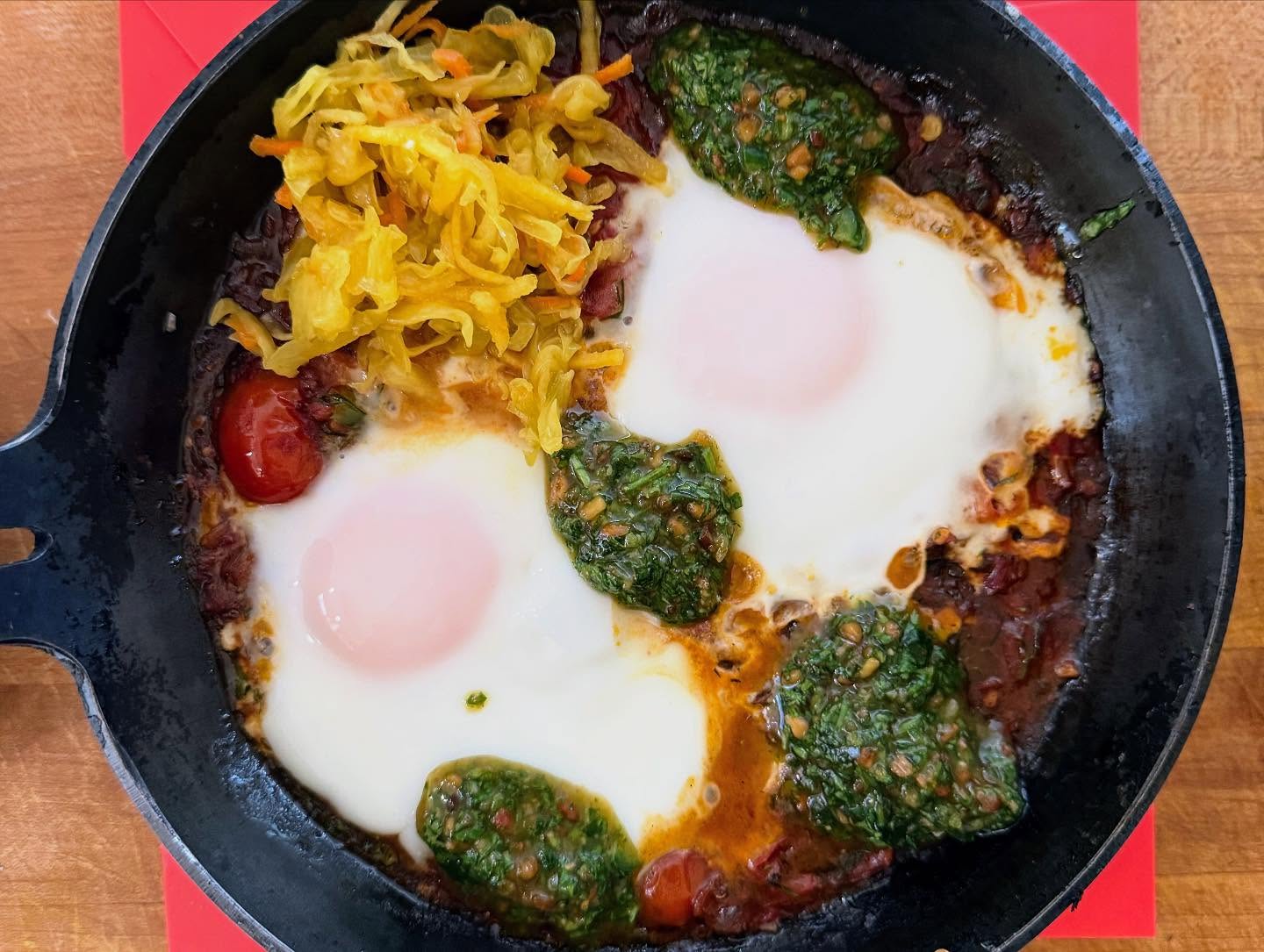
Roasted Red Pepper and Tomato Shakshuka
Reducing the tomatoes before adding the eggs creates a concentrated sauce that supports the whites without drowning them. Roasted peppers bring sweetness, while late-added dill stays fragrant.
Ingredients
- 2 large red bell peppers
- 2 tablespoons ghee
- 1 medium yellow onion, finely diced
- 5 cloves garlic, thinly sliced
- 1 small red chili, finely chopped, seeds removed for less heat
- 2 pounds ripe tomatoes, coarsely chopped, including a handful of whole cherry tomatoes
- 1 teaspoon kosher salt, plus more to taste
- 1/4 teaspoon freshly ground black pepper
- 3 tablespoons chopped fresh dill
- 8 large eggs
- 2–4 tablespoons water, as needed
Instructions
- Heat the oven to 450°F. Halve and seed the peppers, place cut-side down on a lined baking sheet and roast for 25–30 minutes, until blistered and softened. Cover in a bowl for 10 minutes, then peel and cut into short strips.
- Meanwhile, heat the ghee in a wide skillet over medium heat. Add the onion and cook for 8–10 minutes, stirring, until soft and lightly golden. Add the garlic and chili and cook for 1 minute without browning the garlic.
- Add the tomatoes, salt and black pepper. Simmer uncovered for 20–30 minutes, stirring occasionally, until thick and jammy but still spoonable. Crush some tomatoes with the spoon, leaving a few cherry tomatoes intact.
- Fold in the roasted pepper strips and simmer for 5 minutes. Stir in the dill and taste for salt. If the stew is dry enough to stick, loosen it with a little water.
- Divide the hot stew between two 10- to 12-inch lidded skillets, or use one very wide skillet that comfortably holds eight eggs. Make shallow wells and crack an egg into each.
- Cover and cook over low heat for 5–8 minutes, until the whites are opaque and just set and the yolks still wobble. Check frequently near the end; a thin white film over the yolks is fine. Remove from the heat immediately.
Notes
- For the leftover version, replace the onion and tomatoes with 4 cups of cooked tomato stew. Soften the garlic and chili in 1 tablespoon ghee, add the stew and roasted peppers, and simmer until thoroughly hot before adding the dill and eggs.
- Jarred roasted peppers, drained and peeled, can replace the freshly roasted peppers; use about 1 1/2 cups.
- For fully set yolks, continue covered cooking until the eggs reach 160°F.
Coarse Cilantro Pesto
Hand-chopped herbs and toasted seeds give the pesto texture rather than turning it into a smooth green sauce. Lemon cuts through the rich eggs and concentrated tomatoes.
Ingredients
- 2 cups loosely packed cilantro leaves and tender stems, washed and dried
- 3 tablespoons raw hulled sunflower seeds
- 1 small clove garlic, finely grated
- 1 tablespoon fresh lemon juice, plus more to taste
- 1/4 cup extra-virgin olive oil
- 1/4 teaspoon kosher salt, plus more to taste
Instructions
- Toast the sunflower seeds in a dry skillet over medium-low heat for 3–4 minutes, stirring until lightly golden and fragrant. Let cool.
- Finely chop the cilantro and roughly chop the seeds. Combine with the garlic, lemon juice, olive oil and salt.
- Taste and adjust the lemon and salt. Keep the pesto coarse and spoonable, with enough oil to glisten rather than run freely.
Notes
- Makes about 1/2 cup. If using leftover pesto, stir well and refresh with a little lemon juice before serving.
Turmeric Kraut
Cool fermented cabbage adds a sharp, crunchy counterpoint to the soft eggs and sweet stew. Adding it after cooking preserves that contrast.
Ingredients
- 1 cup prepared gluten-free turmeric cabbage kraut, preferably with carrot and no added sugar
Instructions
- Lift the kraut from its brine and let excess liquid drain without squeezing it dry.
- Keep cool until serving, then add a generous mound beside the eggs rather than stirring it into the hot sauce.
Overall Timing / Workflow
The peppers roast while the tomato base cooks, and the cold toppings can be prepared before the eggs need attention.
Instructions
- 0:00 – Heat the oven and start roasting the peppers. Chop the onion, garlic, chili and tomatoes.
- 0:10 – Start the tomato stew while the peppers continue roasting.
- 0:25 – Make the cilantro pesto and drain the kraut.
- 0:30 – Cover the roasted peppers to steam, then peel and slice them once cool enough to handle.
- 0:45 – Fold the peppers into the reduced stew, simmer briefly and add the dill. Set the table before adding the eggs.
- 0:50–1:00 – Cook the eggs gently, then finish with pesto and kraut and serve immediately. Allow extra time if the tomatoes are particularly juicy.
Plating
Keeping the pesto and kraut in distinct patches lets each bite balance warm sauce, rich yolk, fresh herbs and fermented crunch.
Instructions
- Bring the skillets to the table on heatproof trivets, or spoon two eggs per person onto warm shallow plates with plenty of stew underneath.
- Dot the pesto over the sauce and around the eggs, leaving most of the whites and yolks visible.
- Place the turmeric kraut in a mound along one edge and serve immediately.
Leftover Path
Storing the sauce and cold toppings separately preserves their textures and makes it easy to cook fresh eggs for the next meal.
Instructions
- Whenever possible, reserve extra stew before adding eggs. Refrigerate within 2 hours in a covered container for up to 3–4 days; freeze egg-free stew for up to 3 months.
- Store pesto separately in the refrigerator and use within 3 days. Keep the kraut refrigerated in its brine and follow its package guidance.
- Reheat reserved stew with a splash of water until bubbling throughout, then add fresh eggs and cook as directed.
- If storing already-cooked eggs with the stew, refrigerate promptly and reheat gently to 165°F; the yolks will become firm. Add pesto and kraut only after reheating.
Notes
- For stew or pesto that was already leftover, count storage time from when it was originally made, not from this meal.