Early Girl Tomato and Pepper Shakshuka with Tahina, Red Shatta, and Harissa Sauerkraut
Late-summer Early Girl tomatoes cook down around sweet peppers and softly set eggs, with cumin, coriander, and paprika giving the pan a warm backbone. Lemon tahina, bright red shatta, and handfuls of fresh herbs finish the bowls; harissa sauerkraut brings a sharp, crunchy counterpoint.
By Jonathan Katzman · Cooked and photographed · Recipe updated
Serves: 4 servings
Tags: vegetarian, gluten-free, paleo, dairy-free, nut-free
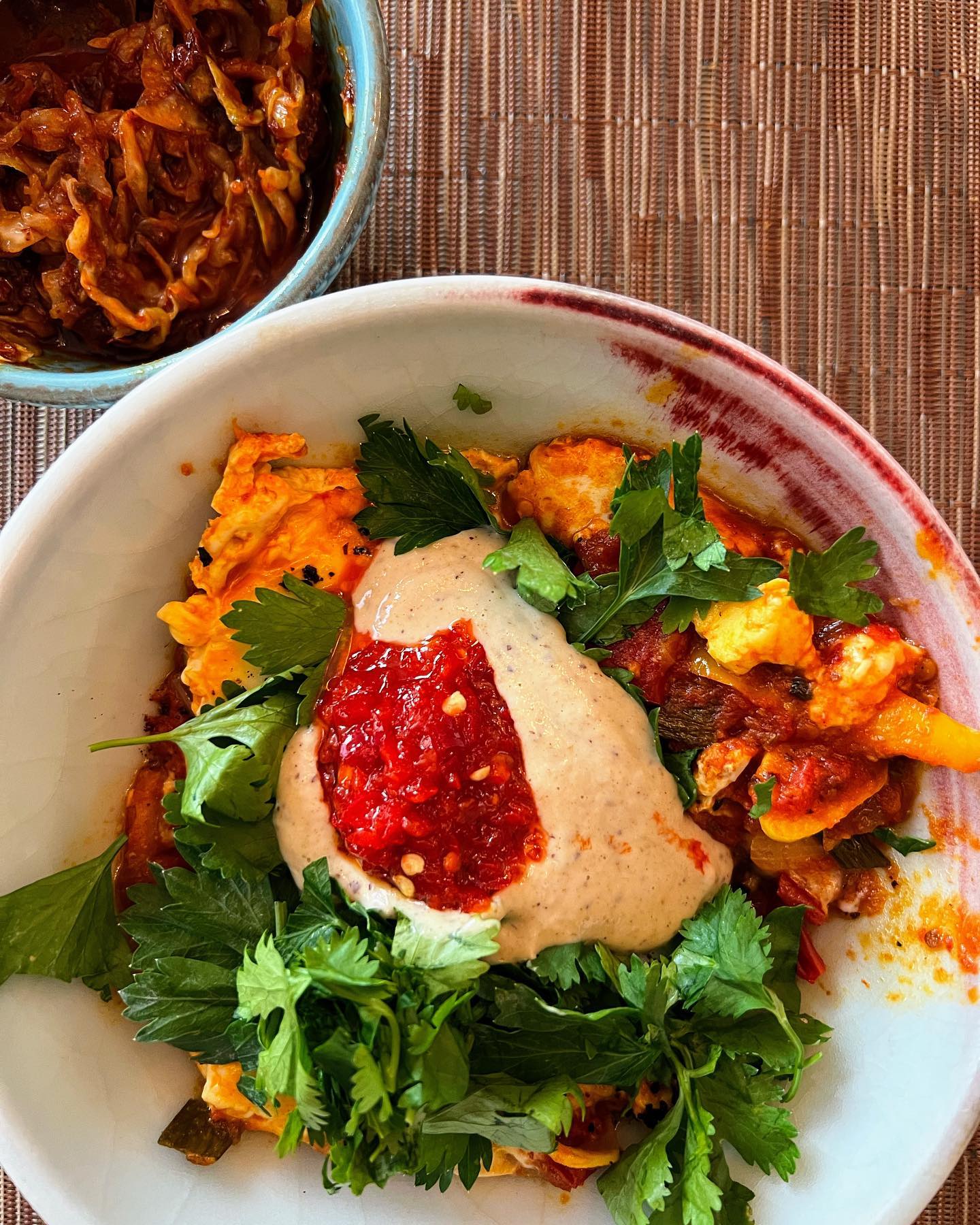
Early Girl Tomato and Pepper Shakshuka
Reducing the fresh tomatoes before adding the eggs concentrates their sweetness and keeps the finished dish spoonable rather than watery. Tender pepper strips give the sauce substance without competing with the eggs.
Ingredients
- 8 large eggs
- 2 lb ripe Early Girl tomatoes, cored and roughly chopped, juices reserved
- 3 medium sweet summer peppers, seeded and cut into 1/2-inch strips
- 1 medium yellow onion, thinly sliced
- 3 cloves garlic, thinly sliced
- 3 tbsp extra-virgin olive oil
- 1 1/2 tsp ground cumin
- 1 tsp ground coriander
- 1 tsp sweet paprika
- 1 tsp kosher salt, plus more to taste
- 1/4 tsp freshly ground black pepper
Instructions
- Heat the olive oil in a wide, heavy 12-inch skillet over medium heat. Add the onion, peppers, and half the salt. Cook for 10–12 minutes, stirring occasionally, until softened and beginning to turn golden at the edges.
- Add the garlic, cumin, coriander, and paprika. Stir for 30–45 seconds, just until fragrant.
- Add the tomatoes with their juices, the remaining salt, and black pepper. Simmer uncovered over medium-low heat for 18–25 minutes, stirring occasionally, until the tomatoes collapse and a spoon drawn through the sauce leaves a trail briefly. Add a splash of water only if the vegetables begin to catch before becoming tender.
- Taste the sauce and adjust the salt. Make eight shallow wells and crack an egg into each. Cover and cook gently for 5–8 minutes, until the whites are opaque and set but the yolks still yield softly. Cook longer for firm yolks.
- For the broken-up texture shown here, gently separate a few of the set whites with a spoon as you portion the eggs and vegetables; do not scramble the eggs into the sauce.
Notes
- Use a mixture of red, yellow, and green sweet peppers if available. Keep the main pan relatively mild because the shatta and harissa supply heat.
- For diners at increased risk from undercooked eggs, use pasteurized eggs or cook until both whites and yolks are firm.
Lemon Tahina
Lemon and cold water turn tahini into a pourable sauce that softens the chile heat without obscuring the tomatoes.
Ingredients
- 1/3 cup well-stirred tahini
- 2 tbsp fresh lemon juice
- 1/2 small clove garlic, finely grated
- 1/4 tsp fine sea salt
- 4–6 tbsp cold water
Instructions
- Whisk together the tahini, lemon juice, garlic, and salt. The mixture will initially tighten.
- Whisk in the cold water a tablespoon at a time until smooth and thickly pourable. It should form a soft puddle on the eggs rather than hold a stiff mound.
- Taste and adjust with a little more lemon or salt.
Notes
- Tahina thickens as it stands; loosen with a teaspoon or two of water before serving.
Red Shatta
A brief refrigerated salt cure softens the chiles while preserving their fresh heat. Vinegar and lemon make a vivid, coarse condiment to spoon over the tahina.
Ingredients
- 250 g fresh red chiles, such as Fresno, stems removed
- 8 g fine sea salt
- 3 tbsp apple cider vinegar
- 1 tbsp fresh lemon juice
- 1 tbsp extra-virgin olive oil
Instructions
- Finely chop the chiles, retaining the seeds, and mix thoroughly with the salt. Transfer to a clean jar, cover, and refrigerate for 3 days, stirring once daily with a clean spoon.
- Drain away the released liquid. Pulse the chiles briefly in a small processor to a coarse paste, leaving some visible seeds and texture.
- Stir in the vinegar, lemon juice, and olive oil. Transfer to a clean jar and keep refrigerated. Serve in small spoonfuls over the tahina.
Notes
- This makes more than the meal needs; allow approximately 1–2 teaspoons per person at first.
- Keep the cure refrigerated throughout; this is not a shelf-stable preserve. Use the finished shatta within 2 weeks or freeze in small portions.
- Prepared gluten-free red shatta without added sugar can replace the homemade batch when cooking the meal the same day.
Harissa Sauerkraut
Raw fermented cabbage provides crunch and acidity alongside the soft eggs and sweet cooked vegetables. Harissa ties the side to the warm spices in the shakshuka.
Ingredients
- 1 1/2 cups plain sauerkraut, lightly drained, made without added sugar
- 1–2 tbsp gluten-free harissa without added sugar, preferably Zwita
- 1 tsp extra-virgin olive oil
Instructions
- Toss the lightly drained sauerkraut with 1 tablespoon harissa and the olive oil until evenly coated.
- Taste and add more harissa if desired. Let stand for 10 minutes while the eggs finish, then serve in a separate small bowl.
Notes
- Do not squeeze the cabbage completely dry; a little brine helps distribute the harissa.
Fresh Parsley and Cilantro
Whole herb leaves add freshness and a leafy texture that contrasts with the rich tahina and reduced tomato sauce.
Ingredients
- 1 cup loosely packed flat-leaf parsley leaves and tender tips
- 1 cup loosely packed cilantro leaves and tender stems
Instructions
- Wash and thoroughly dry the herbs. Leave smaller leaves whole and tear any large clusters into bite-size pieces.
- Scatter generously over the shakshuka immediately before adding the tahina and shatta.
Overall Timing / Workflow
Preparing the chile condiment ahead leaves a straightforward stovetop meal, with all cold accompaniments ready before the eggs go in.
Instructions
- Three days ahead: salt the chiles and refrigerate for the shatta. Finish the condiment on serving day, or use prepared shatta.
- 0:00 — Slice the onion and peppers, chop the tomatoes, and begin softening the vegetables.
- 0:15 — Add the spices and tomatoes. While the sauce reduces, whisk the tahina, mix the harissa sauerkraut, and wash and dry the herbs.
- 0:35–0:40 — Once the sauce is thick and the peppers tender, add the eggs and cover.
- 0:45–0:50 — Check the egg whites, portion immediately, and finish with herbs, tahina, and shatta.
Plating
Keeping the tahina and shatta visibly distinct lets each bite vary between creamy, spicy, and herb-bright.
Instructions
- Spoon the tomato-pepper mixture and two eggs into each shallow bowl, letting some of the set egg whites break naturally during serving.
- Scatter with generous handfuls of parsley and cilantro. Spoon a broad ribbon of tahina across the center and place a small spoonful of shatta on top.
- Serve the harissa sauerkraut separately so it stays crisp and cool. Pass extra shatta at the table.
Leftover Path
The tomato-pepper base reheats well, while storing the cold toppings separately preserves their texture and brightness.
Instructions
- Refrigerate leftovers within 2 hours. Store the shakshuka, tahina, herbs, and harissa sauerkraut in separate covered containers.
- Eat leftover cooked eggs within 2 days and reheat gently, covered, until the food reaches 165°F; the yolks will become firm.
- If reserving part of the meal ahead, hold back tomato-pepper sauce before adding eggs. Refrigerate the sauce for up to 4 days, then simmer with a splash of water and cook fresh eggs in it.
- Use tahina within 4 days, loosening it with cold water as needed. Keep the harissa sauerkraut refrigerated and use within 1 week; follow the shatta component's storage guidance.