Shio Koji Salmon Bellies with Roasted Summer Vegetables and Tongue of Fire Beans
Shio koji gives rich salmon bellies a savory sweetness and deeply caramelized edges. Underneath, creamy shelling beans catch the juices from roasted Early Girls, silky eggplant, sweet Jimmy Nardellos, and nutty Romanesco squash—a generous bowl for peak summer.
By Jonathan Katzman · Cooked and photographed · Recipe updated
Serves: 4 servings
Tags: gluten-free, dairy-free, nut-free, pescatarian
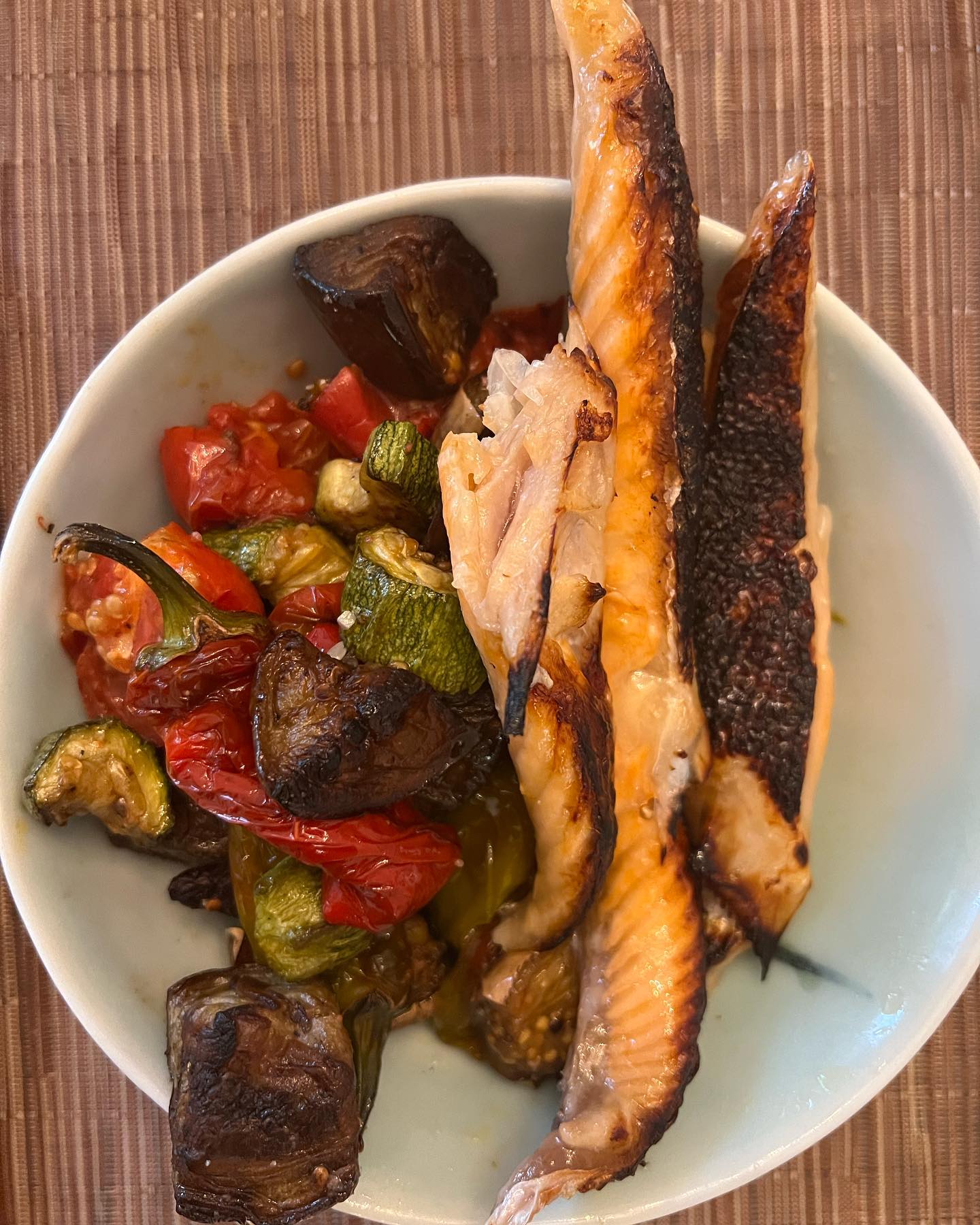
Shio Koji–Marinated Salmon Bellies
Shio koji seasons the fatty belly meat while encouraging browning. Wiping away excess marinade keeps the surface from burning before the salmon cooks through.
Ingredients
- 1 1/2 lb skin-on salmon belly strips, scaled and checked carefully for bones
- 3 tbsp gluten-free shio koji
- 1 tsp avocado oil
Instructions
- Pat the salmon dry and coat lightly with the shio koji. Cover and refrigerate for 2–6 hours.
- Heat the oven to 425°F. Wipe off excess koji without rinsing, then pat the surfaces dry. Lightly oil a foil-lined rimmed sheet pan.
- Arrange the strips in a single layer with the skin facing upward where their shape allows. Roast for 6–10 minutes, depending on thickness.
- Switch to the broiler and position the salmon about 6 inches below the element. Broil for 1–3 minutes, watching constantly, until the skin blisters and the edges are deeply golden. Remove thinner strips as they finish; the thickest flesh should reach 145°F.
- Rest for 2 minutes before lifting the delicate strips from the tray.
Notes
- Salmon bellies vary greatly in thickness. Begin checking narrow strips early, and shield already-dark edges with small pieces of foil.
- Shio koji supplies the salt; do not add more before cooking.
Roasted Eggplant, Jimmy Nardellos, Romanesco Squash, and Early Girl Tomatoes
Two uncrowded trays let the eggplant and squash brown while the tomatoes and peppers soften into a juicy dressing. Combining them after roasting preserves both caramelized edges and tomato juices.
Ingredients
- 1 lb small eggplants, cut into 1 1/2-inch chunks
- 3/4 lb Romanesco summer squash, cut into 1-inch-thick pieces
- 1/2 lb Jimmy Nardello peppers, left whole
- 1 lb Early Girl tomatoes, cored and quartered
- 5 tbsp extra-virgin olive oil, divided
- 3/4 tsp fine sea salt, plus more to taste
- 1/4 tsp freshly ground black pepper
- 2 tsp fresh lemon juice, plus more to taste
Instructions
- Heat the oven to 425°F with racks in the upper and lower thirds.
- Toss the eggplant and squash with 3 tablespoons olive oil, 1/2 teaspoon salt, and the black pepper. Spread on a large rimmed sheet pan with broad cut surfaces against the pan.
- On a second rimmed sheet pan, toss the peppers and tomatoes with the remaining 2 tablespoons olive oil and 1/4 teaspoon salt. Arrange the tomatoes cut-side up.
- Roast both trays, rotating their positions after 15–20 minutes. Turn the eggplant and squash and roll the peppers at the same time.
- Remove the tomatoes and peppers when the tomatoes have slumped and the peppers are wrinkled with browned spots, about 25–30 minutes. Give the eggplant and squash 30–40 minutes total, until browned and tender all the way through.
- Gently combine the vegetables and all their pan juices in a bowl. Add the lemon juice and adjust the salt. Keep warm without covering tightly.
Notes
- Use a third tray if necessary rather than crowding the vegetables; crowded eggplant steams instead of browning.
- Leave the pepper stems for serving, but discard them when eating.
Tender Tongue of Fire Shelling Beans
Fresh shelling beans make a creamy, substantial base without competing with the salmon. A little retained bean broth catches the roasted tomato juices and keeps the bowl succulent.
Ingredients
- 3 cups fresh shelled Tongue of Fire beans, from approximately 3 lb pods
- 4 cups water, plus more as needed
- 2 garlic cloves, lightly crushed
- 1 bay leaf
- 1/2 tsp fine sea salt, plus more to taste
- 2 tbsp extra-virgin olive oil
Instructions
- Rinse the shelled beans and place them in a saucepan with the water, garlic, and bay leaf. The water should cover the beans by about 1 inch; add more if needed.
- Bring to a full boil and boil for 10 minutes. Reduce to a gentle simmer, add the salt, and cook for another 20–35 minutes, until the beans are creamy throughout but still hold their shape. Add hot water as needed to keep them submerged.
- Remove the bay leaf. Drain off excess liquid, reserving it, and leave about 1/2 cup broth with the beans.
- Stir in the olive oil, crushing the softened garlic into the broth. Taste for salt and loosen with reserved broth as needed. Hold warm over very low heat.
Notes
- Fresh beans vary in maturity; taste several before stopping the cooking.
- If using dried Tongue of Fire beans, use 1 cup dried, soak overnight, drain, and cook in fresh water. Allow roughly 60–90 minutes after the initial boil, testing for complete tenderness.
Overall Timing / Workflow
The beans and vegetables tolerate a short hold, leaving the salmon to cook last. The oven stays at one roasting temperature until the final broil.
Instructions
- 2–6 hours ahead: Coat the salmon with shio koji and refrigerate.
- 0:00 — Heat the oven to 425°F and start the beans.
- 0:10 — Cut and season the vegetables; put both trays in the oven.
- 0:30 — Rotate the trays and turn the vegetables. Check the beans and keep them gently simmering.
- 0:40–0:50 — Finish the vegetables and beans, reserving their juices and broth. Hold warm.
- 0:50 — Wipe the salmon dry and roast it, then broil briefly. While it rests, spoon the beans into warm bowls and add the vegetables.
Plating
A shallow bowl holds the beans and roasting juices while allowing the salmon skin to stay above the moist vegetables.
Instructions
- Divide the warm beans and a little of their broth among four shallow bowls.
- Spoon the roasted vegetables over and alongside the beans, distributing the tomato juices evenly.
- Lay the salmon belly strips across the top, keeping browned skin exposed. Serve immediately.
Leftover Path
Beans and roasted vegetables reheat well together, while keeping the salmon separate prevents it from overcooking.
Instructions
- Refrigerate the salmon separately from the beans and vegetables in covered containers within 2 hours. Use within 3 days.
- Reheat the beans and vegetables with a splash of water or reserved bean broth until steaming hot.
- Flake leftover salmon over the hot vegetables just before serving, or reheat separately in a covered low oven to 165°F. The skin will soften during storage.
- Alternatively, serve the chilled salmon with room-temperature beans and vegetables, brightened with a little fresh lemon juice.