Shio Koji Salmon Belly Salad with Umeboshi–Tahini Dressing
Rich salmon bellies get a savory shio koji cure and a quick turn under the broiler, leaving browned edges and tender, silky flesh. Underneath, crisp spring greens and peas carry a tangy umeboshi–tahini dressing with two vinegars and a savory scattering of furikake.
By Jonathan Katzman · Cooked and photographed · Recipe updated
Serves: 4 servings
Tags: gluten-free, dairy-free, nut-free, pescatarian
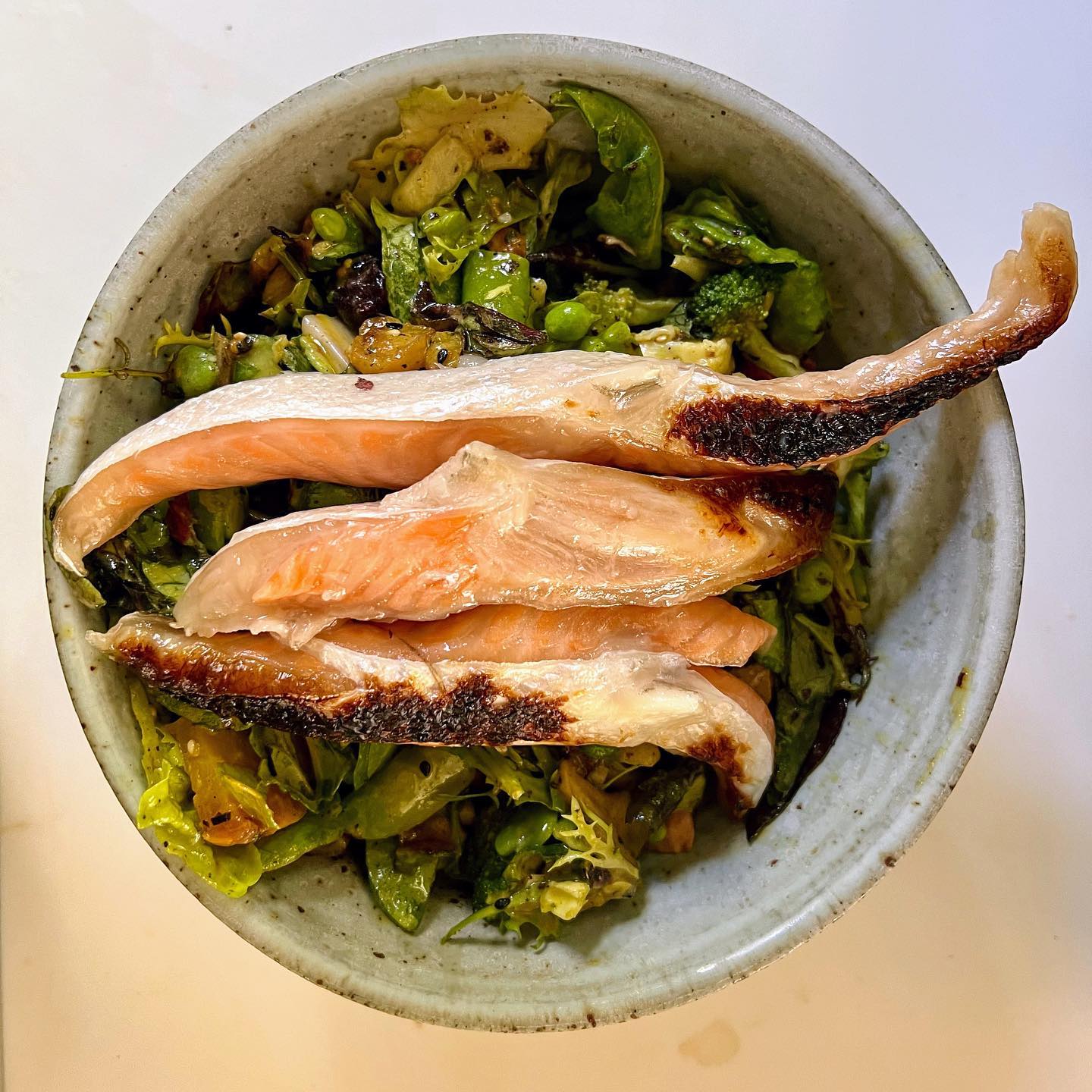
Shio Koji–Marinated Salmon Bellies
Shio koji seasons the fatty belly meat and encourages quick browning. A short roast followed by brief broiling renders some fat without drying the thin strips.
Ingredients
- 1½ lb salmon belly strips, skin on, pin bones and scales removed
- 3 tablespoons gluten-free shio koji
- 1 teaspoon avocado oil, for the rack
Instructions
- Pat the salmon dry and coat lightly and evenly with the shio koji. Cover and refrigerate for 2–6 hours.
- Heat the oven to 425°F. Line a rimmed sheet pan with foil and set a lightly oiled, broiler-safe metal rack over it.
- Wipe excess shio koji from the salmon without rinsing, then blot dry. Arrange the strips skin-side up on the rack, leaving space between them.
- Roast for 6–10 minutes, checking thin strips early. Switch to high broil and cook for 1–3 minutes, watching continuously, until the exposed edges are browned and the skin has blistered in spots.
- Check the thickest flesh from the side with an instant-read thermometer; cook to 145°F. Remove thinner pieces as they finish. Rest for 2–3 minutes before placing over the salad.
Notes
- Shio koji varies in saltiness. Avoid adding salt before cooking; taste a cooked piece first.
- Keep the fish about 6–8 inches from the broiler element. If the koji darkens before the flesh is cooked, return to roasting heat to finish.
Umeboshi–Tahini Dressing
Umeboshi supplies concentrated salt and tart fruit, while tahini gives the dressing enough body to cling to the leaves. Coconut and rice vinegars sharpen the rich salmon without making the salad heavy.
Ingredients
- 1 tablespoon finely mashed, pitted umeboshi plum
- 3 tablespoons well-stirred tahini
- 1 tablespoon coconut vinegar
- 1 tablespoon unseasoned rice vinegar
- 2 tablespoons avocado oil
- 3–5 tablespoons cold water, as needed
- 2 teaspoons gluten-free sesame-and-nori furikake
Instructions
- Mash the umeboshi to a smooth paste, removing any tough skin pieces.
- Whisk the umeboshi with the tahini and both vinegars. The mixture may tighten initially.
- Whisk in 3 tablespoons water a little at a time, then whisk in the avocado oil until smooth.
- Stir in the furikake. Add more water as needed to make a pourable dressing that lightly coats a leaf rather than sitting on it in a thick mound.
- Taste with a piece of lettuce before adjusting. Add a little more umeboshi for salt and tartness, or water to soften an overly assertive dressing.
Notes
- Umeboshi and furikake can both be quite salty; additional salt is usually unnecessary.
- Use coconut vinegar, not coconut milk or cream.
Spring Greens, Broccoli, and Pea Salad
Tender leaves catch the creamy dressing, while briefly blanched broccoli and peas keep the salad crisp and sweet. Thorough drying prevents the dressing from becoming watery.
Ingredients
- 8 oz mixed tender lettuces, including some frisée or other slightly bitter greens
- 8 oz broccoli, cut into small bite-size florets
- 6 oz sugar snap peas, strings removed
- ½ cup shelled green peas, fresh or frozen
- to taste kosher salt, for blanching water
- as needed ice water, for cooling the vegetables
Instructions
- Wash the lettuces, tear into fork-friendly pieces, and spin completely dry.
- Bring a pot of lightly salted water to a boil and prepare a bowl of ice water.
- Blanch the broccoli for about 90 seconds, until bright green and crisp-tender. Transfer to the ice water.
- Blanch the snap peas for 30–45 seconds and the shelled peas for 45–60 seconds, transferring each to the ice water. Frozen peas only need enough time to heat through.
- Drain the vegetables promptly and dry thoroughly on clean towels. Cut the snap peas into short diagonal pieces.
- Combine the vegetables and lettuces in a large bowl. Keep chilled and undressed until the salmon is ready.
Notes
- The broccoli should retain a little bite; soft florets will make the dressed salad feel heavy.
Overall Timing / Workflow
Marinating ahead keeps the active cooking short. The dressing and vegetables can be ready before the salmon goes into the oven, so the leaves stay crisp and the fish arrives warm.
Instructions
- 2–6 hours ahead: Coat the salmon with shio koji and refrigerate.
- About 35 minutes before serving: Heat the oven, make the dressing, and wash and dry the lettuces.
- About 20 minutes before serving: Blanch, chill, and thoroughly dry the broccoli and peas.
- About 15 minutes before serving: Wipe the salmon and begin roasting. Keep the salad and dressing separate.
- Just before serving: Broil the salmon, check doneness, and let it rest briefly while tossing and portioning the salad.
Plating
Wide, shallow bowls support the long belly strips and keep the salad from being compressed. Dressing the vegetables first distributes the umeboshi flavor without hiding the salmon's browned edges.
Instructions
- Toss the greens and vegetables with about two-thirds of the dressing. Add more only until everything is lightly but evenly coated.
- Divide among four wide, shallow bowls.
- Lay the warm salmon belly strips across the top, keeping the browned skin and edges visible. Serve immediately with any remaining dressing alongside.
Leftover Path
Storing the fish, greens, and dressing separately preserves their textures. Salmon belly is rich enough to enjoy cold, avoiding the drying effects of repeated heating.
Instructions
- Refrigerate leftover salmon within 2 hours in a covered container and use within 3 days.
- Store undressed, dry salad vegetables separately and use within 2 days. Dressed lettuce is best eaten the same day.
- Refrigerate the dressing separately for up to 4 days; stir in a splash of water if it thickens.
- Serve leftover salmon cold over freshly dressed greens, or warm gently in a covered dish at 275°F until it reaches 165°F. Flake it over the salad rather than trying to re-crisp the thin strips.