Shio Koji Salmon Belly with Morel Tamari, Dandelion Greens, and Roasted Sunchokes
Shio koji gives rich salmon belly a delicate savory sweetness, with morel tamari adding a woodsy finish. Garlicky dandelion greens bring a welcome bitter edge alongside deeply roasted sunchokes—a simple, satisfying plate for a cool November evening.
By Jonathan Katzman · Cooked and photographed · Recipe updated
Serves: 4 servings
Tags: gluten-free, paleo, dairy-free, nut-free, pescatarian
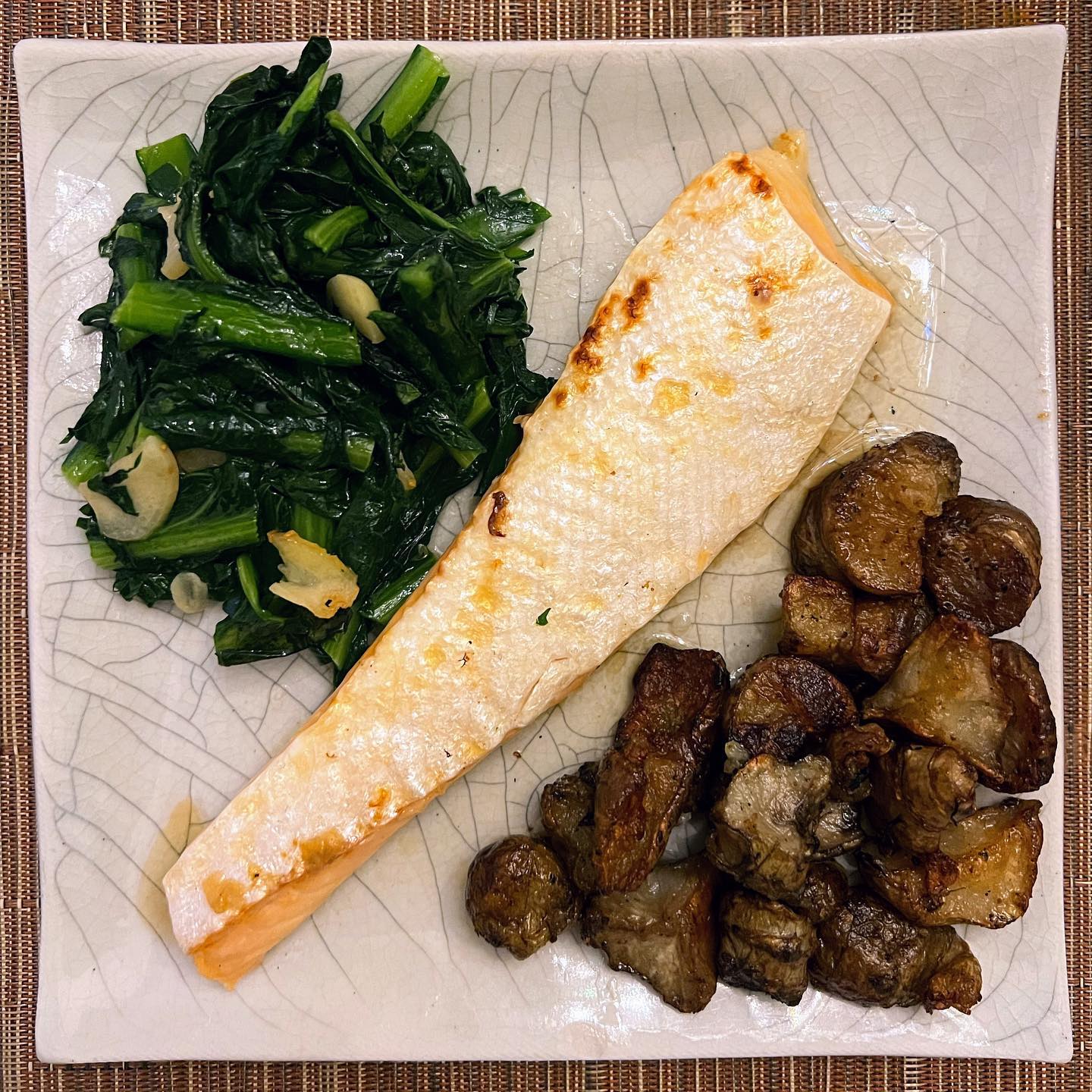
Broiled Shio Koji Salmon Belly with Morel Tamari
Shio koji seasons the fatty belly while encouraging quick browning. Adding the morel tamari after cooking preserves its mushroom aroma and avoids scorching the sauce.
Ingredients
- 1½ lb salmon belly, divided into 4 long portions, pin bones removed
- 3 tablespoons gluten-free shio koji
- 1 teaspoon avocado oil, for the pan
- 2 teaspoons gluten-free morel tamari, preferably Shared Cultures, plus more to taste
Instructions
- Pat the salmon dry and coat all over with the shio koji. Cover and refrigerate for 30–60 minutes.
- Heat the broiler with a rack about 6–8 inches below the element. Lightly oil a foil-lined rimmed baking sheet.
- Gently wipe away excess koji without rinsing. Arrange the salmon in a single layer, skin-side down if skin is attached, with the flesh facing up.
- Broil for 6–12 minutes, depending on thickness, until lightly golden in patches and just cooked through. Start checking thin belly strips after 5 minutes; if they brown before the center is ready, move the pan farther from the element and finish at 375°F. For fully cooked fish, the thickest part should reach 145°F.
- Transfer carefully to plates and drizzle each portion with about ½ teaspoon morel tamari. Taste before adding more; both the marinade and finishing sauce contribute salt.
Notes
- Avoid an overnight marinade for thin belly strips: prolonged contact with shio koji can soften their texture excessively.
- Check the producer's labels for gluten-free status, especially for small-batch fermented sauces.
Dandelion Greens with Elephant Garlic and Shoyu
A brief blanch softens the greens' bitterness without losing their character. Slowly cooked elephant garlic supplies mellow sweetness against the savory shoyu.
Ingredients
- 1½ lb dandelion greens, tough stem ends removed
- 2 large cloves elephant garlic, thinly sliced
- 1½ tablespoons avocado oil
- 2 teaspoons gluten-free shoyu, plus more to taste
- 1 tablespoon water, as needed
Instructions
- Bring a large pot of water to a boil. Cut the greens and tender stems into roughly 3-inch lengths.
- Blanch the greens for 1–2 minutes, until bright green and beginning to soften. Drain, cool briefly under cold water, and gently squeeze out excess moisture.
- Heat the avocado oil and sliced elephant garlic in a wide skillet over medium-low heat. Cook for 3–5 minutes, stirring, until the garlic is tender and just turning pale gold.
- Raise the heat to medium-high, add the drained greens, and toss for 2–3 minutes until hot and glossy. Add a tablespoon of water if the pan becomes dry.
- Add the shoyu and toss for another 30 seconds. Taste before adding more, and serve with the garlic slices distributed throughout.
Notes
- For especially bitter mature greens, extend the blanch to 3 minutes. Keep the final sauté brief so the leaves remain distinct rather than mushy.
Roasted Sunchokes
Roasting skin-on chunks produces browned, slightly chewy edges and creamy centers. Their earthy sweetness balances the bitter greens and savory fish.
Ingredients
- 1½ lb sunchokes
- 2 tablespoons olive oil
- ½ teaspoon kosher salt, plus more to taste
- ¼ teaspoon freshly ground black pepper
Instructions
- Heat the oven to 425°F. Scrub the sunchokes thoroughly, trim damaged spots, and dry well; leave the skins on.
- Cut into roughly 1-inch chunks, halving small knobs and cutting larger ones into thick slices so each piece has a flat surface.
- Toss with the olive oil, salt, and pepper. Spread on a metal baking sheet with a cut side down, leaving space between pieces.
- Roast for 30–40 minutes, turning after about 20 minutes, until deeply browned outside and easily pierced with a knife. Taste and adjust the salt.
Notes
- Avoid crowding the pan; use two sheets if necessary so the sunchokes roast rather than steam.
Overall Timing / Workflow
The salmon marinates while the sunchokes roast, leaving only a short final cooking window for the fish and greens.
Instructions
- 0:00 — Coat the salmon with shio koji and refrigerate. Heat the oven to 425°F.
- 0:05 — Scrub, cut, and season the sunchokes; put them in the oven.
- 0:15 — Wash and cut the dandelion greens, slice the elephant garlic, and bring the blanching water to a boil.
- 0:25 — Turn the sunchokes. Blanch and drain the greens, then cook the garlic gently in the skillet.
- 0:40 — Check the sunchokes; when tender and browned, remove them and switch the oven to broil. Prepare the salmon for broiling.
- 0:45 — Broil the salmon. During its final few minutes, sauté the greens with the garlic and shoyu.
- 0:55 — Plate immediately and finish the salmon with morel tamari.
Notes
- Use doneness rather than the clock: thicker sunchokes may need the full roasting time, while thin salmon belly can cook very quickly.
Plating
Keeping the three components distinct preserves the contrast between silky fish, glossy greens, and crisp-edged roots.
Instructions
- Lay one long salmon portion diagonally across each warm plate.
- Arrange the dandelion greens alongside one edge, keeping the garlic slices visible.
- Pile the roasted sunchokes beside the opposite edge, with several browned cut faces upward.
- Spoon the measured morel tamari over the salmon just before serving, keeping the sunchokes out of any pooled sauce.
Leftover Path
Separate storage lets the sunchokes regain their roasted texture without overcooking the delicate salmon.
Instructions
- Refrigerate the salmon, greens, and sunchokes in separate shallow containers within 2 hours of cooking. Use within 3 days.
- Reheat sunchokes at 425°F for 10–15 minutes, until hot and crisp at the edges.
- Warm the greens in a skillet with a small splash of water.
- Enjoy the salmon cold, flaked beside the warm vegetables, or reheat covered at 275°F with a splash of water until it reaches 165°F. Avoid broiling it a second time.