Shio Koji Salmon Collars and Bellies with Ponzu, Miso Eggplant, and Shichimi Sweet Potatoes
Shio koji brings out the sweetness of salmon collars and bellies, with citrusy ponzu to cut through their richness. Silky miso-glazed eggplant and crisp-edged Japanese sweet potatoes round out the plate, finished with scallions, sesame, and a warm scattering of shichimi.
By Jonathan Katzman · Cooked and photographed · Recipe updated
Serves: 4 servings
Tags: gluten-free, dairy-free, nut-free, pescatarian
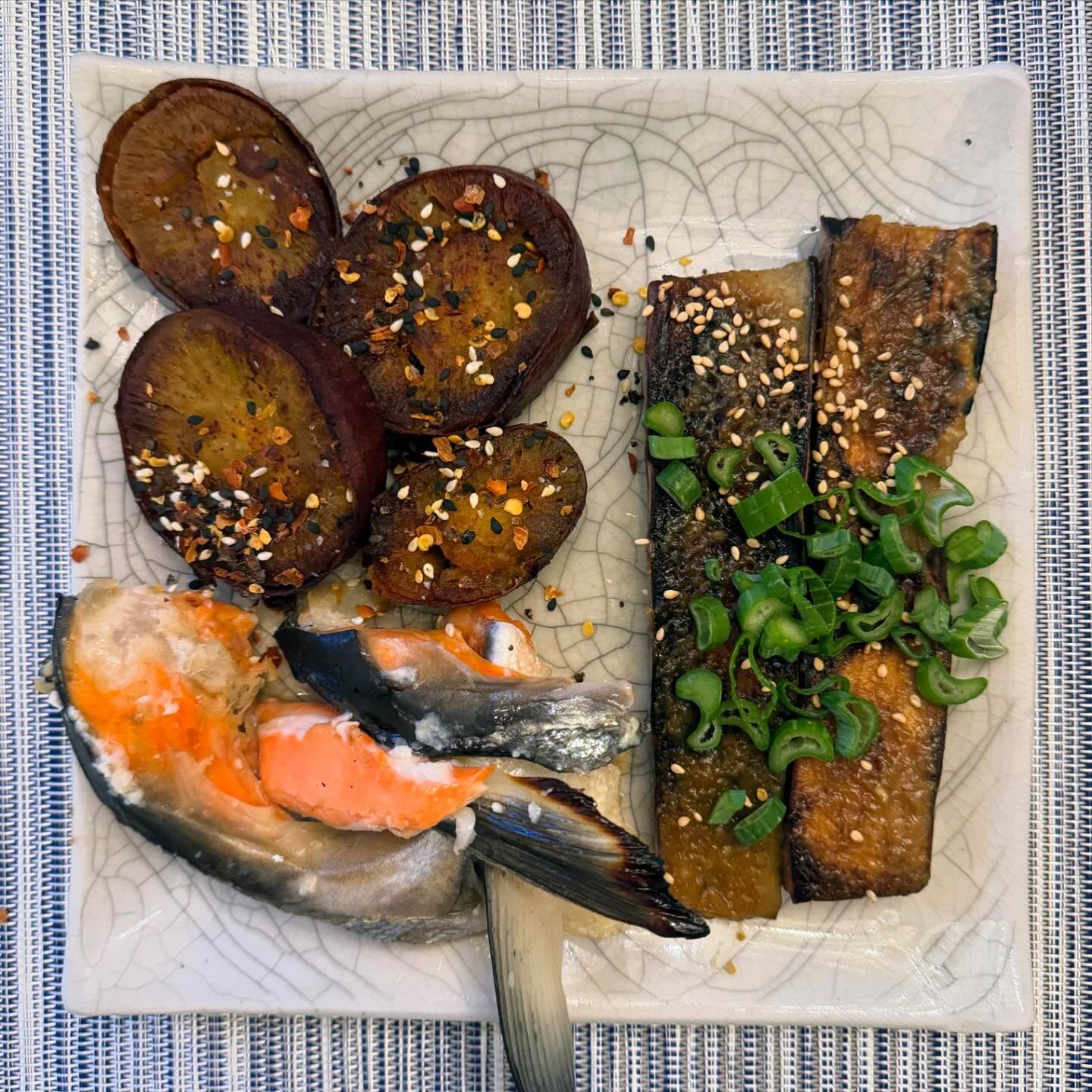
Shio Koji–Roasted Salmon Collars and Bellies
Shio koji seasons the irregular cuts evenly and encourages browning. A short marinade and careful roasting preserve the rich, tender flesh without scorching the koji.
Ingredients
- 2½ lb salmon collars and belly strips, skin on, cleaned and scaled
- ¼ cup gluten-free shio koji
- 2 tsp avocado oil
Instructions
- Pat the salmon dry, checking the collars for any remaining gill tissue or loose scales. Coat with shio koji, cover, and refrigerate for 2–6 hours.
- Heat the oven to 425°F. Line a rimmed baking sheet with foil and lightly coat it with avocado oil.
- Wipe away excess shio koji without rinsing. Arrange the collars in a single layer with their thickest flesh exposed; place belly strips skin-side down alongside them.
- Roast belly strips for approximately 10–15 minutes and collars for 15–22 minutes, removing individual pieces as they finish. The flesh should separate easily from the bones; for fully cooked fish, verify 145°F in the thickest flesh without touching bone.
- If needed, briefly broil the collars for 1–2 minutes to brown the edges, watching constantly because koji burns quickly. Rest for 3 minutes and serve with ponzu.
Notes
- Collar yield varies considerably. Buy enough to provide one substantial collar or equivalent combination of collar and belly per person.
- Do not add salt before cooking; the shio koji supplies it.
Citrus Ponzu
Fresh citrus and rice vinegar balance the fatty salmon, while tamari and dashi keep the sauce savory rather than sharply sour.
Ingredients
- 3 tbsp gluten-free tamari
- 2 tbsp fresh lemon juice
- 1 tbsp fresh lime or yuzu juice
- 1 tbsp unseasoned rice vinegar
- 2 tbsp cooled, unsalted gluten-free kombu-bonito dashi
Instructions
- Whisk together the tamari, citrus juices, rice vinegar, and dashi.
- Taste with a small piece of cooked salmon. Add a splash of water if the sauce tastes too salty or concentrated.
- Serve in small dipping dishes or spoon sparingly over the salmon immediately before eating.
Notes
- Make up to 2 days ahead and refrigerate. Fresh citrus tastes brightest on the first day.
Miso-Glazed Japanese Eggplant
Roasting softens the eggplant before the glaze goes on, so the miso can caramelize quickly without burning. Sesame and fresh scallions contrast with the sweet, savory surface.
Ingredients
- 4 medium Japanese eggplants, about 1½ lb total
- 2 tbsp avocado oil
- 3 tbsp gluten-free white miso
- 1 tbsp gluten-free hon mirin
- 1 tbsp sake
- 2 tsp honey
- 1–2 tsp water, as needed
- 2 scallions, thinly sliced
- 2 tsp toasted white sesame seeds
Instructions
- Heat the oven to 425°F. Halve the eggplants lengthwise and lightly score the flesh in a crosshatch, keeping the skin intact. Cut very long halves crosswise to make manageable pieces.
- Brush the eggplant with avocado oil and arrange cut-side down on a metal baking sheet. Roast for 20–25 minutes, until the flesh yields easily to a knife. Turn cut-side up.
- Meanwhile, combine the miso, mirin, sake, and honey in a small saucepan. Cook over low heat for 2–3 minutes, stirring, until smooth and spreadable. Add a little water if it becomes stiff.
- Spread a thin, even layer of glaze over the tender eggplant. Broil about 6 inches from the heat for 2–4 minutes, until bubbling and browned in patches, not blackened.
- Finish with scallions and toasted sesame seeds.
Notes
- If using larger globe eggplant, cut into thick lengthwise slabs and allow additional roasting time until completely tender.
Fried Japanese Sweet Potatoes with Shichimi Togarashi
Steaming cooks the dense centers without overbrowning the outside. Drying and shallow-frying then create crisp, golden faces around a creamy interior.
Ingredients
- 1½ lb Japanese sweet potatoes, scrubbed, skin on
- ⅓ cup avocado oil, plus more as needed for shallow-frying
- 1 tsp gluten-free shichimi togarashi, or to taste
- 1 tsp toasted mixed black and white sesame seeds
- ¼ tsp fine sea salt, or to taste
Instructions
- Slice the sweet potatoes into rounds about ½ inch thick.
- Steam over simmering water for 12–18 minutes, until a thin knife passes through the centers with only slight resistance. Keep the rounds intact rather than cooking them until crumbly.
- Spread on a rack or tray for 10 minutes to release steam, then blot both faces thoroughly dry.
- Heat a thin layer of avocado oil in a wide skillet over medium heat. Add the rounds in a single layer and fry for 3–5 minutes per side, until deeply golden with crisp edges. Work in batches and adjust the heat if they darken too quickly.
- Drain briefly on a rack. While hot, season with salt, shichimi togarashi, and sesame seeds.
Notes
- Keep cooked batches on a rack in a 225°F oven if needed; avoid stacking, which softens the crust.
- Shichimi varies in heat and salt content, so start lightly and add more at the table.
Overall Timing / Workflow
The eggplant and salmon share one oven temperature, while the potatoes finish on the stovetop. Making the sauces ahead keeps the final cooking focused.
Instructions
- 2–6 hours ahead: Coat the salmon with shio koji and refrigerate.
- 0:00 — Heat the oven to 425°F. Prepare the eggplant and slice the potatoes.
- 0:10 — Start roasting the eggplant and steaming the potatoes. Mix the ponzu and cook the miso glaze.
- 0:25 — Spread the steamed potatoes out to dry. Check the eggplant and remove it once tender.
- 0:30 — Roast the salmon, keeping collars and belly strips easy to remove separately. Begin frying the dried potato rounds.
- 0:45 — Check the salmon for doneness and finish frying the potatoes. Glaze the eggplant.
- Once the fish is out, switch to broil and caramelize the eggplant glaze. Garnish and serve immediately.
Notes
- Use a separate tray for the eggplant so it can be broiled while the salmon rests.
Plating
Keeping the components in separate clusters preserves the crisp potatoes and lets diners control how much ponzu reaches the fish.
Instructions
- Arrange a collar and several belly pieces on each plate, leaving the bones visible and accessible.
- Place the glazed eggplant alongside, with the scallions and sesame concentrated over its surface.
- Overlap the sweet potato rounds in a separate cluster and add a final light pinch of shichimi if desired.
- Serve ponzu in small dishes on the side and provide a small bowl for fish bones.
Leftover Path
Removing the salmon bones while the fish is still easy to handle makes leftovers more useful. Separate storage protects the potatoes from moisture and keeps the ponzu bright.
Instructions
- Refrigerate all cooked components within 2 hours. Pick leftover salmon from the bones and store separately from the vegetables and ponzu.
- Use the salmon within 2 days, cold in a cucumber-and-scallion salad with a little ponzu, or gently reheated covered until hot throughout.
- Reheat potatoes on a rack in a 400°F oven for 8–12 minutes, until hot and crisp-edged.
- Warm eggplant in a 350°F oven for 10–15 minutes, shielding the glaze with foil if it starts to darken. Use cooked vegetables within 3–4 days.
Notes
- Discard ponzu that has been used as a communal dipping sauce; refrigerate only the untouched portion.