Shio Koji Salmon Collars with Swiss Chard and Spiced Delicata Squash
Shio koji gives salmon collars a savory sweetness and helps their rich flesh brown beautifully. Tender Swiss chard and roasted delicata squash round out the plate, with warm spice on the squash and a little lemon to brighten the fish.
By Jonathan Katzman · Cooked and photographed · Recipe updated
Serves: 4 servings
Tags: dairy-free, pescatarian
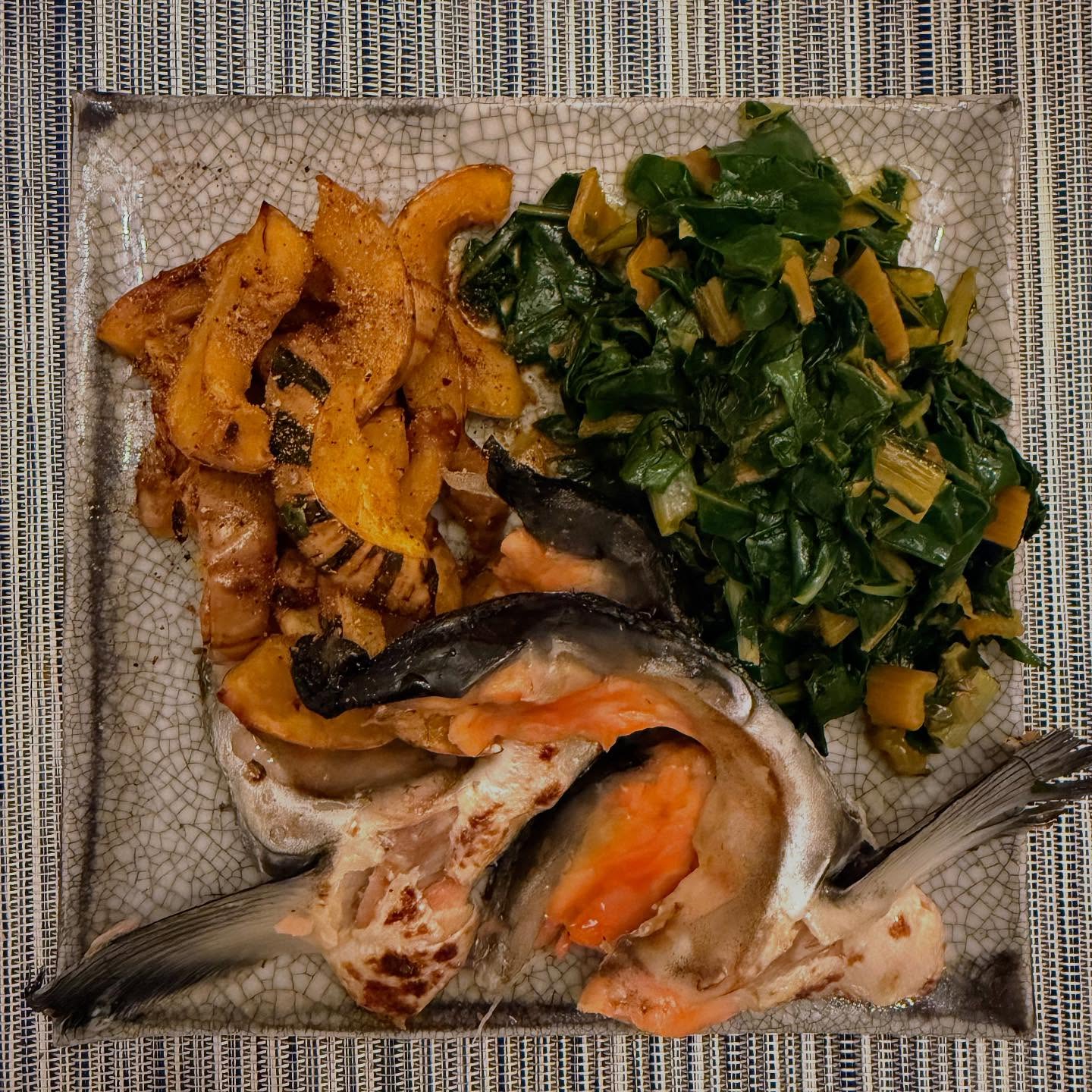
Shio Koji–Marinated Salmon Collars
Shio koji seasons the irregular cuts evenly and encourages browning. Moderate oven heat cooks the thick pockets of flesh before a short broil colors the surface.
Ingredients
- 4 large salmon collars, about 3–4 lb total, cleaned and scaled
- 1/3 cup shio koji
- 2 tsp avocado oil
- 1 lemon, cut into wedges, for serving
Instructions
- Check the collars for remaining scales and bone fragments, then pat dry. Coat the flesh and skin with shio koji, place in a covered nonreactive container, and refrigerate for 4–8 hours.
- Heat the oven to 425°F. Line a rimmed baking sheet with foil and brush lightly with the avocado oil.
- Wipe off excess shio koji without rinsing. Arrange the collars in a single layer with the exposed flesh facing up.
- Roast for 12–18 minutes, depending on thickness. Switch to the broiler and cook for another 1–3 minutes, watching closely because koji browns quickly.
- Check the thickest flesh away from the bone with an instant-read thermometer; it should reach 145°F and separate easily into moist flakes. If the surface browns before the interior is done, return to regular oven heat and loosely shield the browned areas with foil.
- Rest for 3 minutes and serve with lemon wedges.
Notes
- Collars vary considerably in size; buy enough for one generous collar or two small pieces per person.
- Do not add salt before cooking: shio koji usually supplies enough.
Garlicky Swiss Chard
Cooking the stems before the leaves keeps both tender without turning the greens mushy. A small splash of lemon balances the chard’s earthy flavor and the richness of the salmon.
Ingredients
- 2 large bunches Swiss chard, about 1 1/2 lb
- 1 tbsp avocado oil
- 2 cloves garlic, thinly sliced
- 2 tbsp water
- 2 tsp lemon juice
- 1/4 tsp fine sea salt, plus more to taste
Instructions
- Wash the chard thoroughly. Separate the stems from the leaves, cut the stems into 1/2-inch pieces, and roughly chop the leaves.
- Heat the avocado oil in a wide skillet over medium heat. Add the stems and salt; cook for 4–5 minutes, stirring, until beginning to soften.
- Add the garlic and stir for 30 seconds. Add the leaves in batches, turning them as they wilt.
- Add the water, cover, and cook for 2–3 minutes, until the stems are tender and the leaves remain deep green.
- Uncover and let excess liquid evaporate. Finish with lemon juice and adjust the salt.
Notes
- Keep the finished chard moist and glossy, but drain off any standing liquid before plating.
Roasted Delicata Squash with Noma Projects Spice Mix
Thin, skin-on crescents develop browned edges while keeping a creamy center. Adding most of the spice near the end preserves its aroma and limits scorching.
Ingredients
- 2 medium delicata squash, about 2 lb total
- 2 tbsp olive oil
- 2 tsp Noma Projects spice mix, divided
- 1/4 tsp fine sea salt, adjusted to the saltiness of the spice mix
Instructions
- Heat the oven to 425°F. Scrub the squash, halve lengthwise, scoop out the seeds, and slice into 1/2-inch crescents.
- Toss with the olive oil and salt, using less salt if the spice mix is already salty. Spread on a large rimmed baking sheet in a single layer.
- Roast for 15 minutes, then turn the slices. Continue roasting for 8–12 minutes, until tender with browned edges.
- Sprinkle with 1 teaspoon of the spice mix, toss gently, and roast for another 2–3 minutes.
- Taste and add the remaining spice mix as desired before serving.
Notes
- Check the blend’s ingredient and allergen label if dietary restrictions matter; its exact formulation is not specified here.
- For a very finely ground or easily scorched blend, add all of it after roasting while the squash is still hot.
Overall Timing / Workflow
The squash gets a head start, while the chard cooks during the salmon’s final oven time. This keeps the fish freshly cooked and the greens vibrant.
Instructions
- 4–8 hours ahead: Coat the salmon collars with shio koji and refrigerate.
- 0:00 — Heat the oven to 425°F and prepare the squash.
- 0:10 — Put the squash in the oven. Wash and chop the chard, then prepare the salmon tray.
- 0:25 — Turn the squash and put the salmon on a separate rack in the oven.
- 0:30 — Start cooking the chard. Finish seasoning the squash and remove it once tender and browned.
- 0:40 — Check the salmon, then broil briefly once nearly cooked. Remove the squash before broiling if it is still in the oven.
- 0:45 — Rest the salmon briefly, finish the chard with lemon, and plate everything hot. Allow extra time for unusually thick collars.
Plating
Keeping the three components distinct preserves the squash’s browned edges and makes the collars easy to pick apart.
Instructions
- Place a salmon collar toward the front of each warm plate, with the exposed flesh accessible.
- Arrange the squash crescents to one side and pile the chard beside them, leaving excess cooking liquid behind.
- Serve lemon wedges alongside and provide a small bowl for bones and fins.
Leftover Path
Picking the fish while it is still slightly warm makes it easier to find the small bones. Gentle reheating protects its rich, delicate texture.
Instructions
- Remove leftover salmon flesh from the collars, carefully checking for bones. Refrigerate the fish, squash, and chard in separate covered containers within 2 hours.
- Use refrigerated leftovers within 3 days. Reheat the squash in a 400°F oven until hot and warm the chard in a small saucepan.
- Warm the salmon gently, covered, with a splash of water until it reaches 165°F, or serve it cold with the vegetables and fresh lemon.