Shio Koji Sea Bass Collars with Smashed Fingerling Potatoes and Ratatouille
Shio koji gives sea bass collars savory depth and beautifully browned skin while the meat stays succulent around the bones. Crisp-edged fingerlings and a chunky summer ratatouille with fresh basil make this a generous July dinner.
By Jonathan Katzman · Cooked and photographed · Recipe updated
Serves: 4 servings
Tags: gluten-free, nut-free, pescatarian
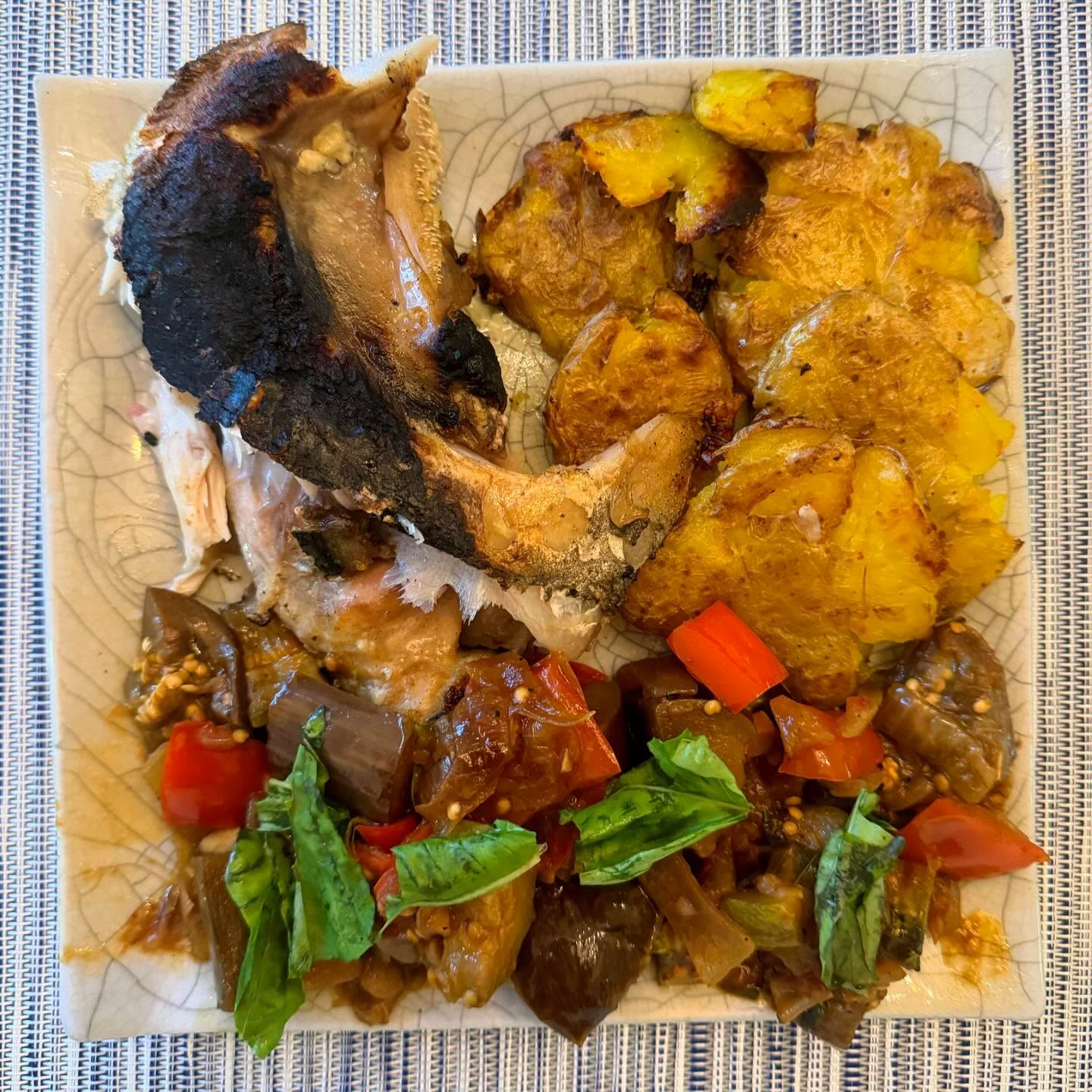
Shio Koji–Marinated, Pan-Seared and Roasted Sea Bass Collars
Shio koji seasons the irregular collar meat and encourages browning. A controlled sear followed by roasting cooks the thick sections without drying out the thinner edges.
Ingredients
- 3–4 lb meaty sea bass collars, scaled and cleaned, portioned by the fishmonger for four
- 5 tbsp gluten-free shio koji
- 2 tbsp ghee
Instructions
- Pat the collars dry and check for any remaining scales or gill material. Coat the skin and flesh thinly with shio koji, cover, and refrigerate for 4–8 hours.
- Heat the oven to 425°F. Scrape off the excess marinade and blot the collars thoroughly dry; do not add salt before cooking.
- Heat the ghee in a large ovenproof skillet over medium heat. Set the collars broad skin-side down, working in batches if necessary. Sear for 3–5 minutes, adjusting their position with tongs so the curved skin makes contact. Aim for deep brown rather than black; lower the heat if the koji darkens too quickly.
- Turn the collars flesh-side down for 1 minute, then arrange skin-side up in the skillet or on a roasting tray. Roast for 10–22 minutes, checking smaller pieces early.
- Probe the thickest flesh without touching bone. Cook to 145°F; the flesh should be opaque and release readily in moist flakes. Rest for 3 minutes and spoon over any clear roasting juices.
Notes
- Collars vary greatly in bone-to-meat ratio. Ask for enough to yield roughly 5–6 ounces of cooked fish per person.
- Keep the pan heat moderate: residual koji sugars can scorch before the thick collar meat cooks through.
Crisp Smashed Fingerling Potatoes
Boiling makes the centers creamy, while flattening exposes rough edges that turn crisp in a hot oven.
Ingredients
- 1½ lb large fingerling potatoes
- 3 tbsp olive oil, divided
- 1 tbsp kosher salt for the boiling water
- ½ tsp fine sea salt, plus more to taste
- ¼ tsp freshly ground black pepper
Instructions
- Heat the oven to 425°F. Cover the potatoes with cold water by 1 inch, add the kosher salt, and bring to a boil. Simmer for 15–20 minutes, until a knife passes through easily.
- Drain well and let steam-dry for 5 minutes. Coat a large metal sheet pan with 1 tablespoon olive oil.
- Arrange the potatoes on the pan and gently press each with the bottom of a glass to about ½ inch thick. Keep the broken edges attached where possible.
- Drizzle with the remaining olive oil and season with sea salt and pepper. Roast for 30–40 minutes, turning carefully after about 20 minutes, until deeply golden with crisp edges.
Notes
- Leave space between the potatoes so they roast rather than steam. If the oven is crowded with fish, give the potatoes a few extra minutes after the fish comes out.
Chunky Summer Ratatouille with Basil
Gentle cooking turns eggplant silky while larger pieces of pepper and zucchini retain their shape. Reduced tomato juices bind the vegetables without making a soupy sauce.
Ingredients
- 1 lb eggplant, cut into 1-inch chunks
- 2 medium zucchini, cut into ¾-inch pieces
- 1 large red bell pepper, cut into 1-inch pieces
- 1 medium yellow onion, cut into chunky pieces
- 1 lb ripe tomatoes, cored and chopped
- 3 cloves garlic, thinly sliced
- ¼ cup olive oil, divided
- 3 sprigs thyme
- 1 tsp fine sea salt, divided, plus more to taste
- ¼ tsp freshly ground black pepper
- 1–2 tsp red wine vinegar, to taste
- ½ cup loosely packed basil leaves, torn just before serving
Instructions
- Warm 2 tablespoons olive oil in a wide, heavy pot over medium-low heat. Add the onion, pepper, and ¼ teaspoon salt. Cook gently for 8–10 minutes, stirring occasionally, until softened without substantial browning.
- Add the garlic and cook for 1 minute. Stir in the eggplant, remaining olive oil, and ¼ teaspoon salt. Cover and cook for 10 minutes, stirring twice; add a tablespoon of water if the bottom begins to catch.
- Add the tomatoes, thyme, remaining ½ teaspoon salt, and black pepper. Simmer partially covered for 10 minutes, then fold in the zucchini.
- Cook uncovered for another 12–18 minutes, stirring gently, until the eggplant is silky and the zucchini is tender but intact. The tomato juices should lightly coat the vegetables; reduce a little longer if watery.
- Remove the thyme stems. Add 1 teaspoon vinegar, taste, and adjust the salt and acidity. Fold in half the basil off heat and reserve the rest for serving.
Notes
- Make this up to two days ahead; reheat gently and add the basil just before serving.
- Use vinegar sparingly with very tart tomatoes. The finish should be bright, not sharply sour.
Overall Timing / Workflow
The ratatouille can wait while the potatoes crisp, leaving only the fish to cook at the last minute.
Instructions
- 4–8 hours ahead: Coat the collars with shio koji and refrigerate.
- 0:00 - Heat the oven to 425°F, start the potatoes in water, and chop the ratatouille vegetables.
- 0:15 - Begin cooking the ratatouille. Drain, steam-dry, and smash the potatoes as soon as they are tender.
- 0:25 - Put the potatoes in the oven. Continue the ratatouille, adding zucchini toward the end.
- 0:45 - Turn the potatoes. Scrape and dry the collars, then begin searing them.
- 0:55 - Transfer the collars to the oven. Finish the ratatouille and hold it over very low heat.
- 1:05 onward - Check fish temperature and potato crispness. Rest the cooked collars briefly, finish the ratatouille with basil, and serve.
Notes
- Allow extra time for unusually large collars or batch searing. Use separate oven racks for the fish and potatoes.
Plating
Keeping the juicy vegetables beside the potatoes and fish preserves the crisp surfaces.
Instructions
- Place a collar or a generous section of collar on each warm plate, with the browned skin facing up.
- Arrange the smashed potatoes alongside and spoon the ratatouille into a separate area of the plate.
- Finish the vegetables with the reserved torn basil. Spoon any fish roasting juices around the flesh rather than over the crisp potatoes.
- Provide a small plate for bones and caution diners about sharp fin and collar bones.
Leftover Path
Picking the fish while it is still easy to handle simplifies reheating, while separate storage keeps the potatoes from absorbing vegetable juices.
Instructions
- Remove leftover fish from the bones, checking carefully for small bones. Refrigerate the fish, potatoes, and ratatouille in separate shallow containers within 2 hours.
- Use the fish within 2 days and the vegetables and potatoes within 3–4 days.
- Recrisp the potatoes in a 425°F oven for 10–15 minutes. Reheat ratatouille in a covered saucepan, adding a splash of water if needed.
- For a next-day meal, fold the flaked fish into hot ratatouille and heat gently until the fish reaches 165°F. Serve with the recrisped potatoes.