Six-Course Seafood Supper with Spring Fruit, Miso Butter and Chilled Cacao
A little seafood, a few good leftovers, and six small courses: bright anchovies with apricot and cucumber, deeply browned mushrooms, crisp rockfish tacos, miso-buttered black cod and sesame tuna with tart rhubarb. Chilled cacao and blueberries finish the meal with just enough sweetness. It’s a late-spring supper built around contrasts—cool and crisp, rich and briny, smoky and fresh.
By Jonathan Katzman · Cooked and photographed · Recipe updated
Serves: 2 servings, as a six-course meal
Tags: gluten-free, nut-free, pescatarian
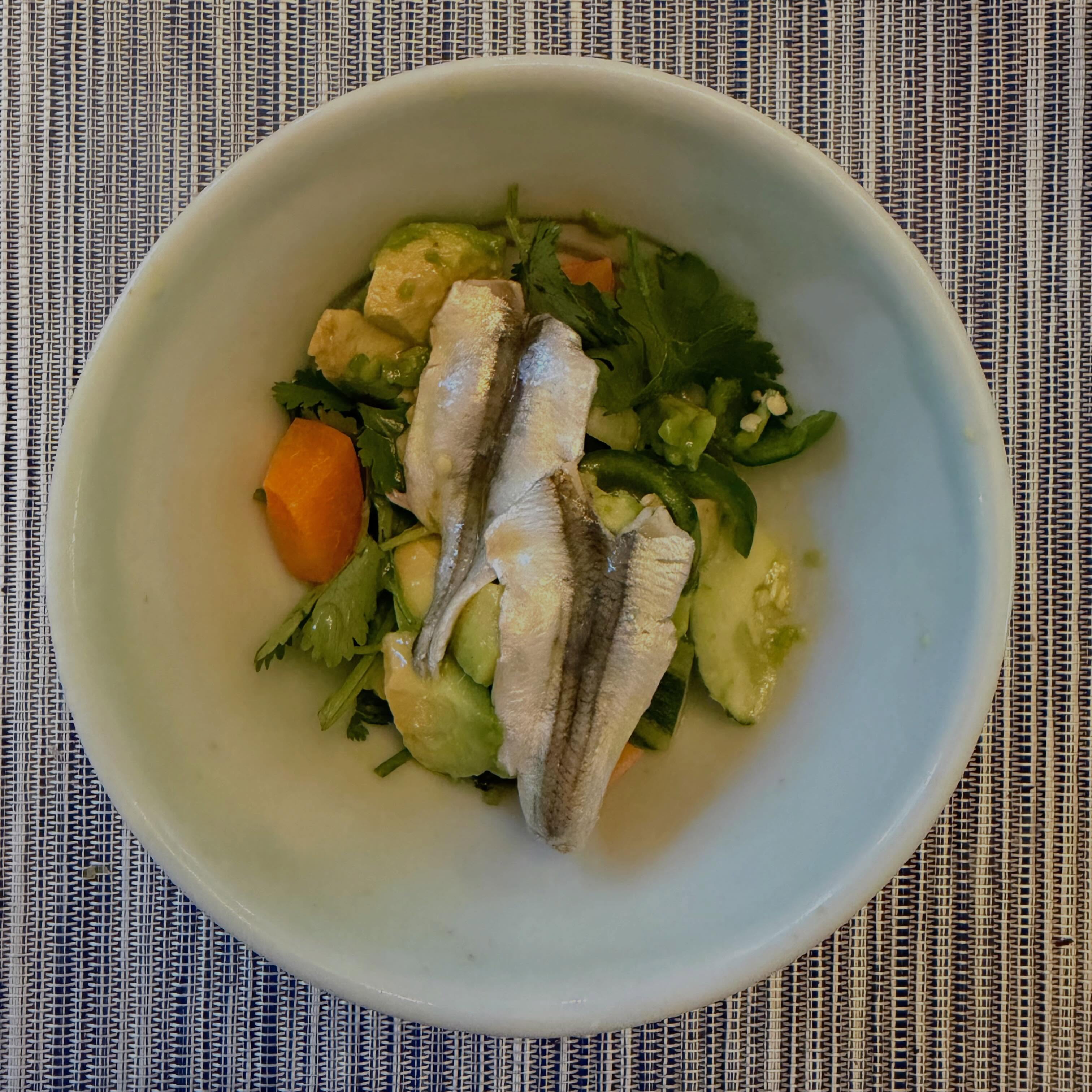
Marinated Anchovies over Serpent Cucumber, Avocado and Apricot Salad
Sweet-tart apricot and creamy avocado soften the anchovies' briny acidity, while cucumber and jalapeño keep the opening course crisp.
Ingredients
- 4–6 ready-to-eat white marinated anchovy fillets, drained
- 150 g serpent cucumber, thinly sliced on the diagonal
- 1/2 large avocado, cut into chunks
- 1 ripe but firm apricot, cut into small wedges
- 1/2 jalapeño, thinly sliced, seeds removed to taste
- 1/4 cup cilantro leaves and tender stems
- 2 tsp extra-virgin olive oil
- 1–2 tsp lime juice
- to taste fine sea salt
Instructions
- Toss the cucumber, apricot and jalapeño with the olive oil and 1 teaspoon lime juice.
- Fold in the avocado and cilantro without crushing them. Taste before adding salt; the anchovies will provide much of the seasoning.
- Divide between two small bowls and lay the anchovies silver-side up over the salad. Add the remaining lime juice only if needed and serve immediately.
Notes
- Use refrigerated, vinegar-marinated white anchovies rather than intensely salty brown anchovies. Follow the package's storage and use-by directions.
Seared Lion's Mane with Cep Tamari and Furikake
Pressing out moisture gives lion's mane a browned, almost seafood-like texture. Cep tamari reinforces its savory character without burying it in sauce.
Ingredients
- 150 g lion's mane mushrooms
- 2 tsp avocado oil
- 1–2 tsp verified gluten-free cep tamari
- 1 tbsp water
- 1/2 tsp unseasoned rice vinegar
- 1 tsp gluten-free sesame-and-nori furikake
Instructions
- Trim the tough base and tear the mushrooms into broad, roughly 1-inch-thick pieces.
- Set a heavy skillet over medium heat. Add the mushrooms dry and press gently with a spatula for 4–5 minutes, turning once, until they release moisture and begin to flatten.
- Add the avocado oil and increase the heat to medium-high. Brown for 3–4 minutes per side, adjusting the heat so the fine edges toast rather than burn.
- Mix 1 teaspoon cep tamari with the water and vinegar. Lower the heat, add the mixture and turn the mushrooms until lightly glazed, about 30 seconds. Taste before adding more tamari.
- Transfer to two small plates and sprinkle with furikake just before serving.
Notes
- If cep tamari is unavailable, steep a small pinch of porcini powder in gluten-free tamari and use sparingly.
Lightly Crisped Rockfish
A thin cassava coating gives the fish golden edges while leaving room for the crema, avocado and chile oil.
Ingredients
- 120 g boneless, skinless rockfish fillet
- 1 tbsp cassava flour
- 1/8 tsp fine sea salt
- 1 pinch ground cumin
- 1 tbsp ghee
- 2 small lime wedges, for serving
Instructions
- Pat the fish thoroughly dry and cut into four short strips. Mix the cassava flour, salt and cumin on a plate.
- Heat the ghee in a small skillet over medium-high heat. Lightly dredge the fish and shake off all loose flour.
- Pan-fry for 2–3 minutes on the first side and 1–3 minutes on the second, until golden, opaque and 145°F at the thickest point.
- Transfer to a rack or paper towel and serve promptly with the warm tortillas and toppings.
Notes
- For already-cooked leftover rockfish, skip the dredge and warm it covered with a splash of water until it reaches 165°F; do not pan-fry it as though raw.
Warm Blue-Corn Tortillas
A small, warm corn tortilla provides a flexible base without making this tasting-menu course too heavy.
Ingredients
- 2 small gluten-free blue-corn tortillas
Instructions
- Warm the tortillas in a dry skillet over medium-high heat for 20–30 seconds per side, until pliable with a few toasted spots.
- Wrap in a clean towel and fill within a few minutes.
Cilantro Crema
Tangy dairy and lime cool the chile heat. Finely chopped cilantro keeps the crema pale and flecked rather than turning it into a heavy green purée.
Ingredients
- 3 tbsp sour cream
- 1 tbsp finely chopped cilantro
- 1 tsp lime juice
- 1–2 tsp water
- 1 pinch fine sea salt
Instructions
- Stir together the sour cream, cilantro, lime juice and salt.
- Add water a little at a time until the crema falls from a spoon in a thick ribbon. Refrigerate until needed.
Simple Guacamole
Keeping the guacamole chunky and lime-forward adds richness without duplicating the crema's smooth texture.
Ingredients
- 1/2 large avocado
- 1–2 tsp lime juice
- 1 tsp finely minced shallot
- 1 tsp finely chopped cilantro
- 1 pinch fine sea salt
Instructions
- Mash the avocado roughly with 1 teaspoon lime juice, the shallot, cilantro and salt.
- Taste and add more lime if needed. Cover directly on the surface and refrigerate until the taco course.
Roasted Brassicas and Onion
Deeply browned florets give the taco plate a substantial, smoky side. A final squeeze of lime keeps the roasted flavors lively.
Ingredients
- 100 g broccoli, cut into small florets with sliced stems
- 100 g cauliflower, cut into small florets
- 1/4 medium yellow onion, cut into wedges
- 2 tsp avocado oil
- 1/8 tsp fine sea salt
- 1 tsp lime juice
- 2 tsp Seed Salsa Macha, from the separate component
Instructions
- Heat the oven to 425°F. Dry the vegetables well, then toss with the avocado oil and salt.
- Spread on a metal sheet pan with cut surfaces against the pan. Roast for 22–28 minutes, turning once, until tender with dark brown edges.
- Toss with lime juice and salsa macha immediately before serving beside the tacos.
Notes
- For previously roasted vegetables, re-crisp in a 425°F oven for 8–12 minutes, heating leftovers to 165°F before dressing.
Seed Salsa Macha
Toasted chiles, sesame and pepitas supply smoky heat and crunch. A little vinegar keeps the oil-based salsa from tasting flat.
Ingredients
- 3 tbsp avocado oil
- 1 small garlic clove, thinly sliced
- 1 dried guajillo chile, stemmed, seeded and cut into small pieces
- 1/2–1 dried chile de árbol, stemmed
- 1 tbsp raw pepitas
- 1 tsp sesame seeds
- 1 tsp apple cider vinegar
- 1/8 tsp fine sea salt
Instructions
- Combine the oil and garlic in a small saucepan over medium-low heat. Cook until the garlic is pale gold, about 2 minutes, then lift it into a heatproof bowl.
- Add the chiles to the oil and stir for 15–30 seconds, just until fragrant. Transfer them to the bowl before they darken.
- Toast the pepitas in the oil for about 1 minute, then add the sesame seeds for the final 20 seconds. Pour everything into the bowl and cool.
- Pulse the cooled mixture briefly in a small processor, or finely chop the solids and return them to the oil. Stir in the vinegar and salt.
- Use about 2 teaspoons on the vegetables and a few drops on each taco, adding more to taste.
Notes
- Makes more than this meal needs. Refrigerate promptly and use within 4 days, or freeze small portions.
Chanterelle Miso Butter
Soft butter carries the fermented mushroom flavor across both the cod and corn. Adding it gently preserves its creamy texture and avoids scorching the miso.
Ingredients
- 2 tbsp unsalted butter, softened
- 2 tsp verified gluten-free Shared Cultures chanterelle miso
- 1/2 tsp lemon juice
Instructions
- Mash the softened butter and chanterelle miso until evenly blended, then work in the lemon juice.
- Divide into two equal portions: one for the collar meat and one for the corn.
- Refrigerate if making ahead, then soften briefly before using.
Notes
- Miso salt levels vary; do not salt the finished fish or corn until after adding the butter.
Roasted Black Cod Collar
Collar meat is rich and gelatinous, making it forgiving to roast and especially good picked into large flakes over sweet corn.
Ingredients
- 1 large black cod collar, about 300–400 g, cleaned
- 1 tsp avocado oil
- 1 portion Chanterelle Miso Butter, half the prepared batch
- 1 scallion, green part finely sliced
Instructions
- Heat the oven to 425°F. Pat the collar dry, rub lightly with avocado oil and place skin-side down in a small roasting dish.
- Roast for 15–22 minutes, depending on its thickness, until the meat separates easily from the bones and reaches 145°F in the thickest flesh without touching bone.
- Rest for 3 minutes, then carefully pick the meat into large flakes, removing bones, fin rays and any tough skin.
- Fold the warm meat gently with its portion of miso butter. Serve over the corn and finish with sliced scallion.
Notes
- For cooked leftover collar meat, check meticulously for bones, add a splash of water and reheat covered to 165°F. Fold in the miso butter off heat.
Pan-Roasted Corn with Miso Butter
Letting the kernels sit against the hot pan creates browned sweetness. Miso butter then coats the corn without turning it into a heavy sauce.
Ingredients
- 1 cup corn kernels, cut from 1–2 ears
- 1 tsp avocado oil
- 1 portion Chanterelle Miso Butter, half the prepared batch
- 1–2 tsp water, as needed
Instructions
- Heat a skillet over medium-high heat and add the avocado oil. Add the dry corn kernels in a single layer.
- Leave undisturbed for 2 minutes, then toss and continue cooking for 4–6 minutes until tender with scattered brown patches.
- Remove from the heat and stir in the miso butter. Add a teaspoon or two of water if needed to make a glossy coating.
- Divide between two warm shallow bowls and top with the black cod.
Notes
- Thawed corn works well; blot it dry before cooking so it browns rather than steams.
Sesame-Crusted Ahi Tuna
Black and white sesame give the tuna a savory, crisp perimeter. Thin slices make a modest portion feel complete with the concentrated rhubarb sauce.
Ingredients
- 120–150 g ahi tuna steak, about 1 inch thick
- 1 tsp gluten-free tamari
- 1 tbsp white sesame seeds
- 1 tbsp black sesame seeds
- 2 tsp avocado oil
Instructions
- Pat the tuna dry and brush lightly with tamari. Mix the sesame seeds on a plate and press them onto both broad faces and the edges.
- Heat the avocado oil in a small skillet over medium heat. Sear for 2–3 minutes per broad side, then briefly turn onto the edges.
- Lower the heat and continue cooking, turning as needed, until the center reaches 145°F. If the sesame is browning too quickly, finish in a 325°F oven and check frequently.
- Rest for 3 minutes, then slice across the grain into 1/4-inch slices with a very sharp knife. Spoon a little rhubarb tamari around and over the slices.
Notes
- This version is cooked through; rely on temperature rather than flesh color to judge doneness.
- For leftover cooked tuna, serve thinly sliced and chilled rather than searing it a second time.
Rhubarb Tamari
Rhubarb supplies a clean, fruity tartness that cuts through tuna and sesame. Diluting the tamari before reducing keeps the sauce savory rather than aggressively salty.
Ingredients
- 60 g rhubarb stalk, thinly sliced; leaves discarded
- 3 tbsp water
- 2 tsp gluten-free tamari
- 1 tsp honey
- 1/2 tsp finely grated ginger
- 1/2 tsp unseasoned rice vinegar
Instructions
- Combine the rhubarb, water, tamari, honey and ginger in a small saucepan. Cover and simmer gently for 6–8 minutes, until the rhubarb collapses.
- Press through a fine sieve, discarding the fibrous solids. Return the liquid to the pan and simmer briefly only if needed; it should lightly coat a spoon but remain pourable.
- Stir in the rice vinegar. Taste and balance with a few drops of water if salty, or a little more honey if sharply sour.
- Cool to room temperature before serving with the tuna.
Notes
- Aim for a tart seasoning sauce, not a sweet glaze. Yield is approximately 2–3 tablespoons.
Chilled Ceremonial Cacao Pots with Blueberries
Whole cacao paste contains enough cacao butter to set a small cream-based pot without eggs or starch. Blueberries bring fresh acidity to the dense, gently bitter chocolate.
Ingredients
- 40 g unsweetened ceremonial cacao paste, finely chopped
- 120 ml heavy cream
- 30 ml water
- 2 tsp honey
- 1 small pinch fine sea salt
- 1/2 cup fresh blueberries, washed and dried
Instructions
- Put the chopped cacao in a heatproof bowl.
- Heat the cream, water, honey and salt until steaming with small bubbles at the edge; do not boil hard.
- Pour over the cacao and let stand for 1 minute. Stir from the center outward until smooth and glossy. If needed, use an immersion blender with its head submerged to avoid incorporating excess air.
- Divide between two small cups. Cool briefly, cover and refrigerate for at least 2 hours, until thick and spoonable.
- Top with blueberries just before serving. Let the cups stand for 5–10 minutes if very firm straight from the refrigerator.
Notes
- Use whole cacao paste, not defatted cacao powder; the setting behavior is different.
Overall Timing / Workflow
Make the cold elements and sauces first, then cook each hot course close to service. Small portions and reusable pans keep a six-course dinner manageable.
Instructions
- At least 2 hours ahead: make the cacao pots and refrigerate. Prepare the rhubarb tamari, salsa macha and miso butter. Make the crema and refrigerate.
- About 45 minutes before the first course: heat the oven to 425°F, cut the roasting vegetables, trim the mushrooms, cut the corn and prepare the raw fish on a separate board. Keep seafood refrigerated until cooking.
- Roast the brassicas and onion. Meanwhile, prepare the cucumber, apricot and jalapeño; leave the avocado uncut until shortly before serving.
- Just before service: make the guacamole, finish the anchovy salad and serve the first course. Keep the crema and guacamole refrigerated until the taco course.
- Cook and serve the lion's mane next. Return the vegetables to the oven briefly if needed, then pan-fry the rockfish, warm the tortillas and serve the tacos with the roasted vegetables.
- While eating the taco course, roast the collar. Cook the corn near the end of the roasting time, pick the collar meat and finish both with their portions of miso butter.
- After the cod course, cook and slice the tuna and serve with the prepared rhubarb tamari. Finish with the chilled cacao pots and blueberries.
- If working with cooked leftovers, use their original cooking dates to judge storage life; reworking them does not restart the clock. Reheat only the portions being served.
Notes
- Keep cold seafood at 40°F or below and refrigerate perishable foods within 2 hours of leaving refrigeration.
Plating
Small dishes and restrained saucing preserve the six-course rhythm and let the different seafood textures stay distinct.
Instructions
- Use small cool bowls for the anchovy salad, keeping the fruit and cucumber visible beneath the silver fillets.
- Arrange the lion's mane in a loose mound on small plates, showing its browned faces; finish with furikake at the table.
- Place one warm tortilla on each plate, add half the rockfish, a spoonful of crema and a small scoop of guacamole. Add a few drops of salsa macha and serve the roasted vegetables alongside.
- Spoon corn into the center of two warm shallow bowls. Top with large, carefully deboned cod flakes and scallion, leaving some browned corn exposed.
- Fan the tuna slices onto small plates and use the rhubarb tamari sparingly so the sesame crust stays crisp.
- Serve the cacao in its chilled cups with blueberries gathered to one side.
Leftover Path
Separate storage protects crisp textures and makes the remaining sauces useful without repeatedly reheating delicate fish.
Instructions
- Refrigerate fish, vegetables, corn and sauces separately in shallow covered containers within 2 hours. For newly cooked fish, use within 3–4 days; for pre-existing leftovers, retain the original storage deadline.
- Keep marinated anchovies in their original packing liquid according to the package instructions. Eat dressed cucumber-avocado salad the same day.
- Use leftover rockfish or cod in a small tortilla with crema and vegetables. Reheat cooked fish and vegetables to 165°F, then add cold toppings.
- Serve leftover cooked tuna chilled with cucumber and a few drops of rhubarb tamari. Keep the sauce refrigerated and use within 3–4 days.
- Use crema within 3 days and guacamole preferably within 24 hours. Refrigerate the garlic-containing salsa macha for no more than 4 days, or freeze it.
- Keep cacao pots refrigerated for up to 3 days and add fresh blueberries only when serving.