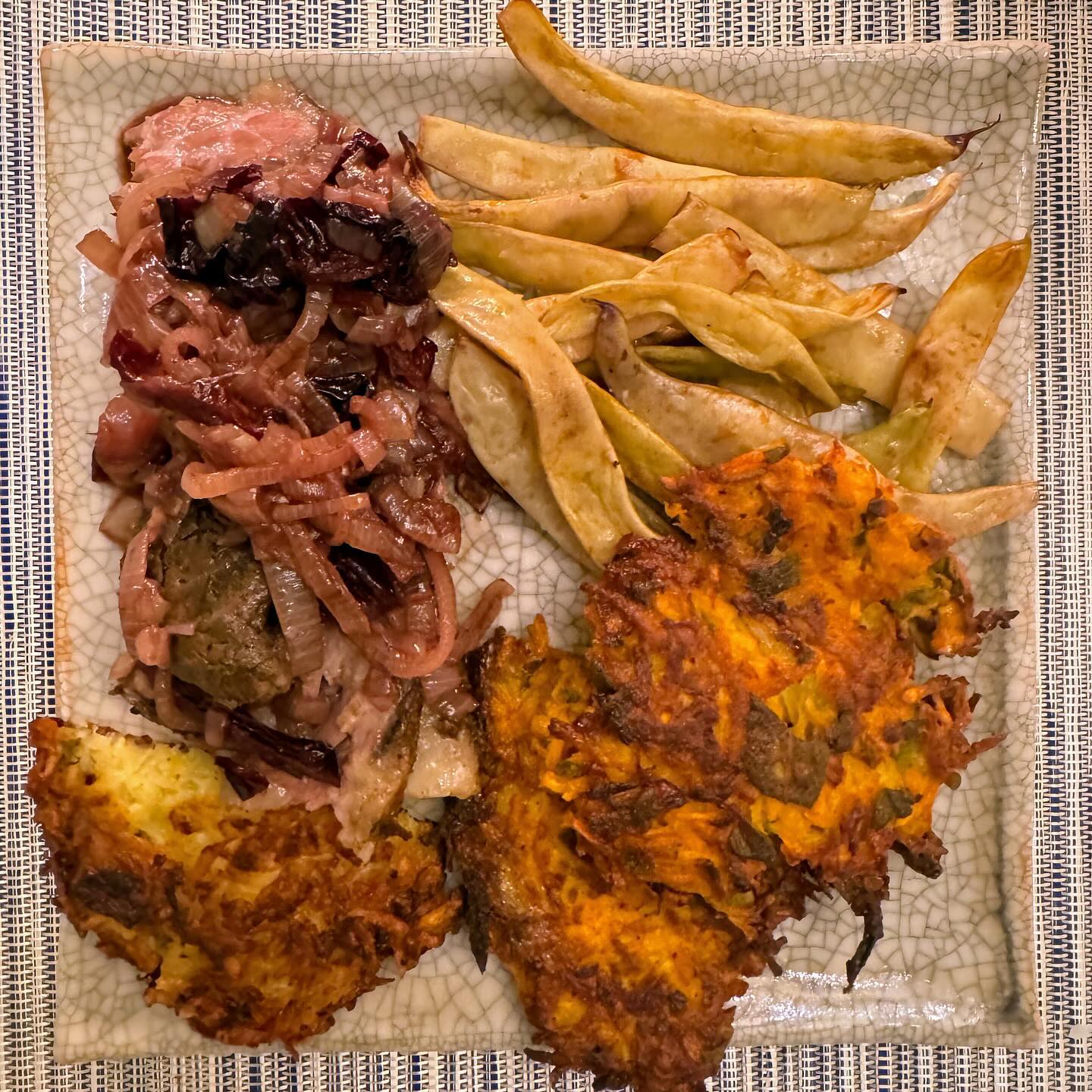
48-Hour Brisket with Shallots and Plums, Roasted Dragon Tongue Beans, and Two Latkes
Long, gentle cooking gives the brisket tender, sliceable meat, finished with soft shallots and a tart-sweet plum sauce. Roasted dragon tongue beans and crisp-edged butternut–sage latkes make this a generous Hanukkah plate, with a classic potato latke alongside for good measure.
By Jonathan Katzman · Cooked and photographed · Recipe updated
Serves: 4 servings
Tags: gluten-free, nut-free
48-Hour Sous Vide Brisket
Cooking at 140°F for 48 hours softens brisket while keeping it sliceable rather than pot-roast soft. A brief sear adds savory flavor without substantially cooking the interior further.
Ingredients
- 2–2½ lb brisket flat, with fat cap trimmed to about ¼ inch
- 0.8 % fine salt by meat weight, about 8 g per kg
- 1 tsp freshly ground black pepper
- 1 tbsp ghee
Instructions
- Preheat a covered sous vide bath to 140°F / 60°C. Season the brisket with the weighed salt and pepper, then vacuum-seal in a heat-rated bag with a secure seal.
- Submerge fully, keeping water circulating around the bag, and cook for 48 hours. Cover the bath to limit evaporation and check the water level periodically.
- Remove the brisket from the bag, reserving the juices for the shallot–plum sauce. Pat the meat very dry.
- Heat the ghee in a heavy skillet over high heat. Sear the broad faces of the brisket for 45–60 seconds each, just until browned; briefly brown the edges.
- Rest for 5 minutes, then slice thinly across the grain. Serve promptly with the hot sauce.
Notes
- For cooking ahead, immediately chill the sealed cooked brisket in a generously iced water bath until thoroughly cold, then refrigerate. Rewarm in a 140°F bath until hot through before drying and searing.
- The meat should be tender but still hold together in slices; this temperature does not produce a shreddable braise.
Shallot and Plum Sauce
Slowly softened shallots round out the plums' acidity, while brisket juices tie the fruit directly to the meat. A little vinegar keeps the finished sauce savory rather than jammy.
Ingredients
- 1 tbsp ghee
- 6 medium shallots, peeled and sliced into ¼-inch rings
- 3 medium red or black plums, pitted and cut into thick wedges, fresh or thawed from frozen
- ¾ cup reserved brisket bag juices, supplemented with unsalted gluten-free beef stock as needed
- 1–2 tsp red wine vinegar
- to taste fine salt and freshly ground black pepper
Instructions
- Pour the brisket juices into a small saucepan, bring to a simmer, and skim any coagulated protein. Strain and spoon off excess fat. Measure ¾ cup, adding stock if needed.
- Heat the ghee in a wide skillet over medium heat. Add the shallots and cook for 12–15 minutes, stirring gently, until soft with lightly golden edges.
- Add the plum wedges and cook for 3 minutes. Pour in the prepared juices and simmer gently for 8–12 minutes, until the plums soften but some pieces remain intact.
- Reduce until the liquid lightly coats a spoon. Add 1 teaspoon vinegar, taste, and add more if needed. Season with pepper and only as much salt as the brisket juices require.
Notes
- If the plums are very tart, soften their acidity with ½–1 teaspoon honey. If the sauce becomes salty before it thickens, add water and leave it slightly looser.
- Use thawed frozen plums when good fresh fruit is unavailable; add them gently because they break down faster.
Roasted Dragon Tongue Beans
High heat gives the broad pods browned edges while retaining a little bite. A restrained squeeze of lemon balances the rich meat and fried latkes.
Ingredients
- 1 lb dragon tongue beans, stem ends trimmed
- 1½ tbsp olive oil
- ½ tsp fine salt
- ¼ tsp freshly ground black pepper
- 1–2 tsp lemon juice
Instructions
- Heat the oven to 425°F / 220°C. Dry the beans thoroughly and toss with olive oil, salt, and pepper.
- Spread in a single layer on a large rimmed sheet pan. Roast for 15–20 minutes, turning once, until lightly blistered and tender with a slight bite.
- Toss with lemon juice just before serving.
Notes
- Dragon tongue beans lose much of their purple striping when cooked. If unavailable in December, use broad Romano beans or green beans and begin checking for tenderness after 12 minutes.
Butternut Squash and Sage Latkes
Coarsely grated squash makes a sweet, lacy-edged latke, with sage adding an earthy counterpoint. Removing moisture and keeping the patties thin helps them crisp before their surfaces darken.
Ingredients
- 1 lb peeled, seeded butternut squash, coarsely grated
- 1 small yellow onion, coarsely grated
- ¾ tsp fine salt, divided
- 1 large egg
- 3 tbsp cassava flour
- 2 tbsp finely sliced fresh sage leaves
- ¼ tsp freshly ground black pepper
- ⅓ cup ghee, for shallow-frying, adding more as needed
Instructions
- Toss the grated squash and onion with ½ teaspoon salt and let stand for 10 minutes. Wrap in a clean kitchen towel and squeeze firmly to remove as much liquid as possible.
- Combine the squeezed vegetables with the egg, cassava flour, sage, pepper, and remaining ¼ teaspoon salt. Mix until the shreds hold together when pressed.
- Heat a thin, approximately ⅛-inch layer of ghee in a heavy skillet over medium heat. Divide the mixture into 8 portions, pressing each into a patty about 3 inches across and no more than ⅜ inch thick.
- Fry in uncrowded batches for 4–5 minutes per side, until deeply golden, crisp at the edges, and tender through the center. Adjust the heat downward if the squash browns before it softens.
- Transfer to a wire rack over a sheet pan. Hold uncovered in a 225°F / 110°C oven for up to 30 minutes.
Notes
- Cook a small test patty first. If it falls apart, add another teaspoon or two of cassava flour; avoid making the mixture doughy.
- Do not stack cooked latkes or drain them in a covered dish, which traps steam.
Traditional Potato Latkes
Russet potatoes provide crisp edges and a tender center. Recovering their settled starch helps bind the shreds without a heavy flour coating.
Ingredients
- ¾ lb russet potatoes, peeled
- ½ small yellow onion
- 1 large egg, beaten
- 1 tbsp cassava flour
- ½ tsp fine salt
- ¼ tsp freshly ground black pepper
- ¼ cup ghee, for shallow-frying, adding more as needed
Instructions
- Coarsely grate the potatoes and onion. Wrap in a clean towel and squeeze very thoroughly over a bowl.
- Let the squeezed liquid stand for 5 minutes. Carefully pour off the liquid, keeping the white potato starch settled at the bottom.
- Add the squeezed potato and onion to the recovered starch with the egg, cassava flour, salt, and pepper. Mix just before frying.
- Heat approximately ⅛ inch of ghee in a heavy skillet over medium to medium-high heat. Form 4 latkes about 3½ inches across and ⅜ inch thick.
- Fry for 4–5 minutes per side, until well browned and cooked through. Drain on a wire rack and serve hot, or hold briefly in the low oven with the squash latkes.
Notes
- If the mixture releases liquid while waiting, stir and lift each portion out without scooping up the pooled liquid.
Overall Timing / Workflow
The brisket cooks almost entirely unattended. Finishing the beans after the latkes avoids a long wait that would soften their edges.
Instructions
- Two days before dinner: season and seal the brisket, then start its 48-hour cook at 140°F / 60°C.
- About 60 minutes before serving: slice the shallots and plums, trim the beans, and grate and squeeze the squash and onion. Heat the oven to 225°F / 110°C.
- About 40 minutes before serving: fry the squash latkes and hold them on a rack in the low oven. Prepare and fry the potato latkes next.
- About 25 minutes before serving: remove the brisket from the bath and collect its juices. Start the sauce. Remove the latkes from the oven and raise the temperature to 425°F / 220°C.
- Roast the beans once the oven is hot. During their final 5 minutes, return the latkes to the oven on their rack to re-crisp, watching closely.
- While the beans roast, dry and sear the brisket. Rest, slice across the grain, and finish seasoning the sauce. Serve everything immediately.
Notes
- Two skillets make the final cooking easier: one for latkes and one for sauce, with the latke skillet wiped clean before searing the brisket.
Plating
Keeping the sauce on the meat preserves the latkes' crispness and lets each part retain its own texture.
Instructions
- Arrange overlapping slices of brisket along one side of each warmed plate.
- Spoon shallots, plum pieces, and a little sauce over the beef.
- Place roasted beans alongside, then add two squash–sage latkes and one potato latke per person, keeping them clear of the sauce.
Leftover Path
Brisket reheats gently in its sauce, while dry oven heat brings back the latkes' crisp edges.
Instructions
- Refrigerate leftovers within 2 hours, storing brisket with its sauce and keeping beans and latkes in separate shallow containers. Use within 3–4 days.
- Reheat brisket covered with its sauce and a splash of water over low heat until it reaches 165°F / 74°C.
- Re-crisp latkes on a rack in a 400°F / 205°C oven for 10–15 minutes, until hot throughout. Warm the beans on a separate tray during the final few minutes.
- For another meal, chop the brisket and serve with the shallot–plum sauce beside reheated latkes, adding the beans at the end so they do not overcook.