Sous Vide Wild Chinook Salmon with Summer Tomato Salsa, Fresh Cranberry Beans, and Roasted Summer Vegetables
Silky wild Chinook gets a bright spoonful of ripe tomato, basil, and scallion salsa, with plenty of its juices running onto the plate. Creamy fresh cranberry beans, roasted zucchini, and sweet Jimmy Nardello peppers make this a late-summer dinner that needs very little embellishment.
By Jonathan Katzman · Cooked and photographed · Recipe updated
Serves: 4 servings
Tags: gluten-free, dairy-free, nut-free, pescatarian
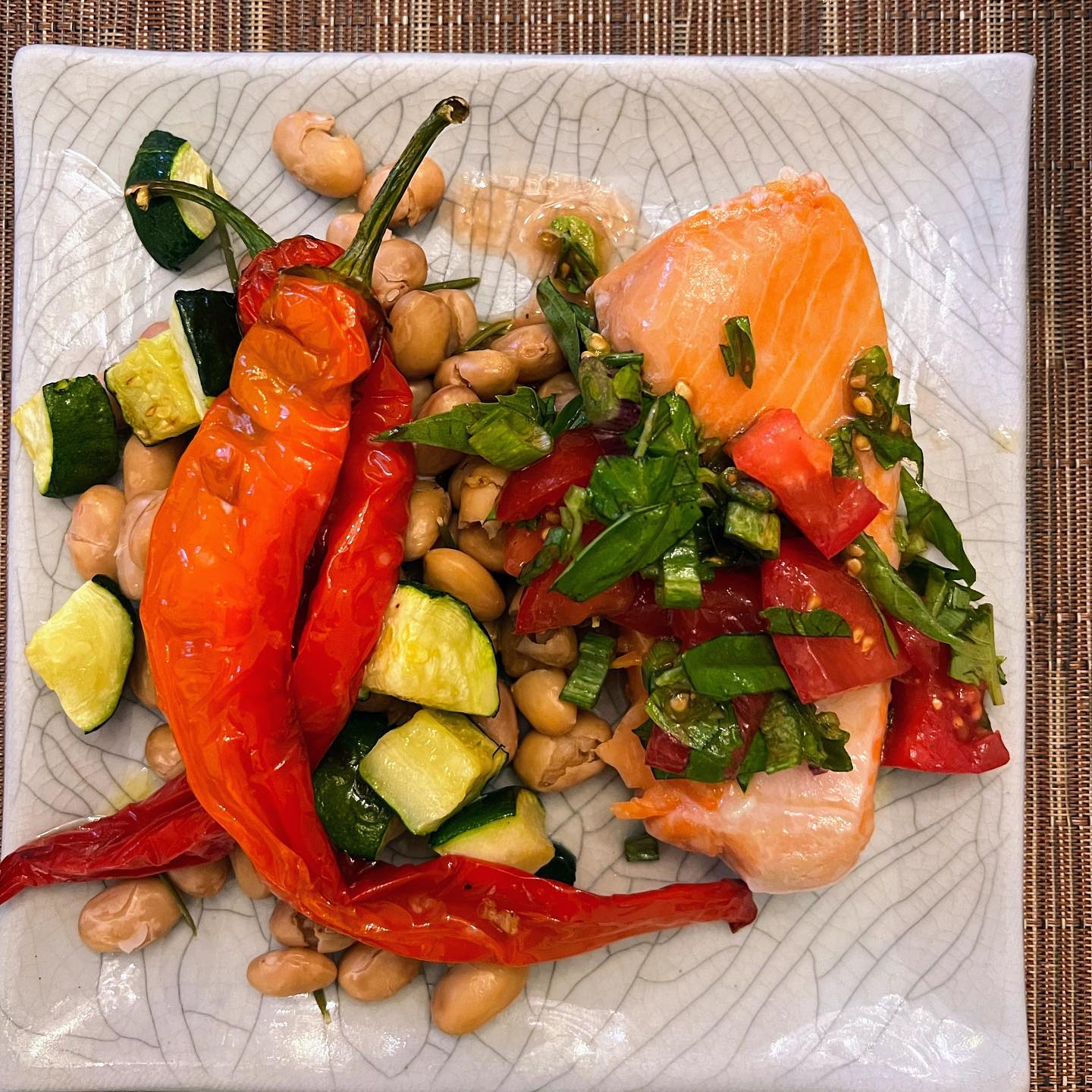
120°F Sous Vide Wild Chinook Salmon
A low-temperature bath preserves Chinook’s rich texture without adding a crust that would compete with the fresh salsa.
Ingredients
- 4 portions wild Chinook salmon, about 6 ounces each and approximately 1 inch thick, pin bones removed
- 1 tablespoon extra-virgin olive oil
- 3/4 teaspoon fine sea salt
Instructions
- Heat a sous vide bath to 120°F / 49°C. Keep the salmon refrigerated until the bath is ready.
- Season the salmon with salt. Place in a food-safe sous vide bag with the olive oil, arranging the pieces in a single layer. Seal gently without compressing the fish.
- Submerge and cook for 45–60 minutes for portions approximately 1 inch thick. The flesh should be warm, translucent, and very tender, separating into soft flakes under gentle pressure; this is intentionally rare salmon, not fully cooked fish.
- Remove carefully from the bag, blot away surface moisture, and gently peel off the skin if present. Serve immediately without searing.
Notes
- 120°F does not pasteurize fish. For this rare preparation, use salmon commercially frozen under a validated parasite-destruction process and confirm suitability with the supplier; ordinary home freezing is not a reliable substitute. Freezing does not eliminate bacterial risks.
- For a fully cooked option, particularly for pregnant, older, immunocompromised, or very young diners, cook the salmon to an internal temperature of 145°F instead.
Summer Tomato, Basil, and Scallion Salsa
Juicy tomatoes supply the sauce, while basil, scallions, and a little lemon lift the richness of the salmon and beans.
Ingredients
- 1 lb ripe red tomatoes, cut into irregular 1/2-inch pieces
- 2 scallions, thinly sliced
- 1/2 cup loosely packed fresh basil leaves, roughly torn
- 2 tablespoons extra-virgin olive oil
- 1 tablespoon fresh lemon juice, plus more to taste
- 1/2 teaspoon fine sea salt, plus more to taste
- 1/4 teaspoon freshly ground black pepper
Instructions
- Combine the tomatoes and scallions with the olive oil, lemon juice, salt, and pepper.
- Let stand at room temperature for 10–15 minutes so the tomatoes release a little juice.
- Fold in the basil just before serving. Taste for salt and acidity; the salsa should be juicy and bright rather than sharply sour.
Notes
- Keep the tomato juices for spooning over the fish and beans. If the tomatoes release excessive liquid, lift the solids onto the fish first, then add only as much juice as the plate needs.
Fresh Cranberry Beans with Olive Oil
Fresh shelling beans cook into a creamy, substantial side without soaking. Gentle simmering keeps them intact for catching the tomato salsa.
Ingredients
- 3 cups fresh shelled cranberry beans, from approximately 2 1/2–3 pounds in their pods
- 2 garlic cloves, lightly crushed
- 1 bay leaf
- 2 tablespoons extra-virgin olive oil
- 1 teaspoon fine sea salt, divided, plus more to taste
- 2 teaspoons fresh lemon juice
- as needed water
Instructions
- Put the shelled beans in a saucepan with the garlic, bay leaf, and 1/2 teaspoon salt. Cover with water by about 1 inch.
- Bring to a boil, then reduce to a gentle simmer. Cook partially covered for 25–45 minutes, adding hot water if needed to keep the beans submerged.
- Taste several beans for doneness: they should be creamy all the way through, with no chalky center. Older fresh beans may need longer.
- Discard the bay leaf and garlic. Drain, reserving a little cooking liquid, then dress the warm beans with olive oil, lemon juice, and the remaining salt to taste.
- Add a spoonful or two of cooking liquid if needed to keep the beans moist, but not soupy.
Notes
- Fresh cranberry beans lose most of their pink markings as they cook; a creamy beige color is normal.
- Add the lemon only after the beans are tender.
Roasted Zucchini and Jimmy Nardello Peppers
A hot oven wrinkles and sweetens the thin-walled peppers while giving the zucchini light browning without cooking it to mush.
Ingredients
- 1 lb small to medium zucchini
- 8 Jimmy Nardello peppers, about 12 ounces, left whole
- 2 tablespoons extra-virgin olive oil
- 3/4 teaspoon fine sea salt
- 1/4 teaspoon freshly ground black pepper
Instructions
- Heat the oven to 425°F / 220°C. Cut the zucchini into thick half-moons or quarters, about 3/4–1 inch across.
- Toss the zucchini and whole peppers with olive oil, salt, and pepper. Arrange on a large rimmed baking sheet in a single layer, leaving space around the zucchini; use two sheets if crowded.
- Roast for 20–30 minutes, turning once. Remove the peppers when soft, glossy, and lightly blistered, and the zucchini when lightly browned but still holding its shape. They may finish at different times.
- Serve warm with the peppers whole; leave the stems uneaten.
Notes
- Jimmy Nardellos are sweet frying peppers, not hot chiles. Avoid peeling them after roasting—the delicate skins are part of the dish.
Overall Timing / Workflow
Start the beans and salmon first, then use their largely unattended cooking time for roasting and salsa preparation.
Instructions
- 0:00 — Heat the sous vide bath to 120°F and the oven to 425°F. Shell the beans.
- 0:15 — Start simmering the beans. Season and bag the salmon; place it in the bath once the water reaches temperature.
- 0:25 — Cut and season the zucchini and peppers, then put them in the oven.
- 0:35 — Chop and dress the tomato salsa, leaving out the basil for now.
- 0:45 onward — Check the beans and vegetables. Dress the tender beans and keep warm with a splash of their cooking liquid; remove vegetables as they finish.
- 1:00–1:15 — When the salmon has cooked for 45–60 minutes, fold basil into the salsa, remove the fish from its bag, and plate immediately.
Notes
- If the beans need extra time, let the finished vegetables stand at room temperature and delay putting the salmon into the bath rather than extending its low-temperature hold.
Plating
Keeping the salmon and vegetables loosely grouped preserves their textures while allowing the tomato juices to bring the plate together.
Instructions
- Spoon the warm cranberry beans across one side of each plate.
- Arrange roasted zucchini among the beans and lay two whole peppers over them.
- Set the salmon alongside the vegetables, supporting it with a wide spatula so it stays intact.
- Spoon the tomato salsa generously over part of the salmon, letting a little salsa and juice fall onto the beans.
Leftover Path
The beans and vegetables make an easy next-day salad, while keeping the rare salmon separate allows safer handling and avoids soggy salsa.
Instructions
- Refrigerate leftovers promptly, within 2 hours, in separate shallow containers. Treat the 120°F salmon as rare fish, not pasteurized sous vide food.
- Use leftover salmon within 1 day; for the safer leftover route, reheat it to 165°F, accepting a firmer texture.
- Keep the beans and roasted vegetables refrigerated for up to 3–4 days. Serve as a room-temperature salad with fresh lemon and olive oil, or reheat gently with a splash of water.
- Use the tomato salsa within 1 day for the best texture. Add fresh basil just before serving if the original leaves have wilted.