Sous Vide Halibut with Kumquat Kosho Beurre Blanc, Spigariello Kale, and Japanese Sweet Potato Fries
Gently cooked halibut gets a generous spoonful of kumquat kosho beurre blanc: buttery, citrusy, and quietly hot. Tender spigariello and deeply browned Japanese sweet potato rounds balance the sauce with a little bitterness and caramelized sweetness—a lovely late-spring fish dinner.
By Jonathan Katzman · Cooked and photographed · Recipe updated
Serves: 4 servings
Tags: gluten-free, nut-free, pescatarian
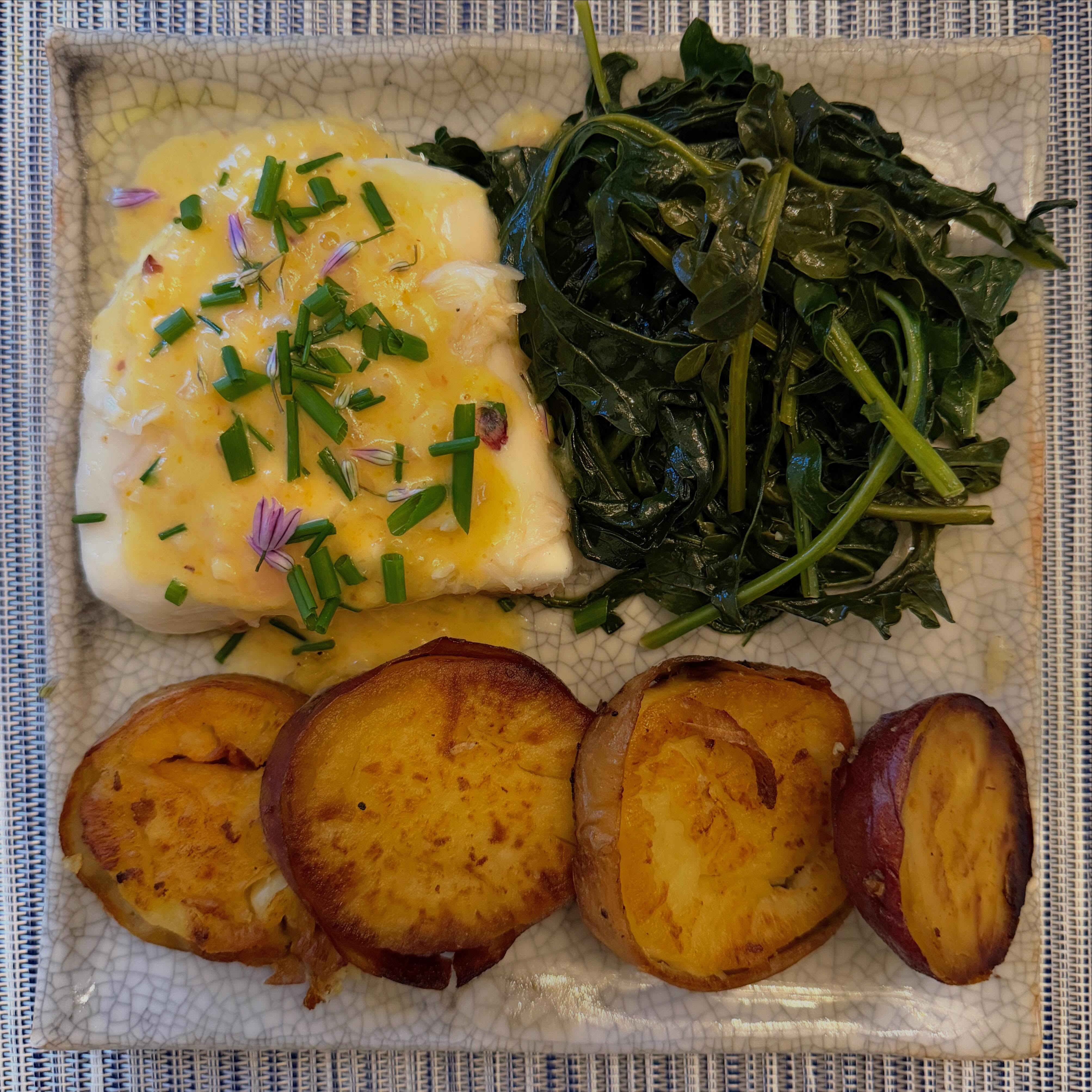
Sous Vide Halibut
Gentle, controlled heat keeps lean halibut moist and leaves its clean flavor open to the citrus butter sauce. Skipping a sear preserves its delicate flakes.
Ingredients
- 4 fillets skinless halibut, 6 ounces each and approximately 1 inch thick
- 3/4 teaspoon fine sea salt
- 2 teaspoons extra-virgin olive oil
- 2 tablespoons chives, cut into short lengths
- 1 tablespoon chive blossoms, separated into florets, optional
Instructions
- Heat a sous vide bath to 54°C / 129°F.
- Check the halibut for pin bones, pat dry, and season evenly with salt. Arrange in food-safe cooking bags in a single layer with the olive oil; seal gently without compressing the flesh.
- Submerge completely and cook refrigerated, approximately 1-inch-thick portions for 35–45 minutes. The fish should be pearly, moist, and just beginning to separate into broad flakes; avoid extending the bath time unnecessarily.
- Open the bags immediately before serving. Lift the fish carefully with a wide spatula, blot surface moisture, and transfer to warm plates without searing. Finish with the beurre blanc, chives, and optional blossoms.
Notes
- This low-temperature preparation is not a pasteurization process. Use fish suitable for undercooked service and appropriate parasite controls; for higher-risk diners, cook the fish to a measured center temperature of 63°C / 145°F instead.
Kumquat Kosho Beurre Blanc
An acidic reduction emulsified with cold butter gives halibut richness without obscuring it. Fermented kumquat kosho supplies citrus peel fragrance, salt, and chile heat.
Ingredients
- 1 small shallot, finely minced
- 1/3 cup dry white wine
- 1 tablespoon white wine vinegar
- 1 tablespoon water, plus more as needed
- 8 tablespoons cold unsalted butter, cut into small cubes
- 1–2 teaspoons gluten-free kumquat kosho (kusho)
- to taste fine sea salt
Instructions
- Combine the shallot, wine, and vinegar in a small saucepan. Simmer until only about 1 tablespoon of moist reduction remains, 7–10 minutes.
- Add the water and reduce the heat to very low. Whisk in the cold butter a few cubes at a time, adding more as each addition becomes creamy. Lift the pan off the heat frequently so the sauce stays warm but never simmers.
- Once all the butter is incorporated, whisk in 1 teaspoon kumquat kosho. Taste and add more in small increments until citrus and gentle heat are clear without overwhelming the fish.
- Adjust salt only after adding the kosho. If the sauce is too thick or sharp, whisk in warm water a teaspoon at a time. Serve immediately, or hold briefly around 45–50°C / 113–122°F, stirring occasionally.
Notes
- Kosho varies substantially in salt and heat, so start conservatively.
- If the sauce begins to separate, place 1 teaspoon cool water in a clean bowl and slowly whisk the sauce into it.
Tender Spigariello Kale
A quick blanch softens the stems before a short sauté, keeping the greens tender rather than leathery. A small squeeze of lemon balances both their bitterness and the butter sauce.
Ingredients
- 1 pound spigariello, washed, tough stem ends removed
- 1 tablespoon ghee
- 1 clove garlic, thinly sliced
- 1–2 teaspoons lemon juice
- to taste sea salt and freshly ground black pepper
Instructions
- Leave tender stems attached and cut very long sprigs into manageable lengths. Bring a large pot of salted water to a boil.
- Blanch the spigariello for 2–3 minutes, until the stems yield to a bite and the leaves remain green. Drain well and gently press out excess water.
- Heat the ghee in a wide skillet over medium heat. Add the garlic and cook for about 30 seconds without browning.
- Add the greens and toss for 2–3 minutes, until hot, glossy, and no longer watery. Finish with lemon juice, salt, and pepper.
Notes
- For especially thin, tender spigariello, shorten the blanch to 1 minute.
Japanese Sweet Potato Round Fries
Skin-on rounds develop broad browned surfaces while their centers stay creamy and sweet. A hot oven and uncrowded pans give an oven-fried finish without a heavy coating.
Ingredients
- 1 1/2 pounds Japanese sweet potatoes, scrubbed and left unpeeled
- 2 tablespoons avocado oil
- 3/4 teaspoon fine sea salt, plus more to finish if needed
- to taste freshly ground black pepper
Instructions
- Heat the oven to 220°C / 425°F with racks in the upper and lower thirds.
- Slice the sweet potatoes into rounds about 3/8 inch thick. Dry thoroughly, then toss with avocado oil, salt, and pepper.
- Arrange in a single layer on two lightly oiled metal baking sheets, leaving space between the slices.
- Roast for 15–20 minutes, until the undersides are well browned. Flip with a thin spatula, rotate the pans, and roast for another 12–20 minutes.
- Remove when the edges are browned and slightly crisp and the centers are completely tender. Taste for salt and serve promptly.
Notes
- These are browned round fries with creamy centers, not uniformly crisp potato chips. Crowding the pans will make them steam.
Overall Timing / Workflow
The sweet potatoes and halibut cook largely unattended, leaving the last few minutes for the greens and butter emulsion.
Instructions
- 0:00 - Heat the oven and sous vide bath. Put a pot of water on for the greens. Slice the sweet potatoes and prepare the fish.
- 0:15 - Put the sweet potatoes in the oven and the halibut in the bath. Prepare the shallot reduction, then set it aside before adding butter.
- 0:25 - Blanch and drain the spigariello. Cut the chives and refrigerate the cubed sauce butter.
- 0:35 - Flip the sweet potato rounds and rotate the pans. Warm serving plates.
- 0:45 - Rewarm the sauce reduction gently and whisk in the butter, then the kosho. Sauté the drained greens.
- 0:50–1:00 - Check the sweet potatoes and finish the halibut within its cooking window. Plate everything immediately.
Plating
Keeping the three elements distinct preserves the potatoes' browned surfaces and makes the citrus butter sauce the focus of the fish.
Instructions
- Place a halibut portion slightly off-center on each warm plate and arrange a generous mound of drained spigariello beside it.
- Spoon the kumquat kosho beurre blanc over the fish, allowing a small pool around its base.
- Arrange the sweet potato rounds along the remaining edge, mostly clear of the sauce. Scatter the chives and optional blossoms over the fish and serve immediately.
Leftover Path
Separate storage keeps the potatoes from becoming soggy and prevents reheating the delicate fish more than necessary.
Instructions
- Promptly refrigerate leftover fish, greens, potatoes, and sauce in separate shallow containers; do not leave the low-temperature fish warm for later service. Use the fish within 1–2 days and the vegetables within 3 days.
- Recrisp the sweet potato rounds in a 220°C / 425°F oven for 8–12 minutes. Reheat the greens in a small skillet with a splash of water.
- For a hot leftover meal, warm the fish covered with a splash of water until it reaches 74°C / 165°F; it will be firmer than on the first night.
- Warm the sauce very gently while whisking. If it separates, use it as a flavored melted butter over the vegetables rather than boiling it to force an emulsion.