Sous Vide King Salmon with Nectarine–Corn Salsa, Fresh Corn Polenta and Charred Asparagus, with Marinated Anchovies to Start
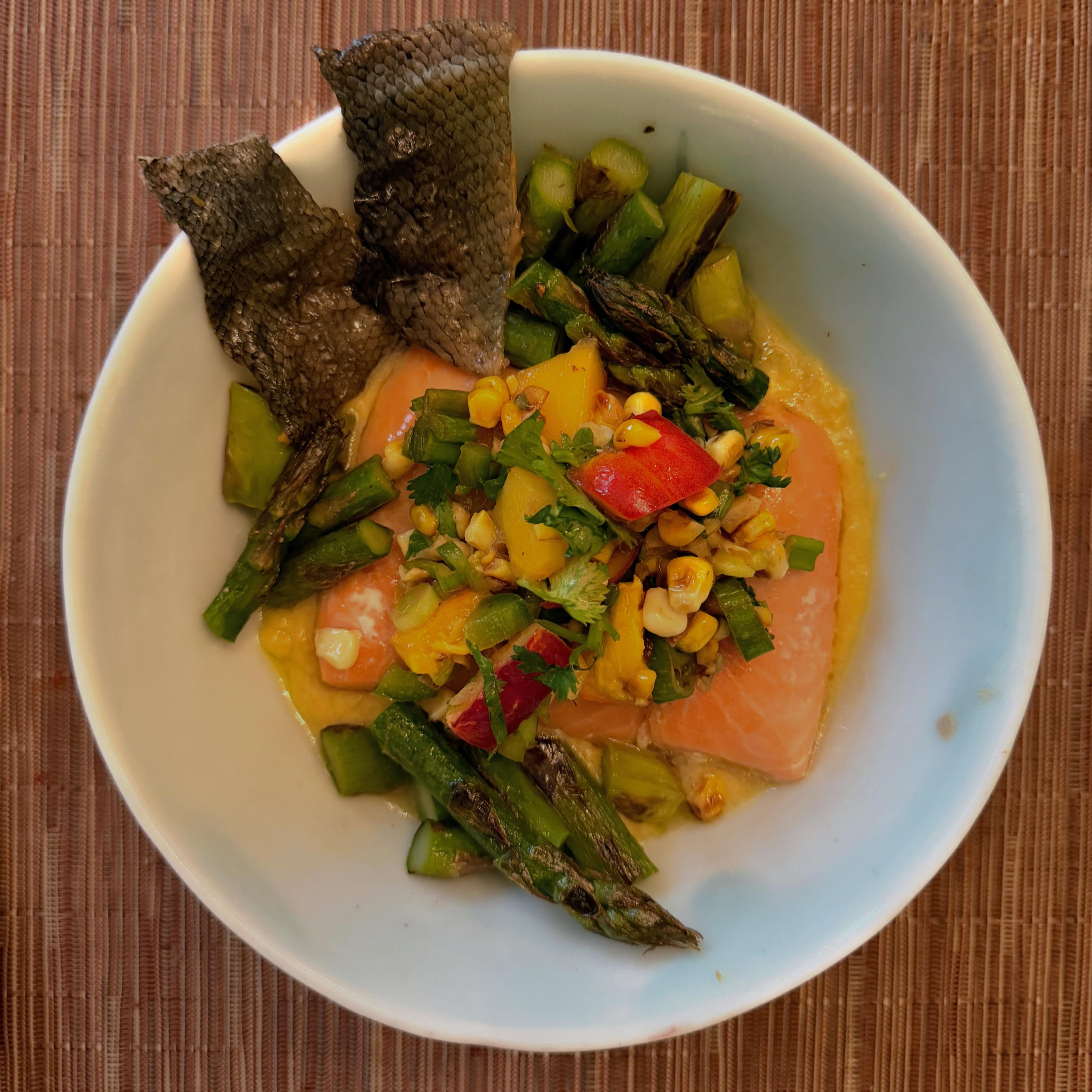
A bright anchovy, avocado and cucumber starter leads into silky king salmon over sweet fresh-corn polenta. Nectarine–corn salsa brings lime, herbs and a little chile, while charred asparagus and crisp salmon skin keep the plate from feeling too soft—a late-spring dinner leaning into the first tastes of summer.
By Jonathan Katzman · Cooked and photographed · Recipe updated
Serves: 4 servings
Tags: gluten-free, nut-free, pescatarian
Marinated Anchovies over Avocado, Cucumber and Jalapeño
Vinegar-marinated anchovies supply salt and acidity against creamy avocado, with cucumber and fresh chile providing crunch.
Ingredients
- 12 fillets prepared vinegar-marinated white anchovies (boquerones), drained
- 2 ripe avocados
- 3 Persian cucumbers
- 1 jalapeño, thinly sliced, seeds removed to taste
- 1 tablespoon fresh lime juice
- 1 tablespoon extra-virgin olive oil
- 1/4 cup cilantro leaves
- to taste fine sea salt
Instructions
- Cut the cucumbers into thick diagonal half-moons and the avocados into bite-size wedges.
- Gently toss the cucumber, avocado and jalapeño with lime juice and olive oil. Taste before adding a small pinch of salt; the anchovies will contribute plenty.
- Divide among four small plates, drape three anchovy fillets over each portion, and scatter with cilantro. Serve cool, immediately after assembling.
Notes
- Use refrigerated, ready-to-eat marinated anchovies, not brown salt-cured fillets. A brief home acid marinade is not a substitute for safe processing of raw fish.
Sous Vide King Salmon
A low-temperature water bath preserves king salmon's rich, custardy texture without a browned crust competing with the fresh salsa.
Ingredients
- 4 portions king salmon, 6 ounces each and approximately 1 inch thick; reserve skin for the crisp garnish
- 1 teaspoon fine sea salt
- 1 tablespoon extra-virgin olive oil
- 1/2 teaspoon finely grated lemon zest
Instructions
- Heat a sous vide bath to 122°F / 50°C. Remove any pin bones and carefully remove the skin in broad pieces, reserving it for the garnish.
- Season the salmon with salt and lemon zest. Place in suitable sous vide bags with the olive oil, arranging the portions in a single layer. Seal gently so the fish is not compressed.
- Submerge fully and cook refrigerator-cold, 1-inch-thick portions for 40–50 minutes. The centers should be warm, glossy and barely flaking; this is a soft, medium-rare preparation.
- Open the bags immediately before serving. Lift the fish out with a broad spatula and gently blot away surface moisture and any white albumin. Do not sear.
Notes
- This low-temperature preparation is not pasteurized. Use fish suitable for undercooked service with appropriate parasite control confirmed by the supplier; freezing does not eliminate all food-safety risks.
- For pregnant, older or immunocompromised diners, or anyone avoiding undercooked fish, cook the salmon to an internal temperature of 145°F / 63°C instead; the texture will be firmer.
Nectarine and Charred Corn Salsa
Juicy nectarine and sweet corn echo the corn base, while lime, jalapeño and herbs cut through the salmon's richness.
Ingredients
- 2 ears fresh sweet corn, husked
- 1 teaspoon avocado oil
- 2 ripe but firm nectarines, pitted and cut into 1/2-inch pieces
- 3 scallions, thinly sliced
- 1/2 jalapeño, finely diced
- 1/3 cup roughly chopped cilantro
- 2 tablespoons fresh lime juice
- 1 tablespoon extra-virgin olive oil
- 1/4 teaspoon fine sea salt, plus more to taste
Instructions
- Heat the broiler with a rack about 5 inches from the element. Rub the corn with avocado oil and place on a rimmed metal tray.
- Broil for 8–12 minutes, turning every few minutes, until the kernels have scattered brown spots but remain juicy. Let cool enough to handle, then cut the kernels from the cobs.
- Combine the corn, nectarines, scallions, jalapeño and cilantro. Fold in the lime juice, olive oil and salt just before serving.
- Taste for a bright, lightly salty finish. Add a little more lime if the fruit is especially sweet.
Notes
- Keep the nectarines in distinct pieces rather than mincing them. If making ahead, refrigerate the corn separately and cut and dress the fruit close to serving.
Fresh Corn Polenta
Blended fresh corn thickens with its own starch into a soft, naturally sweet base. A small amount of butter rounds out the texture without hiding the corn.
Ingredients
- 6 large ears fresh sweet corn, yielding approximately 4 1/2–5 cups kernels
- 3/4 cup water, plus more as needed
- 2 tablespoons unsalted butter
- 1/2 teaspoon fine sea salt, plus more to taste
- to taste freshly ground black pepper
Instructions
- Cut the kernels from the cobs into a wide bowl. Scrape the cobs with the back of a knife to collect their milky juices.
- Put the kernels, corn milk and water in a saucepan. Cover and simmer gently for 8–10 minutes, until the kernels are tender.
- Transfer carefully to a blender and blend until mostly smooth, venting the lid appropriately for hot food. Retain a little fine texture rather than straining.
- Return to the saucepan and cook over medium-low heat for 8–12 minutes, stirring frequently, until thick and spoonable. It should spread slowly on a plate rather than hold a stiff mound.
- Stir in the butter, salt and a little pepper. Keep warm over very low heat, adding warm water a tablespoon at a time if it tightens.
Notes
- Corn sweetness and starch content vary. Reduce longer if loose, or add water if pasty; no dried polenta is needed.
Charred Asparagus with Lemon
High heat creates browned edges while keeping the stalks green and firm. Lemon balances the sweet corn and rich fish.
Ingredients
- 1 1/2 pounds medium-thick asparagus, woody ends trimmed
- 1 tablespoon olive oil
- 1/2 teaspoon fine sea salt
- 2 teaspoons fresh lemon juice
- to taste freshly ground black pepper
Instructions
- Heat the broiler with a rack about 5 inches from the element. Dry the asparagus well and cut into 2–3-inch diagonal pieces.
- Toss with olive oil and salt on a rimmed metal tray, arranging in one uncrowded layer.
- Broil for 6–9 minutes, turning once, until charred in patches and just tender when pierced. Check early if the stalks are thin.
- Toss with lemon juice and pepper immediately before serving.
Crisp Salmon-Skin Shards
Baking the skin flat renders its fat and removes moisture, creating a brittle contrast to the softly cooked salmon and corn.
Ingredients
- 4 pieces reserved salmon skin, fully scaled
- 1 teaspoon olive oil
- 1/4 teaspoon fine sea salt
Instructions
- Heat the oven to 375°F / 190°C. Scrape any attached flesh from the underside of the scaled skin and pat very dry.
- Lightly rub with olive oil and season with salt. Arrange flat between two sheets of parchment on a baking sheet and place a second baking sheet on top to prevent curling.
- Bake for 20–25 minutes. Remove the upper tray and parchment, then bake another 5–10 minutes as needed, until dry and crisp rather than leathery.
- Cool on a rack, blot excess fat, and break into broad shards. Keep uncovered in a dry place until plating.
Notes
- Start checking early if the skin is thin. Add it to the plate at the last moment so it does not soften in the polenta.
Overall Timing / Workflow
Make the dry garnish first, use the salmon's water-bath time for the corn base and starter, and char the asparagus just before serving.
Instructions
- 0:00 — Heat the oven to 375°F / 190°C and the sous vide bath to 122°F / 50°C. Portion and skin the salmon, then prepare the skin for baking.
- 0:10 — Bake the skin. Cut the corn kernels for the polenta, scrape the cobs, and prepare the vegetables and herbs.
- 0:25 — Bag and submerge the salmon. Begin simmering the corn for the polenta.
- 0:40 — Remove the crisp skin and cool it on a rack. Switch the oven to broil and char the salsa corn. Blend and finish the polenta, then keep it warm.
- 0:50 — Cut the avocado and assemble the anchovy appetizer. Serve it while the salmon finishes cooking.
- 1:00 — Mix the salsa and broil the asparagus. Adjust the polenta's consistency with warm water and warm the main-course plates.
- 1:05–1:15 — Remove the salmon once its 40–50-minute bath is complete. Blot gently and plate the main immediately, adding the skin last.
Notes
- For a leisurely first course, delay starting the salmon rather than holding it for a long time after cooking.
Plating
A broad corn base catches the salsa juices, while keeping the crisp skin upright and mostly dry preserves its texture.
Instructions
- Serve the anchovy appetizer on small plates, with the silver skins facing up over the avocado and cucumber and cilantro scattered loosely.
- Spoon a generous pool of fresh corn polenta onto each warm main-course plate.
- Set a salmon portion on the polenta and spoon nectarine–corn salsa across the center, leaving some fish exposed.
- Arrange the charred asparagus alongside the salmon. Stand one or two crisp skin shards against the fish, keeping their upper edges clear of the moist toppings.
Leftover Path
Separate storage protects the fresh salsa and crisp garnish, and lets the corn base be reheated without overcooking the fish.
Instructions
- Refrigerate perishable leftovers promptly in separate shallow containers. Do not store low-temperature sous vide salmon warm or in an unopened cooking bag; if saving an untouched portion, chill it rapidly in an ice bath before refrigerating.
- Use the low-temperature salmon within 24 hours, preferably cold, flaked over cucumber and avocado. It remains an undercooked food and is not suitable for vulnerable diners.
- Reheat the corn polenta gently with a splash of water, stirring until steaming. Use within 3 days.
- Use dressed salsa and the assembled anchovy salad within 24 hours; avocado and cucumber lose their texture quickly. Follow the package's storage directions for any unused anchovies.
- Refrigerate leftover asparagus for up to 3 days and fold into eggs or serve at room temperature with lemon. Keep skin shards separately refrigerated and re-crisp briefly in a 350°F / 175°C oven before using.