Sous Vide King Salmon with Preserved Lemon–Pistachio Salsa Verde, Charred Leeks, and Ras el Hanout Sweet Potato Fries
Silky king salmon gets a bright, crunchy finish from preserved lemon, pistachios, and hand-chopped herbs. Deeply charred leeks with sumac and pine nuts balance sweet, warmly spiced Japanese sweet potato fries—a spring dinner built around contrast.
By Jonathan Katzman · Cooked and photographed · Recipe updated
Serves: 4 servings
Tags: gluten-free, paleo, pescatarian
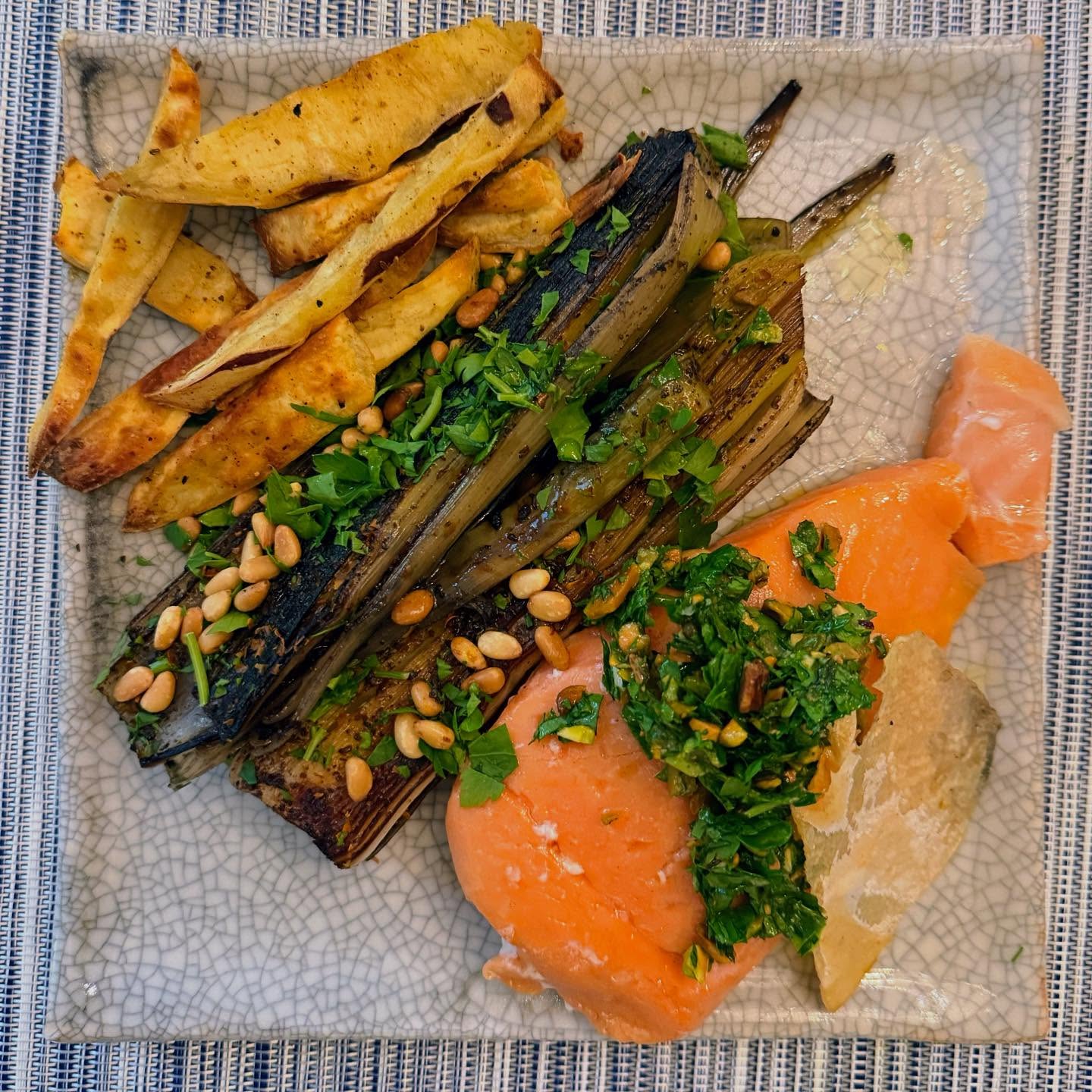
Sous Vide King Salmon
Gentle water-bath cooking preserves king salmon’s rich texture without a browned crust competing with the herb sauce.
Ingredients
- 4 portions king salmon, 6 ounces each and about 1–1¼ inches thick, pin bones removed
- 1 tablespoon extra-virgin olive oil
- ¾ teaspoon fine sea salt
- ¼ teaspoon freshly ground black pepper
Instructions
- Heat a sous vide bath to 122°F / 50°C for moist, medium-rare salmon.
- Season the salmon with salt and pepper. Place in suitable cooking bags with the olive oil, arranging portions in a single layer. Seal gently, using water displacement or low vacuum so the fish is not compressed.
- Submerge and cook refrigerator-cold portions for 45 minutes at 1 inch thick, or 60 minutes at 1¼ inches thick.
- Lift the fish carefully from the bags, discard the cooking liquid, and blot gently. Remove the skin if desired; do not sear. Serve immediately with the salsa verde.
Notes
- This low-temperature preparation is not a pasteurization process. Use fish suitable for undercooked service and keep it refrigerated until cooking; freezing for parasite control does not eliminate all microbial risks.
- For pregnant, elderly, immunocompromised, or other higher-risk diners, cook the salmon to an internal temperature of 145°F / 63°C rather than using the low-temperature method.
Preserved Lemon and Pistachio Salsa Verde
Preserved lemon cuts through the salmon’s richness, while chopped pistachios give the loose herb sauce texture.
Ingredients
- ⅓ cup shelled unsalted pistachios
- 1 cup loosely packed flat-leaf parsley leaves and tender stems
- ¼ cup loosely packed mint leaves
- 2 tablespoons finely chopped preserved lemon rind, rinsed and pulp discarded
- 1 small clove garlic, finely grated
- 1½ tablespoons fresh lemon juice, plus more to taste
- ⅓ cup extra-virgin olive oil
- to taste fine sea salt and freshly ground black pepper
Instructions
- Toast the pistachios in a dry skillet over medium-low heat for 3–4 minutes, stirring until fragrant. Cool, then chop coarsely.
- Finely chop the parsley and mint by hand. Combine with the preserved lemon, garlic, lemon juice, and olive oil.
- Fold in the pistachios shortly before serving. Taste before adding salt, then adjust with pepper and additional lemon juice. Keep the sauce chunky and spoonable rather than puréed.
Notes
- Preserved lemons vary greatly in saltiness; rinse well and season the finished sauce only after tasting.
- If the sauce feels too dense, loosen it with a little olive oil or a teaspoon of water.
Charred Leeks with Sumac and Pine Nuts
A hard sear brings bitterness and sweetness to the leeks; a short covered cook softens their centers. Sumac, lemon, and toasted pine nuts finish them with acidity and crunch.
Ingredients
- 4 large leeks, dark green tops removed
- 2 tablespoons ghee
- ⅓ cup water, plus more as needed
- ¼ cup pine nuts
- 1½ teaspoons ground sumac
- 1 tablespoon fresh lemon juice
- 1 tablespoon extra-virgin olive oil
- ¼ cup coarsely chopped flat-leaf parsley
- ½ teaspoon fine sea salt, plus more to taste
- ¼ teaspoon freshly ground black pepper
Instructions
- Trim the root ends just enough to remove the roots while keeping the layers attached. Halve the leeks lengthwise, rinse thoroughly between the layers, and dry well.
- Toast the pine nuts in a dry wide skillet over medium-low heat for 3–5 minutes, stirring frequently. Transfer to a bowl.
- Heat the ghee in the skillet over medium-high heat. Season the leeks with salt and pepper, then place cut-side down in a single layer, working in batches if necessary. Sear undisturbed for 5–7 minutes until deeply browned with some charred edges.
- Return all the leeks to the pan, cut-side up. Carefully add the water, cover, and reduce the heat to medium-low. Cook for 10–15 minutes, until a knife slips easily through the thickest part; add a splash of water if the pan dries out.
- Uncover and let any remaining water evaporate. Transfer to a platter, drizzle with lemon juice and olive oil, and sprinkle with sumac, pine nuts, and parsley.
Notes
- Aim for dark cut faces but tender, moist interiors; reduce the heat if the outer leaves begin burning before the centers soften.
Ras el Hanout Japanese Sweet Potato Fries
Japanese sweet potatoes have a dense, chestnut-like sweetness that suits warm North African spices. Thick cuts develop browned edges while staying fluffy inside.
Ingredients
- 2 pounds Japanese sweet potatoes, scrubbed, skin on
- 2 tablespoons olive oil
- 2 teaspoons gluten-free ras el hanout spice blend
- ¾ teaspoon fine sea salt
Instructions
- Heat the oven to 425°F / 220°C with racks in the upper and lower thirds.
- Cut the sweet potatoes lengthwise into roughly ½–¾-inch-thick fries or narrow wedges. Dry thoroughly.
- Toss with olive oil, ras el hanout, and salt. Divide between two large baking sheets in a single layer with space between the pieces.
- Roast for 20 minutes, then turn the fries and rotate the trays. Continue roasting for 15–25 minutes, until browned at the edges and completely tender inside.
- Taste for salt and serve hot.
Notes
- Use a spice-only ras el hanout without added sugar or flour. If the blend contains salt, reduce the added salt.
- These are roasted fries with crisp edges, not uniformly crunchy deep-fried potatoes; crowding the trays will make them steam.
Overall Timing / Workflow
The salmon cooks unattended while the oven handles the fries and the stovetop handles the leeks.
Instructions
- 0:00 — Heat the sous vide bath and oven. Season and bag the salmon; put it in the bath once the water reaches temperature.
- 0:10 — Cut and season the sweet potatoes, then put them in the oven. Clean and dry the leeks.
- 0:20 — Toast the pistachios and pine nuts separately. Chop the salsa verde ingredients and mix the sauce, holding back the pistachios.
- 0:25 — Begin searing the leeks, then cover and cook until tender. Turn the fries after their first 20 minutes in the oven.
- 0:45 — Finish the leeks with lemon, sumac, parsley, and pine nuts. Fold the pistachios into the salsa verde and check the fries.
- 0:55–1:10 — Remove the salmon when its thickness-appropriate cooking time is complete. Plate immediately with the hot sides and room-temperature salsa verde.
Notes
- The fries and leeks can wait briefly while the salmon finishes; avoid holding the delicate fish after removing it from the bath.
Plating
Separate zones preserve the contrast between silky fish, tender leeks, and browned sweet potatoes.
Instructions
- Arrange the charred leeks lengthwise through the center of each plate and scatter their pine nuts and parsley over them.
- Place the salmon alongside the leeks and spoon salsa verde along the top, leaving some of the glossy flesh visible.
- Stack the sweet potato fries on the opposite side, keeping them out of the sauce so their edges stay dry.
Leftover Path
Separate storage keeps the herb sauce fresh and makes it possible to reheat the vegetables without overcooking the fish.
Instructions
- Cook only as much low-temperature salmon as you plan to serve when possible. Promptly chill any extra salmon in its sealed cooking bag in an ice-water bath, then refrigerate at 40°F / 4°C or below and use within 24 hours. Refrigerate served leftovers promptly in shallow containers.
- Store the leeks, sweet potatoes, and salsa verde separately in the refrigerator. Use the salsa within 2 days and the vegetables within 3–4 days.
- Reheat the fries at 425°F / 220°C for 10–15 minutes. Warm the leeks in a covered skillet with a splash of water.
- For reheated salmon leftovers, heat to 165°F / 74°C; the texture will be firmer than the original. Serve with the refreshed vegetables and a small spoonful of salsa verde.
Notes
- Do not treat the low-temperature salmon as pasteurized or keep it for extended sous vide storage.