Sous Vide Ōra King Salmon with Parsley Sauce, Green Beans Almondine, and Roasted Winter Vegetables
Silky Ōra King salmon gets a generous spoonful of sharp, caper-studded parsley sauce, with buttery green beans and toasted almonds alongside. Roasted butternut squash and earthy sunchokes bring caramelized edges and winter sweetness, finished with savory pumpkin bushi.
By Jonathan Katzman · Cooked and photographed · Recipe updated
Serves: 4 servings
Tags: gluten-free, pescatarian
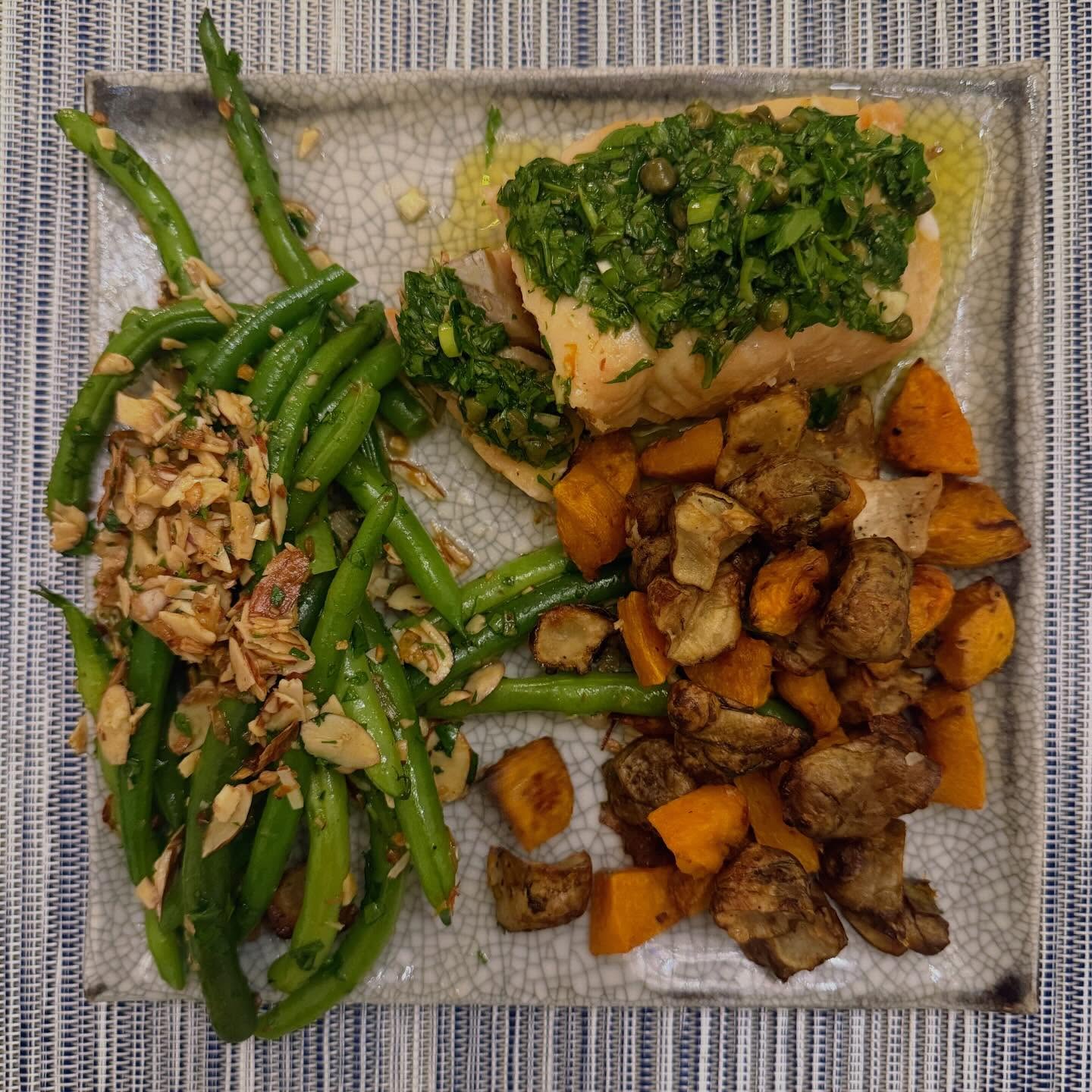
Sous Vide Ōra King Salmon
A gentle water bath preserves king salmon’s rich texture without developing a crust. Keeping the seasoning simple leaves room for the bright parsley sauce.
Ingredients
- 4 portions Ōra King salmon, 5–6 ounces each and approximately 1 inch thick, pin bones removed
- 3/4 tsp fine sea salt
- 1 tbsp extra-virgin olive oil
Instructions
- Heat a sous vide bath to 126°F / 52°C.
- Remove the skin if desired for a fully tender, unseared presentation. Season the salmon evenly with salt and place in sous vide bags in a single layer with the olive oil.
- Seal gently without compressing the fish, or use food-safe zipper bags and water displacement. Keep the seals above water if using zipper bags.
- Cook refrigerated, approximately 1-inch-thick portions for 45–60 minutes. The fish should be warm throughout, moist, and just beginning to separate into broad flakes.
- Lift the portions out carefully, discard the bag liquid, and lightly blot the surface. Serve immediately without searing.
Notes
- This low-temperature preparation is not pasteurized. Use fish suitable for undercooked service; freezing for parasite control does not eliminate all food-safety risks.
- For pregnant, older, immunocompromised, or other higher-risk diners, cook the salmon to a center temperature of 145°F / 63°C instead. The texture will be firmer.
Parsley, Caper, and Lemon Sauce
Hand-chopped parsley and capers give the sauce texture, while lemon and olive oil cut through the salmon’s richness.
Ingredients
- 1 cup firmly packed flat-leaf parsley leaves and tender stems
- 2 tbsp drained capers, roughly chopped
- 1 small clove garlic, finely grated
- 1 tsp finely grated lemon zest
- 2 tbsp fresh lemon juice
- 1/3 cup extra-virgin olive oil
- to taste fine sea salt and freshly ground black pepper
Instructions
- Finely chop the parsley by hand, keeping a little texture rather than making a paste.
- Combine the capers, garlic, lemon zest, and lemon juice in a bowl. Stir in the olive oil and parsley.
- Season with black pepper and taste before adding salt; the capers may provide enough.
- Let stand for 10 minutes, then stir again. The sauce should be loose enough to spoon over the fish, with a small pool of oil around the herbs.
Notes
- If too sharp, add a little more olive oil; if flat or heavy, add lemon juice a teaspoon at a time.
- For the freshest green color, chop and add the parsley within an hour of serving.
String Beans Almondine
Blanching keeps the beans bright and crisp-tender. Toasted almonds and a small butter finish provide richness without weighing them down.
Ingredients
- 1 1/4 lb green beans, stem ends trimmed
- 1/2 cup sliced almonds
- 1 tbsp ghee
- 2 tbsp unsalted butter
- 1 tbsp fresh lemon juice
- 1 tbsp finely chopped flat-leaf parsley
- to taste fine sea salt and freshly ground black pepper
Instructions
- Bring a large pot of generously salted water to a boil and prepare a bowl of ice water.
- Blanch the beans for 3–5 minutes, depending on thickness, until bright green and crisp-tender. Transfer to the ice water, then drain and dry thoroughly.
- Toast the almonds in a large dry skillet over medium-low heat for 3–5 minutes, stirring frequently, until golden and fragrant. Transfer to a plate.
- Add the ghee to the skillet over medium-high heat. Add the dry beans and toss for 2–3 minutes, until hot without becoming soft.
- Lower the heat and add the butter. Toss until melted, then remove from the heat and add the lemon juice, parsley, and most of the almonds.
- Season to taste and scatter the remaining almonds over the beans.
Notes
- The beans can be blanched a day ahead and refrigerated after drying. Toast the almonds ahead too, but keep them separate until the final toss.
Roasted Butternut Squash and Sunchokes with Pumpkin Bushi
Roasting concentrates the squash’s sweetness and gives the sunchokes browned skins and creamy centers. Pumpkin bushi adds a savory finish without obscuring the vegetables.
Ingredients
- 1 1/4 lb peeled and seeded butternut squash, cut into 1-inch chunks
- 1 lb sunchokes, scrubbed well and cut into 3/4–1-inch pieces
- 3 tbsp extra-virgin olive oil
- 3/4 tsp fine sea salt, plus more to taste
- 1/4 tsp freshly ground black pepper
- 1 tsp fresh lemon juice
- 1–2 tbsp gluten-free pumpkin bushi shavings, or to taste according to product strength
Instructions
- Heat the oven to 425°F / 220°C with racks in the upper and lower thirds.
- Dry the sunchokes thoroughly, leaving their skins on. Toss the squash with half the olive oil and the sunchokes with the remainder; divide the salt and pepper between them.
- Spread the vegetables on separate sheet pans in uncrowded single layers, placing cut surfaces against the pans.
- Roast for 35–45 minutes, turning after about 20 minutes and rotating the pans. Remove each vegetable when browned at the edges and tender when pierced; the two may finish at different times.
- Combine the hot vegetables on a serving platter and sprinkle with the lemon juice. Taste for salt.
- Scatter the pumpkin bushi over the vegetables just before serving, starting with the smaller quantity and adding more to taste.
Notes
- Use pumpkin bushi as a finishing seasoning rather than roasting it, which can dull its aroma or scorch thin shavings.
- If the bushi is finely powdered or particularly salty, use substantially less than the volume given for shavings.
Overall Timing / Workflow
The salmon and vegetables cook mostly unattended, leaving the final few minutes for warming the beans and assembling hot plates.
Instructions
- 0:00 — Heat the oven to 425°F / 220°C and the water bath to 126°F / 52°C. Put a pot of water on for the beans.
- 0:05 — Prepare and bag the salmon. Start its 45–60-minute bath once the water reaches temperature.
- 0:10 — Cut and season the squash and sunchokes; get them into the oven.
- 0:20 — Blanch, chill, and thoroughly dry the beans. Toast the almonds.
- 0:30 — Make the parsley sauce. Turn the roasting vegetables and rotate their pans.
- 0:45 — Check the vegetables for tenderness and browning. Hold finished vegetables loosely covered for a few minutes if necessary.
- 0:50 — Reheat and finish the beans. Check that the salmon has completed its cooking time.
- 0:55–1:05 — Lift out the salmon, finish the roasted vegetables with lemon and pumpkin bushi, and plate immediately.
Notes
- Allow extra preparation time if starting with a whole butternut squash rather than prepared squash.
Plating
Keeping the three main elements distinct preserves their textures, while the generous parsley sauce ties the fish and vegetables together.
Instructions
- Use warm plates and place a salmon portion toward the top of each.
- Spoon the parsley sauce generously over the salmon, allowing a little oil to pool around it.
- Arrange the beans along one side and scatter their reserved almonds over the top.
- Place the roasted squash and sunchokes beside the fish, keeping most of the pumpkin bushi on the vegetables. Serve at once.
Leftover Path
Separating the sauce, fish, and vegetables protects their textures and makes the leftovers useful for a second meal.
Instructions
- Refrigerate leftovers promptly, within 2 hours of service, in separate shallow containers. Keep the parsley sauce separate from the fish.
- Because the low-temperature salmon is not pasteurized, plan to eat it immediately rather than storing it. If leftovers remain, refrigerate promptly, use within 24 hours, and reheat to 165°F / 74°C; it will become firmer.
- Use the beans and roasted vegetables within 3–4 days and the parsley sauce within 2 days.
- Reheat the squash and sunchokes in a 400°F / 205°C oven until hot and their edges crisp again. Warm the beans briefly in a skillet.
- For a second meal, chop the vegetables into a warm salad and add safely reheated flaked salmon, finishing with the remaining parsley sauce.