Sous Vide Pork Chops with Spring Hodgepodge, Miso-Braised Leeks and Honey-ACV Delicata
Juicy pork chops get a hard golden sear, then share the plate with a bright hodgepodge of peas, asparagus, green onion and green garlic. Miso-braised leeks bring silky depth and hazelnut crunch, while roasted delicata finished with apple cider vinegar and honey adds a sweet-sharp counterpoint.
By Jonathan Katzman · Cooked and photographed · Recipe updated
Serves: 4 servings
Tags: gluten-free, paleo
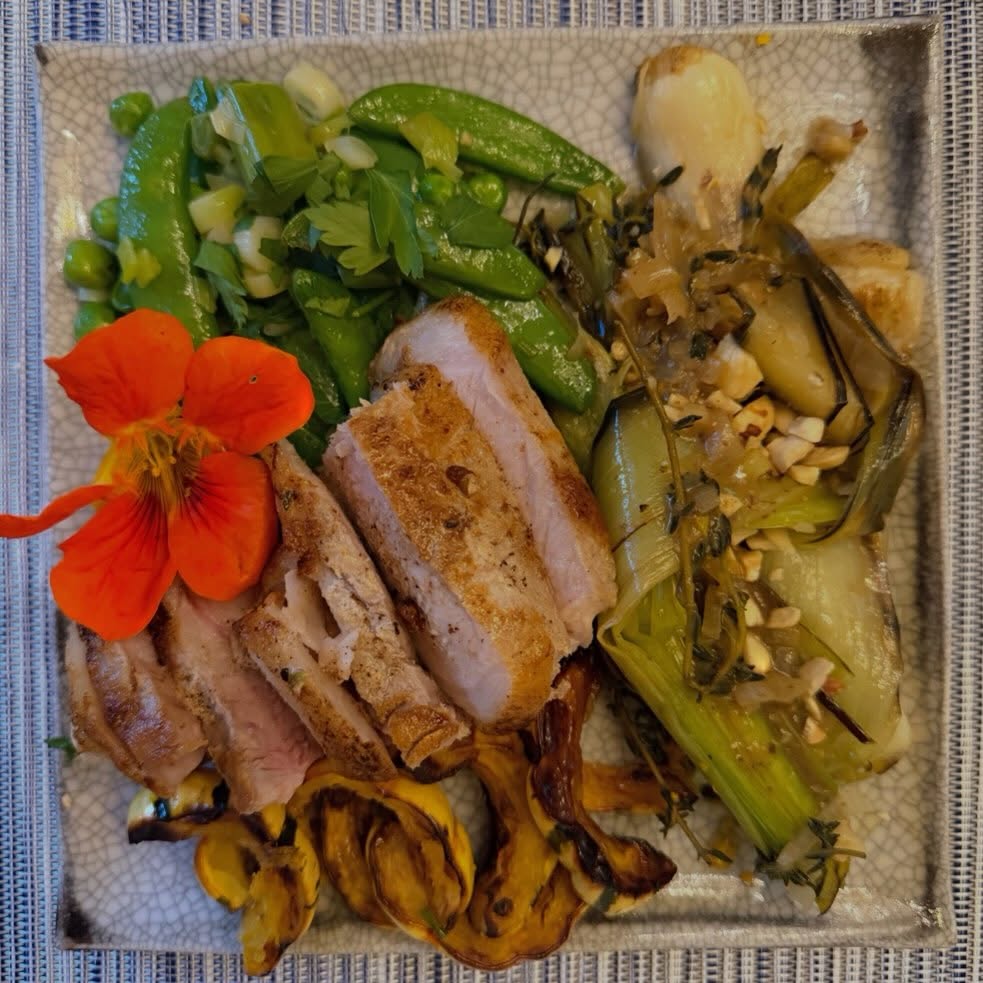
Sous Vide Pork Chops
Sous vide keeps thick chops evenly juicy; thoroughly drying and briefly searing them builds a browned crust without overcooking the center.
Ingredients
- 4 thick-cut pork chops, 1¼–1½ inches thick, about 10–12 ounces each bone-in
- 9 g kosher salt, or about 0.8% of the pork's weight
- ½ tsp freshly ground black pepper
- 2 tbsp ghee
Instructions
- Heat a sous vide bath to 140°F / 60°C. Season the chops evenly with salt and pepper.
- Seal the chops in a single layer in vacuum bags, or use food-safe sous vide bags with the water-displacement method. Submerge fully and cook for 3 hours.
- Remove the chops from the bags and blot extremely dry, including the fat edges. Let surface moisture evaporate on a rack for 5 minutes while heating a heavy skillet.
- Heat the skillet over high heat, then add the ghee. Sear in uncrowded batches for 45–60 seconds per broad side, pressing lightly for full contact. Hold the fat edges against the pan for another 20–30 seconds where needed.
- Rest for 3 minutes, remove any bones, and cut across the grain into thick slices. Serve immediately.
Notes
- The 140°F bath produces a lightly pink, juicy center; use 145°F / 63°C for a firmer chop. The full sous vide time is important—do not treat reaching bath temperature as the end of the cook.
- These timings are for fully thawed chops no thicker than 1½ inches.
Spring Hodgepodge
Brief blanching sets the peas and asparagus up for a fast finish, keeping them green and crisp-tender while the green garlic and onions soften into a gentle aromatic base.
Ingredients
- 8 oz sugar snap peas, strings removed
- 1 cup shelled English peas
- 12 oz asparagus, woody ends removed, cut into 1½-inch pieces
- 4 green onions, sliced, white and green parts separated
- 2 stalks green garlic, tender white and pale-green portions thinly sliced
- 1½ tbsp ghee
- 2 tbsp water
- 2 tsp fresh lemon juice
- 2 tbsp roughly chopped flat-leaf parsley
- to taste kosher salt and freshly ground black pepper
Instructions
- Bring a pot of generously salted water to a boil and prepare a bowl of ice water.
- Blanch the asparagus for 1–2 minutes, the snap peas for 45–60 seconds, and the English peas for 1–2 minutes, working separately and tasting for crisp-tender texture. Transfer each to the ice water, then drain and dry thoroughly.
- Heat the ghee in a wide skillet over medium heat. Add the green garlic and green onion whites with a pinch of salt; cook for 2–3 minutes until softened but not browned.
- Add the blanched vegetables and 2 tablespoons water. Toss over medium-high heat for 1–2 minutes, just until hot and glossy.
- Fold in the green onion tops, lemon juice and parsley. Adjust salt and pepper and serve while bright green.
Notes
- Older or larger English peas may need an extra minute of blanching; taste rather than relying on color alone.
Miso-Braised Leeks with Hazelnuts
A shallow miso braise turns leeks silky and savory, while a reduced spoonful of braising liquid and toasted hazelnuts provide gloss and crunch.
Ingredients
- 4 medium leeks
- 1 tbsp ghee
- 2 tbsp gluten-free white miso
- 1 cup warm water
- 4 sprigs thyme
- 1 tsp apple cider vinegar
- ⅓ cup hazelnuts, toasted, loose skins rubbed away, coarsely chopped
- to taste freshly ground black pepper and kosher salt
Instructions
- Trim away the tough dark-green leek tops, retaining the white and tender light-green portions. Trim the roots closely while leaving the base intact. Halve lengthwise and rinse carefully between the layers; drain and pat dry.
- Whisk the miso into the warm water until smooth.
- Heat the ghee in a wide lidded skillet over medium-high heat. Place the leeks cut-side down and cook for 3–4 minutes, until lightly golden.
- Turn the leeks cut-side up. Pour the miso liquid around them and add the thyme. Bring to a gentle simmer, cover, and cook over low heat for 20–25 minutes, until a knife slides easily through the thickest portion.
- Uncover and simmer for 5–8 minutes to concentrate the liquid to a light, spoonable glaze. Add a splash of water if it reduces before the leeks are tender.
- Remove the thyme stems, stir the vinegar into the braising liquid, and taste before adding any salt. Spoon the liquid over the leeks and finish with pepper and the hazelnuts.
Notes
- Miso varies in saltiness; begin with water rather than salted stock and adjust only after reduction.
Roasted Delicata with Apple Cider Vinegar and Honey
Roasting the squash unglazed first develops browned edges without burning the honey. Vinegar and honey added at the end balance its natural sweetness.
Ingredients
- 2 small delicata squash, about 1½ pounds total
- 1½ tbsp olive oil
- ½ tsp kosher salt, plus more to taste
- ¼ tsp freshly ground black pepper
- 1 tbsp apple cider vinegar
- 2 tsp honey
Instructions
- Heat the oven to 425°F / 220°C. Halve the squash lengthwise, scoop out the seeds, and cut into ½-inch-thick half-moons; leave the edible skin on.
- Toss with olive oil, salt and pepper. Spread in a single layer on a large metal sheet pan, using two pans if necessary to avoid crowding.
- Roast for 25–30 minutes, turning after about 15 minutes, until tender with deeply browned edges.
- Whisk together the vinegar and honey. Drizzle over the squash, turn gently to coat, and roast for another 2–3 minutes, watching closely so the glaze does not burn.
- Taste and add a small pinch of salt or a few extra drops of vinegar if needed.
Notes
- Choose firm, unblemished storage squash; delicata should be tender enough to eat skin and all.
Overall Timing / Workflow
The pork cooks unattended while the vegetables are prepared. Finish the spring vegetables and sear the pork last so the plate has both fresh green crunch and a hot crust.
Instructions
- 0:00 — Heat the sous vide bath, season and bag the pork, and begin its 3-hour cook once the bath is at temperature.
- 1:45 — Clean and cut the vegetables. Toast the hazelnuts in a dry skillet over medium-low heat for 5–7 minutes, cool briefly, rub away loose skins, and chop.
- 2:10 — Heat the oven to 425°F / 220°C and begin the miso-braised leeks.
- 2:25 — Put the delicata in the oven. Blanch, chill and thoroughly drain the spring vegetables while the squash roasts.
- 2:55 — Finish the squash with honey and vinegar. Finish the leek braising liquid and keep the leeks covered over very low heat.
- 3:00 — Remove and thoroughly dry the pork. Finish the spring hodgepodge while a separate heavy skillet heats for searing.
- 3:05 — Sear the chops in batches. Rest briefly, slice, and plate with the vegetables; add the hazelnuts at the last moment.
Plating
Keeping the vegetables in distinct groups preserves their contrasting textures and gives the sliced pork a clean focal point.
Ingredients
- 4 edible, unsprayed nasturtium flowers, optional
Instructions
- Arrange a loose mound of spring hodgepodge toward one side of each warm plate.
- Place two leek halves alongside it and spoon a little reduced miso braising liquid directly over the leeks. Scatter with the toasted hazelnuts.
- Nestle the delicata half-moons along the lower edge, keeping their browned surfaces visible.
- Fan the sliced pork through the center without covering all the vegetables. Add an optional nasturtium flower and serve immediately.
Leftover Path
Gentle reheating protects the pork, while keeping hazelnuts separate preserves their crunch.
Instructions
- Refrigerate the pork and vegetables in shallow airtight containers within 2 hours of cooking. Store the hazelnuts separately and use refrigerated leftovers within 3–4 days.
- For a warm plate, reheat the leeks and squash covered with a splash of water. Add the spring vegetables near the end so they spend as little time over heat as possible.
- Reheat pork gently, covered with a spoonful of water or leek braising liquid, until it reaches 165°F / 74°C; avoid prolonged cooking once hot.
- Alternatively, serve the pork cold in thin slices with the leftover vegetables as a composed lunch salad, using a little apple cider vinegar and olive oil to dress it. Add the hazelnuts just before eating.