Sous Vide Swordfish with Fuyu Persimmon, Green Olive Relish, Miso–Brown Butter Cabbage and Roasted Hokkaido Squash
Tender swordfish and crisp Fuyu persimmon get a salty, lemony lift from a generous spoonful of green olive relish. Deeply roasted savoy cabbage catches a nutty kombucha garlic miso–brown butter sauce, while skin-on Hokkaido squash keeps things simple with grassy olive oil. It’s an autumn dinner built around sweet produce, briny accents and caramelized edges.
By Jonathan Katzman · Cooked and photographed · Recipe updated
Serves: 4 servings
Tags: gluten-free, nut-free, pescatarian
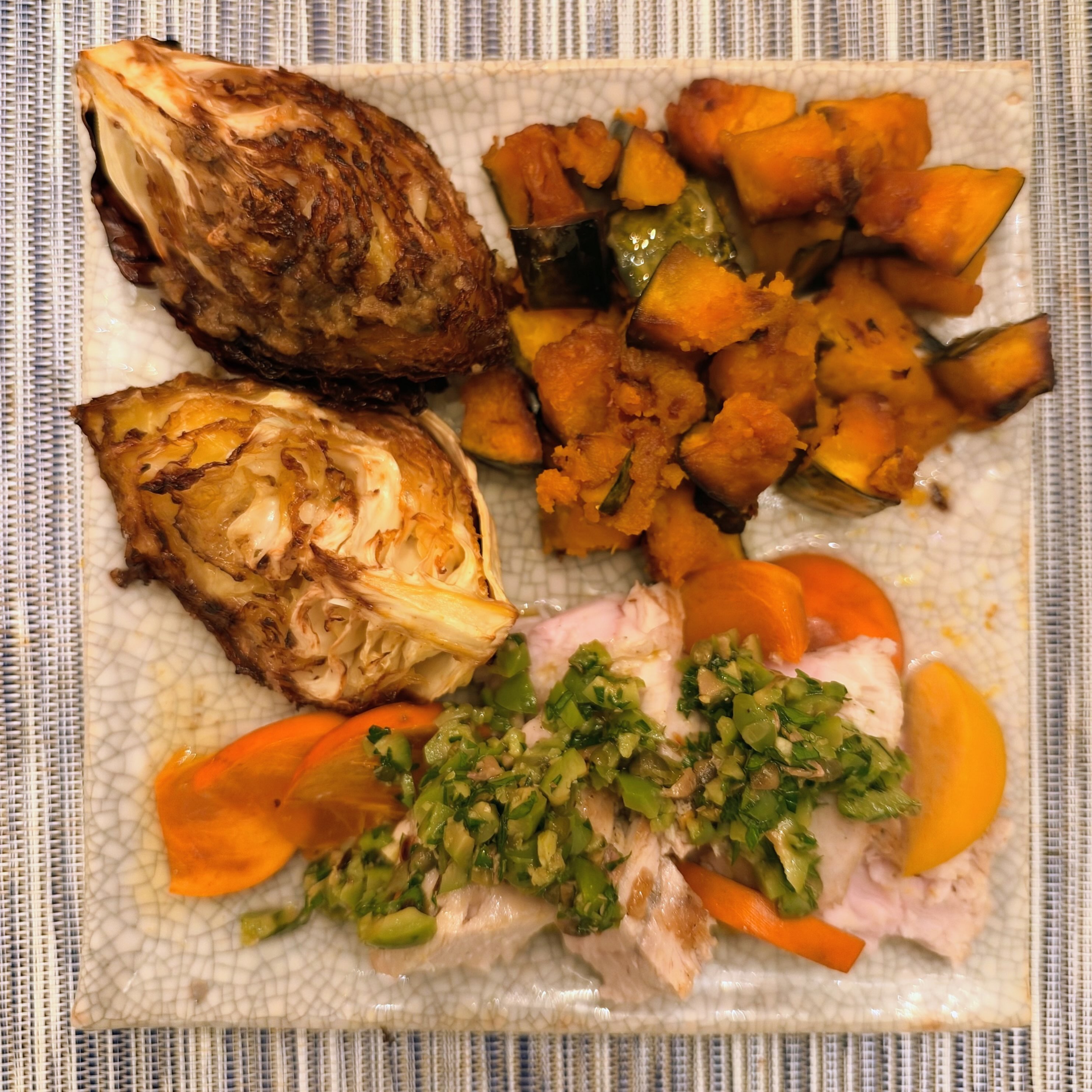
Sous Vide Swordfish
A controlled water bath cooks the thick steaks evenly without developing a dry outer layer. Skipping a final sear keeps the fish delicate beneath the assertive relish.
Ingredients
- 4 swordfish steaks, 5–6 ounces each and about 1 inch thick, skin removed
- 1 tablespoon extra-virgin olive oil
- 1/2 teaspoon fine sea salt
- 1/4 teaspoon freshly ground black pepper
Instructions
- Heat a sous vide bath to 145°F / 63°C.
- Pat the swordfish dry and season with salt and pepper. Arrange in one layer in sous vide bags with the olive oil; seal gently without crushing the fish.
- Submerge fully and cook for about 60 minutes for refrigerated, 1-inch-thick steaks. Check the center of a steak with an instant-read thermometer; it should reach 145°F. If needed, reseal and return to the bath until it does.
- Remove from the bags immediately, blot gently and cut across the grain into thick slices. Serve promptly rather than holding in the bath.
Notes
- These settings give moist, fully opaque fish rather than a rare center; thicker steaks require additional time.
- Swordfish is high in mercury and should be avoided by pregnant or breastfeeding people and young children.
Fuyu Persimmon and Green Olive Relish
Firm, sweet persimmon offsets the olives’ brine, while lemon and herbs keep the fish bright. Keeping the fruit in slices preserves its crisp texture.
Ingredients
- 2 ripe but firm Fuyu persimmons
- 3/4 cup pitted green olives, drained and coarsely chopped
- 1 tablespoon capers, drained and roughly chopped
- 1 tablespoon finely minced shallot
- 1/4 cup chopped flat-leaf parsley
- 1 teaspoon finely grated lemon zest
- 1 1/2 tablespoons fresh lemon juice, plus more to taste
- 3 tablespoons extra-virgin olive oil
- to taste freshly ground black pepper and sea salt
Instructions
- Combine the shallot and lemon juice in a bowl and let stand for 5 minutes.
- Stir in the olives, capers, parsley, lemon zest and olive oil. Keep the texture coarse and spoonable rather than puréed.
- Taste with a piece of persimmon, then adjust the lemon and pepper. Add salt only if needed.
- Remove the persimmon calyxes, halve the fruit and cut into thin wedges or half-moons, removing any seeds. Arrange with the fish and spoon the olive mixture over both.
Notes
- If the olives are aggressively salty, rinse and dry them before chopping.
- Make the olive mixture up to 4 hours ahead, but add parsley and slice the persimmons close to serving.
Roasted Savoy Cabbage
Roasting intact wedges creates crisp, browned outer leaves while the tightly packed centers become sweet and tender. Keeping a little core attached holds the wedges together.
Ingredients
- 1 medium head savoy cabbage, about 2 pounds
- 2 tablespoons extra-virgin olive oil
- 1/2 teaspoon fine sea salt
- 1/4 teaspoon freshly ground black pepper
Instructions
- Heat the oven to 425°F / 220°C with racks in the upper and lower thirds.
- Remove damaged outer leaves. Cut the cabbage into 8 wedges through the core, trimming only the tough exposed base so each wedge stays intact.
- Coat the wedges with olive oil, salt and pepper, working a little oil between the loose outer leaves. Arrange on a rimmed metal baking sheet with a cut face down.
- Roast for 20 minutes, turn onto the other cut face and roast for another 15–25 minutes. The cut faces should be deeply golden, the outer leaves crisp and the core easily pierced with a knife.
- Transfer to a warm platter and spoon over the kombucha garlic miso–brown butter sauce just before serving.
Notes
- If the leaves darken before the core softens, loosely cover the wedges with foil for the remaining roasting time.
Kombucha Garlic Miso–Brown Butter Sauce
Brown butter echoes the cabbage’s roasted sweetness, while fermented garlic miso adds a savory backbone. A little water and lemon make the sauce easier to spoon between the leaves.
Ingredients
- 4 tablespoons unsalted butter
- 1 1/2 tablespoons Shared Cultures kombucha garlic miso, verified gluten-free
- 2 tablespoons warm water, plus more as needed
- 1 teaspoon fresh lemon juice, plus more to taste
Instructions
- Whisk the miso with the warm water in a small heatproof bowl until mostly smooth.
- Melt the butter in a small light-colored saucepan over medium heat. Cook, swirling frequently, until the foam subsides and the milk solids turn hazelnut brown and smell nutty, about 4–6 minutes.
- Immediately remove from the heat and let cool for 30 seconds. Gradually whisk the brown butter, including the browned solids, into the miso mixture.
- Whisk in the lemon juice. Add warm water a teaspoon at a time if necessary to make a loose, glossy sauce, and spoon over the hot cabbage.
Notes
- Do not boil after adding the miso. If the sauce separates, whisk in a teaspoon of warm water.
- Miso salinity varies; start with 1 tablespoon if yours is particularly salty, then add more to taste.
Roasted Hokkaido Squash with Grassy Olive Oil
High heat browns the squash while leaving its dense orange flesh soft and chestnut-like. A final drizzle of fresh olive oil preserves the grassy aroma that would fade in the oven.
Ingredients
- 1 Hokkaido squash, about 2 pounds
- 1 1/2 tablespoons extra-virgin olive oil, for roasting
- 1 tablespoon grassy extra-virgin olive oil, for finishing
- 1/2 teaspoon fine sea salt
- to taste flaky sea salt
Instructions
- Scrub the squash, halve it and scoop out the seeds. Leave the edible skin on and cut into roughly 1 1/2-inch chunks.
- Toss with the roasting olive oil and fine salt. Spread on a second rimmed baking sheet with space between the pieces.
- Roast at 425°F / 220°C for 30–40 minutes, turning once, until browned on several edges and easily pierced with a knife. Rotate the sheets between oven racks if roasting alongside the cabbage.
- Transfer gently to a serving dish. Drizzle with the grassy finishing oil and add a little flaky salt.
Notes
- Avoid crowding the pan; the pieces should roast rather than steam.
Overall Timing / Workflow
The water bath handles the fish while both vegetables roast. Making the relish during that unattended cooking leaves only the quick brown butter sauce for the end.
Instructions
- 0:00 — Heat the sous vide bath to 145°F / 63°C and the oven to 425°F / 220°C. Season and bag the swordfish.
- 0:15 — Once the bath is ready, add the fish. Cut the cabbage and squash and prepare their separate roasting sheets.
- 0:25 — Put both vegetables in the oven. Prepare the olive relish while they roast.
- 0:45 — Turn the vegetables and rotate the baking sheets between racks.
- 1:00 — Check the squash and cabbage; remove each when tender and browned. Keep loosely covered in a warm place.
- 1:05 — Make the brown butter–miso sauce and slice the persimmons.
- 1:15 — Check the swordfish for a 145°F center, continuing in the bath if needed. Slice, dress the cabbage and plate immediately.
Notes
- Bath and oven preheating times vary; start the fish timer only after the bath reaches its set temperature.
Plating
Keeping the components distinct preserves the cabbage’s crisp leaves, the squash’s browned edges and the relish’s fresh texture.
Instructions
- Arrange persimmon slices in a loose fan on each warm plate and lay the sliced swordfish partly over them.
- Spoon the green olive relish generously across the fish, allowing some to fall onto the persimmon.
- Set two cabbage wedges alongside and spoon the warm miso–brown butter sauce over their cut faces.
- Add a small pile of squash, keeping its grassy olive oil separate from the relish and cabbage sauce.
Leftover Path
Separate storage keeps the fresh relish bright and prevents the roasted vegetables from soaking up excess moisture. The fish is especially good served cold rather than repeatedly heated.
Instructions
- Refrigerate leftovers in separate shallow airtight containers within 2 hours. Use the fish within 2 days and the vegetables within 3–4 days.
- Serve leftover swordfish cold or just cool, flaked over greens with persimmon and the olive relish. Use the relish and sliced persimmon within 2 days for best texture.
- Reheat the cabbage and squash at 375°F / 190°C for 10–15 minutes, until hot; loosely cover cabbage that already has sauce on it.
- Warm leftover miso–brown butter sauce gently with a splash of water, whisking to bring it back together.