Sous Vide Swordfish with Salsa Verde, Fresh Cannellini Beans, and Tomato-Braised Romano Beans
Gentle sous vide cooking keeps swordfish moist and clean-tasting beneath a generous spoonful of chunky, lemony salsa verde. Fresh cannellini bring creamy texture, while Romano beans braised with ripe tomatoes make this a generous late-summer plate.
By Jonathan Katzman · Cooked and photographed · Recipe updated
Serves: 4 servings
Tags: gluten-free, dairy-free, nut-free, pescatarian
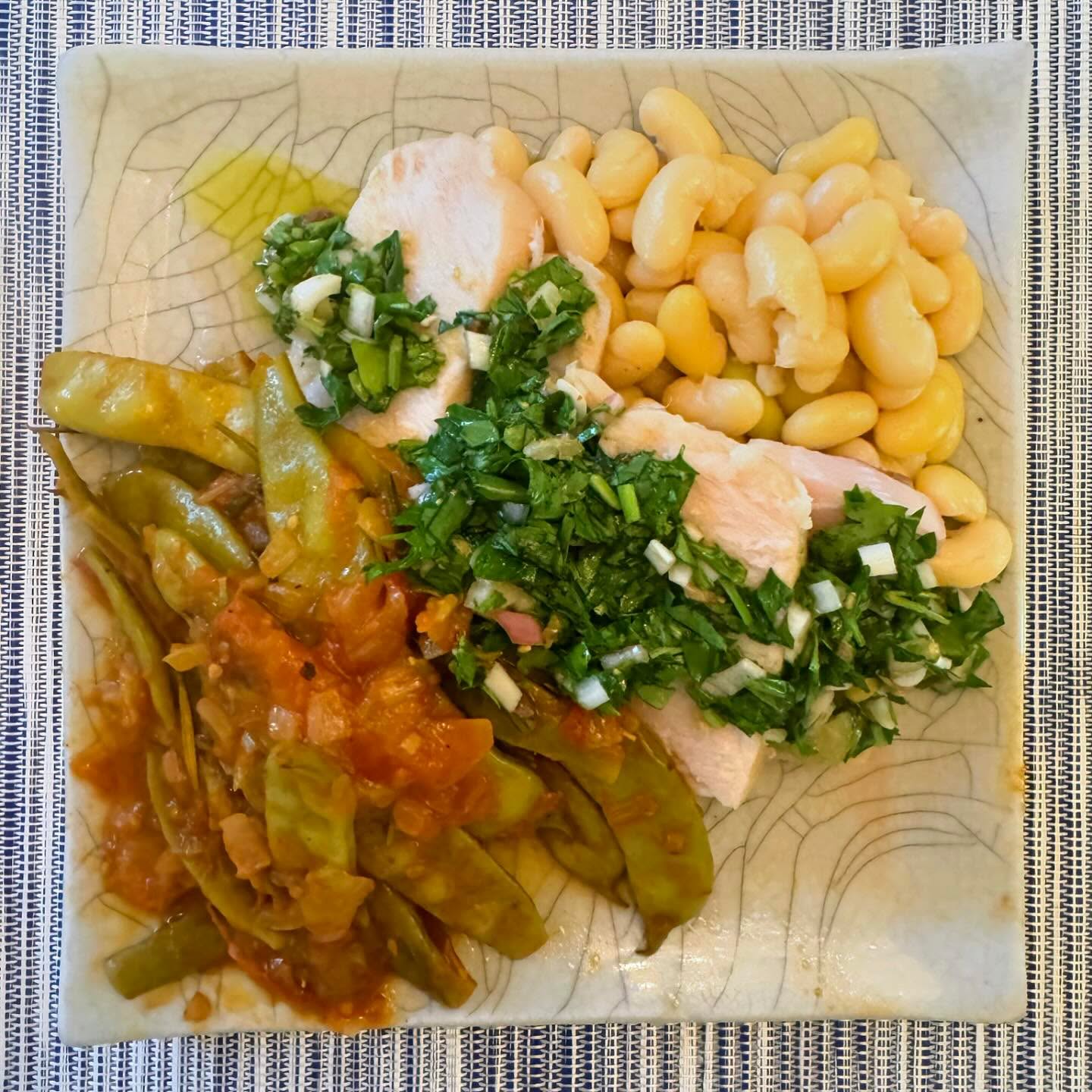
Sous Vide Swordfish
Gentle, controlled cooking preserves the swordfish's moisture without adding a crust that would compete with the fresh herb sauce.
Ingredients
- 1.5 lb swordfish steaks, about 1 inch thick, skin and dark bloodline removed
- 1 tbsp extra-virgin olive oil
- 0.75 tsp kosher salt
- 0.25 tsp freshly ground black pepper
Instructions
- Heat a sous vide bath to 145°F / 63°C.
- Pat the swordfish dry and season with salt and pepper. Arrange in a single layer in a cooking bag with the olive oil. Seal gently without compressing the fish.
- Submerge fully and cook for 60–75 minutes for 1-inch-thick steaks. Check that the center has reached 145°F / 63°C with an instant-read thermometer; if it has not, reseal and continue cooking.
- Lift the fish out carefully and blot away excess surface moisture. Leave unseared and cut into thick serving pieces immediately before plating.
Notes
- Start with refrigerator-cold, fully thawed fish. Thicker steaks need additional time; use the center temperature rather than the clock alone.
- Swordfish is high in mercury and is not recommended for pregnant or breastfeeding people or young children.
Chunky Parsley Salsa Verde
Hand-chopped parsley, briny capers, and sharp lemon provide freshness and texture against the mild fish and creamy beans.
Ingredients
- 1.5 cups loosely packed flat-leaf parsley leaves and tender stems
- 1 small shallot, finely diced
- 2 tbsp drained capers, roughly chopped
- 1 small clove garlic, finely grated
- 2 tbsp fresh lemon juice
- 1 tsp finely grated lemon zest
- 0.33 cup extra-virgin olive oil
- to taste kosher salt and freshly ground black pepper
Instructions
- Combine the shallot, capers, garlic, and lemon juice in a bowl. Let stand for 10 minutes to soften the shallot's bite.
- Hand-chop the parsley, keeping some leafy texture rather than mincing it to a paste.
- Stir the parsley, lemon zest, and olive oil into the shallot mixture shortly before serving. Season with salt and pepper; taste before salting because the capers contribute plenty.
- Adjust with a little more lemon juice if flat or olive oil if too sharp. The sauce should be chunky and spoonable, not blended smooth.
Notes
- For the brightest color and freshest texture, add the parsley no more than 30 minutes before serving.
Fresh Cannellini Beans with Olive Oil
Fresh shell beans cook to a delicate, creamy center without soaking. A little cooking liquor and olive oil keep them glossy rather than dry.
Ingredients
- 1.25 lb fresh shelled cannellini beans, from approximately 3 lb beans in their pods
- 2 cloves garlic, lightly crushed
- 1 bay leaf
- 3 tbsp extra-virgin olive oil
- as needed water
- to taste kosher salt
Instructions
- Rinse the shelled beans and place in a saucepan with the garlic and bay leaf. Cover with water by about 1 inch.
- Bring to a boil, then reduce to a gentle simmer. Cook partially covered for 25–45 minutes, adding hot water as needed to keep the beans submerged.
- Begin tasting after 20 minutes. The beans are ready when creamy all the way through, with no chalky center, but still holding their shape.
- Season the cooking liquid with salt near the end of cooking and let the beans stand in it for 5–10 minutes.
- Remove the bay leaf and garlic. Scoop out the beans with a little cooking liquor, then fold in the olive oil. Keep warm and taste for salt before serving.
Notes
- Fresh shell beans vary considerably in cooking time; older or more mature beans can take longer.
- If fresh cannellini are unavailable, use 3 cups cooked cannellini and warm gently with the aromatics, a splash of water, and olive oil.
Tomato-Braised Romano Beans
Romano beans become silky and sweet with a slow simmer. Ripe tomatoes reduce around them into a savory sauce rather than a watery broth.
Ingredients
- 1.5 lb Romano beans, stem ends trimmed and pods cut diagonally into 2–3-inch pieces
- 1.25 lb ripe tomatoes, cored and roughly chopped
- 1 small yellow onion, finely diced
- 3 cloves garlic, thinly sliced
- 3 tbsp extra-virgin olive oil
- 0.5 cup water, plus more as needed
- 1 tsp red wine vinegar, plus more to taste
- to taste kosher salt and freshly ground black pepper
Instructions
- Warm the olive oil in a wide, lidded saucepan over medium heat. Add the onion and a pinch of salt; cook for 7–9 minutes until soft and translucent, without browning.
- Add the garlic and stir for 1 minute. Add the tomatoes and cook for 5–7 minutes, crushing them lightly as they begin to collapse.
- Add the Romano beans and water. Season lightly, bring to a simmer, and cover.
- Cook over low heat for 25–35 minutes, stirring occasionally, until the beans are fully tender and supple rather than crisp. Add a splash of water if the pan starts to dry.
- Uncover and simmer for 5–10 minutes if necessary to reduce the tomato juices to a sauce that clings to the beans.
- Stir in the vinegar and adjust salt and pepper. Serve warm rather than piping hot.
Notes
- The beans will turn olive green as they braise; tenderness and a concentrated tomato sauce are the goal here.
Overall Timing / Workflow
Both bean dishes hold well, leaving the fish and fresh herb sauce as the only last-minute tasks.
Instructions
- 0:00 — Heat the sous vide bath, shell the cannellini, and start their simmering liquid.
- 0:15 — Bag the swordfish and put it in the heated bath. Start the onion and tomato base for the Romano beans.
- 0:30 — Add the Romano beans to their braise. Check the cannellini periodically and keep them at a gentle simmer.
- 0:40 — Chop the salsa ingredients and macerate the shallot with lemon, capers, and garlic; hold the parsley separately.
- 0:55 — Finish the cannellini when tender and hold them in a little cooking liquor. Check the Romano beans and reduce their sauce if needed.
- 1:10 — Fold the parsley and oil into the salsa verde and warm the plates.
- 1:15–1:30 — Verify the swordfish's center temperature, lift it from the bag, and portion it. Finish seasoning the beans and serve immediately.
Plating
Distinct groups keep the creamy shell beans and tomato braise recognizable, while the salsa ties the fish to both sides.
Instructions
- Spoon the cannellini onto one side of each warm plate, allowing a little olive oil and cooking liquor to pool underneath.
- Arrange the tomato-braised Romano beans alongside, keeping their sauce concentrated around the pods.
- Place thick pieces of swordfish between the two bean preparations.
- Spoon the chunky salsa verde generously over the swordfish, allowing some to fall onto the beans.
Leftover Path
Keeping the herb sauce separate preserves its freshness and allows gentle reheating without overcooking the fish.
Instructions
- Refrigerate the fish, each bean preparation, and the salsa separately in shallow, covered containers within 2 hours of cooking.
- Use the fish within 1–2 days and the beans within 3–4 days. Use the salsa within 2 days for the best color and flavor.
- For a cold lunch, flake the swordfish over the cannellini and dress with salsa verde; serve the Romano beans alongside.
- For a hot meal, warm the beans with a splash of water. Reheat the fish covered over gentle heat until it reaches 165°F / 74°C, then add the salsa off heat.
Notes
- The cannellini and Romano beans freeze well separately for up to 2 months; the fresh salsa is best made anew.