Sous Vide Wild King Salmon with Miso Corn, Roasted Asparagus and Arrowhead Cabbage
Silky wild king salmon sits over sweet corn browned in the pan and finished with savory miso and chives. Roasted arrowhead cabbage catches the juices beneath tender asparagus, with just enough lemon to brighten the rich fish and caramelized vegetables.
By Jonathan Katzman · Cooked and photographed · Recipe updated
Serves: 4 servings
Tags: gluten-free, nut-free, pescatarian
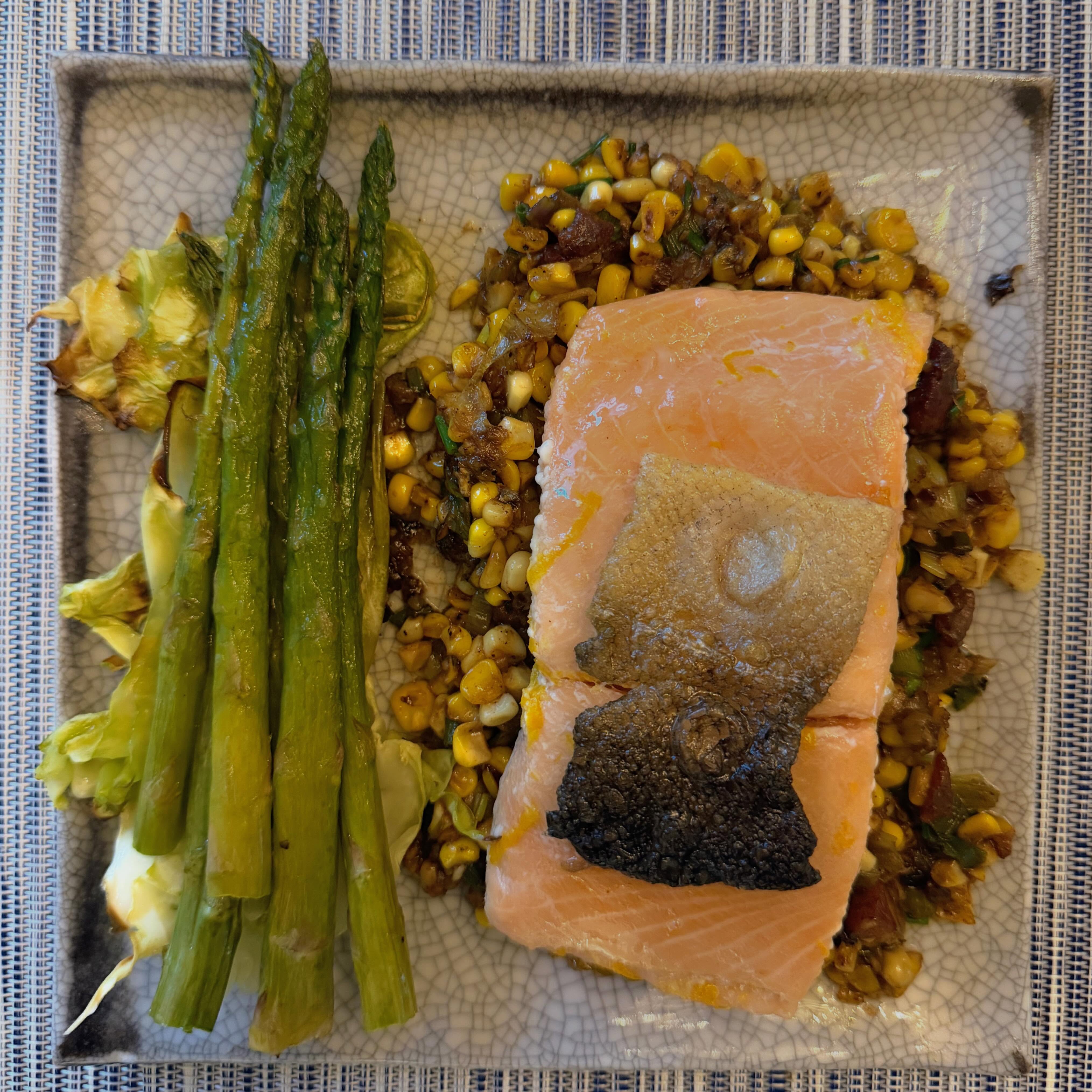
Sous Vide Wild King Salmon
A gentle water bath preserves king salmon's rich texture without a browned crust, letting the sweet corn and roasted vegetables provide contrast.
Ingredients
- 4 portions skin-on wild king salmon, 5–6 oz each and approximately 1 inch thick, pin bones removed
- 1 tbsp extra-virgin olive oil
- 3/4 tsp fine sea salt
- 1/2 tsp finely grated lemon zest
Instructions
- Heat a sous vide bath to 122°F / 50°C for silky, medium-rare salmon.
- Pat the salmon dry and season with the salt. Place in food-safe sous vide bags with the olive oil, arranging portions in a single layer. Seal gently without compressing the flesh.
- Submerge fully and cook refrigerated, approximately 1-inch-thick portions for 40–50 minutes. The flesh should be glossy and tender, separating into broad flakes with gentle pressure.
- Open the bags just before serving. Lift the salmon out carefully with a wide spatula and blot away surface moisture without pressing. Leave the skin attached, or gently peel it away if preferred.
- Scatter the lemon zest lightly over the fish and serve immediately without searing.
Notes
- This low-temperature method is not pasteurizing. Use fish handled for raw or undercooked service, with appropriate commercial parasite control for wild salmon; freezing does not eliminate all food-safety risks. For higher-risk diners, cook salmon to an internal temperature of 145°F / 63°C instead.
Pan-Roasted Miso Corn
Browning the corn before adding miso builds roasted sweetness without scorching the fermented paste. A little water turns the miso into a light glaze rather than a heavy sauce.
Ingredients
- 4 cups fresh sweet corn kernels, cut from approximately 5–6 ears
- 2 tbsp ghee
- 2 medium shallots, diced
- 1 1/2 tbsp gluten-free white miso
- 2 tbsp water, plus more as needed
- 2 tsp fresh lemon juice
- 2 tbsp chopped chives
- to taste fine sea salt and freshly ground black pepper
Instructions
- Whisk the miso with the water until smooth.
- Heat a wide, heavy skillet over medium-high heat. Add the ghee, then the corn, spreading it into a shallow layer. Cook undisturbed for 2–3 minutes, until patches underneath are golden brown.
- Stir, add the shallots, and cook for another 6–8 minutes, stirring occasionally, until the corn is crisp-tender and the shallots are soft and browned. Use two batches if the skillet is crowded.
- Reduce the heat to low. Stir in the diluted miso and toss for 30–60 seconds, just until the kernels are glossy. Add a splash of water if the glaze looks pasty.
- Remove from the heat and fold in the lemon juice and chives. Taste before adding salt; finish with black pepper.
Notes
- Dry the kernels well before cooking and avoid frequent stirring at first; moisture and crowding prevent browning.
Roasted Arrowhead Cabbage
Arrowhead cabbage has tender leaves that roast into sweet, supple layers with crisp edges. Keeping a small piece of core attached makes the wedges easy to turn and plate.
Ingredients
- 1 medium head arrowhead cabbage, approximately 1 1/2 lb
- 2 tbsp extra-virgin olive oil
- 1/2 tsp fine sea salt
- 1/4 tsp freshly ground black pepper
- 2 tsp fresh lemon juice
Instructions
- Heat the oven to 425°F / 220°C. Cut the cabbage lengthwise into 8 narrow wedges, trimming the tough core while leaving enough to hold the layers together.
- Coat the wedges with olive oil, salt and pepper, working a little oil between the outer leaves. Arrange cut-side down on a rimmed baking sheet without crowding.
- Roast for 15 minutes, turn onto the other cut side, and roast for another 10–15 minutes, until the edges are deeply golden and the thickest ribs yield to a knife.
- Sprinkle with the lemon juice just before plating.
Roasted Asparagus
A short roast browns the asparagus tips while retaining some bite in the stems. Its grassy flavor balances the sweet corn and rich salmon.
Ingredients
- 1 lb medium-thick asparagus, woody ends trimmed
- 1 tbsp extra-virgin olive oil
- 1/4 tsp fine sea salt
- to taste freshly ground black pepper
- 1 tsp fresh lemon juice
Instructions
- Toss the asparagus with olive oil, salt and pepper. Arrange in a single layer on a separate baking sheet.
- Roast at 425°F / 220°C for 10–14 minutes, turning once, until the tips are lightly browned and the stems are tender but not limp. Start checking thin spears after 7 minutes.
- Toss with the lemon juice immediately before serving.
Overall Timing / Workflow
The salmon cooks gently while the oven handles the vegetables. Cooking the corn last keeps its browned texture and miso glaze fresh.
Instructions
- 0:00 — Heat the water bath to 122°F / 50°C and the oven to 425°F / 220°C. Season and bag the salmon.
- 0:10 — Put the salmon in the bath once it reaches temperature. Cut and season the cabbage, then begin roasting it.
- 0:20 — Cut the corn from the cobs, dice the shallots, chop the chives and prepare the diluted miso. Trim and season the asparagus.
- 0:35 — Turn the cabbage and put the asparagus in the oven. Begin pan-roasting the corn.
- 0:45 — Check both roasted vegetables and remove them as they finish. Finish the corn with miso, lemon and chives; keep warm over very low heat only briefly.
- 0:50–1:00 — Once the salmon has completed its bath, lift it out carefully, finish with lemon zest and plate everything on warm plates.
Plating
Two distinct stacks preserve the original arrangement and keep the salmon as the focus without burying the roasted vegetables.
Instructions
- Spoon a broad bed of miso corn onto one side of each warm plate.
- Lay a salmon portion over the corn, keeping the glossy flesh and attached skin intact.
- Arrange two cabbage wedges on the other side and lay the asparagus lengthwise over them.
- Spoon any remaining light corn glaze around the salmon rather than over its surface. Serve immediately.
Leftover Path
Storing the fish separately prevents the vegetables from becoming wet and allows each component to be reheated appropriately.
Instructions
- For the low-temperature salmon, cook only what you intend to serve immediately; do not treat it as pasteurized cook-chill fish.
- Refrigerate leftover vegetables in shallow, covered containers within 2 hours and use within 3–4 days.
- Reheat the corn in a skillet with a small splash of water. Warm the cabbage and asparagus in a 375°F / 190°C oven until hot, allowing their edges to crisp again.
- If salmon was fully cooked to 145°F / 63°C, refrigerate promptly and use within 3 days; flake it over the reheated vegetables or serve it cold with lemon.