Spring Asparagus, Ricotta and Lemon Banza Gemelli
Tender asparagus and lemon brighten a generous coating of whole-milk ricotta, with gemelli twists catching the sauce. Soft shallot and chives keep it savory and fresh—a simple spring supper best tossed together just before sitting down.
By Jonathan Katzman · Cooked and photographed · Recipe updated
Serves: 4 servings
Tags: vegetarian, gluten-free, nut-free
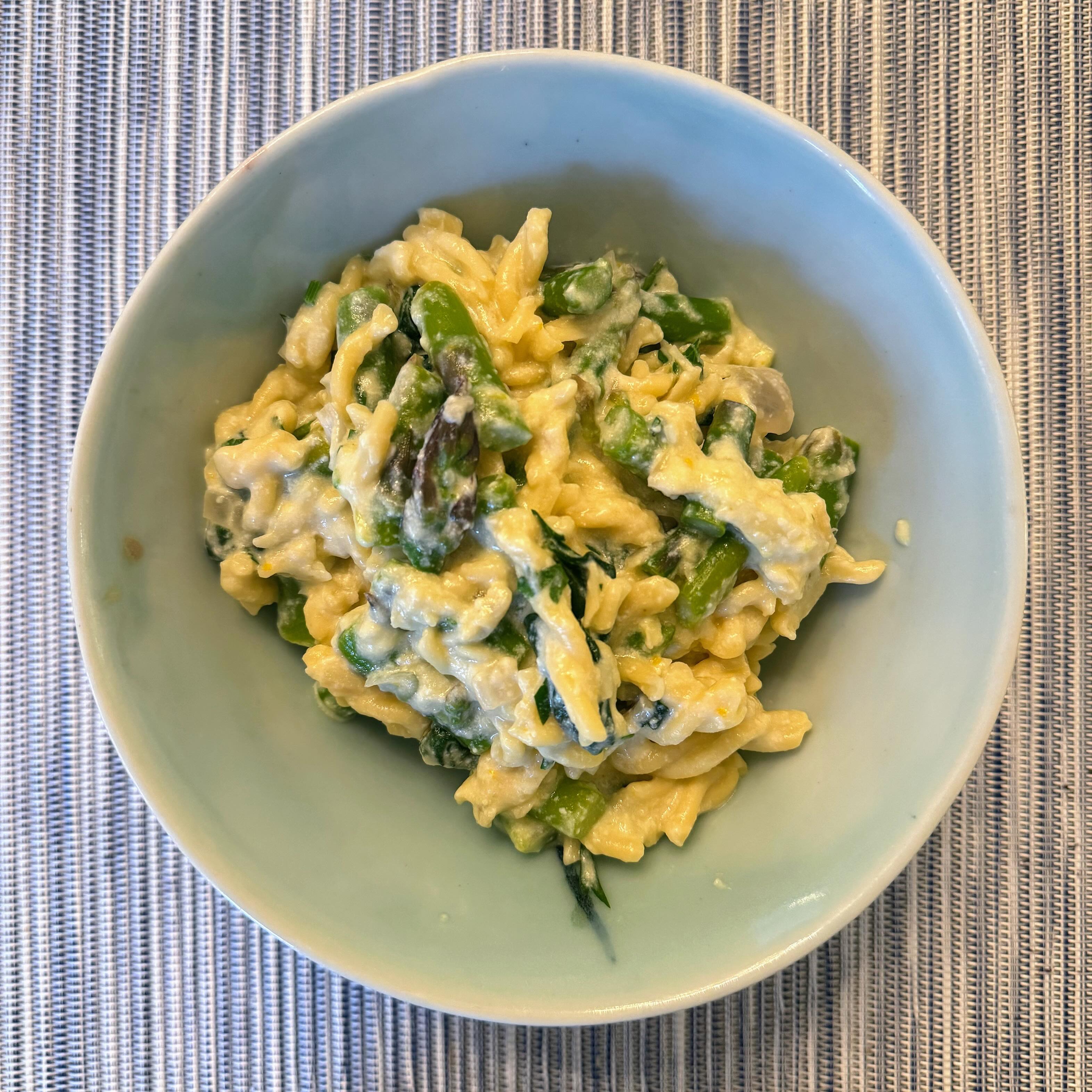
Banza Gemelli with Asparagus and Lemon Ricotta
Ricotta loosens into a creamy coating with warm pasta water, without needing cream. Gently steaming the asparagus preserves its sweetness and bite, while lemon zest adds fragrance without excessive acidity.
Ingredients
- 16 oz Banza gluten-free chickpea gemelli
- 1½ lb asparagus, woody ends trimmed
- 1½ cups whole-milk ricotta, made without animal rennet
- 1 large shallot, thinly sliced
- 1 tbsp ghee
- 1 large lemon, finely zested and juiced
- 2 tbsp finely sliced chives
- ¼ cup water, for steaming asparagus
- 1 cup reserved pasta cooking water, used as needed
- to taste kosher salt and freshly ground black pepper
Instructions
- Bring a large pot of water to a boil and salt it. Cut the asparagus on the diagonal into 1½-inch pieces, keeping the tips separate from the stems.
- In a large serving bowl, stir the ricotta with the lemon zest, 1 tablespoon lemon juice, a pinch of salt and a little black pepper. Let stand at room temperature while the pasta cooks.
- Heat the ghee in a wide skillet over medium heat. Add the shallot and a pinch of salt; cook for 3–4 minutes, stirring, until translucent and soft without browning.
- Add the asparagus stems and ¼ cup water. Cover and cook for 2 minutes, then add the tips and cook, covered, for another 1–2 minutes. Uncover and let any excess water evaporate briefly. The asparagus should be bright green and just tender, with a little resistance at the center. Remove from the heat.
- Meanwhile, cook the gemelli according to its package directions, stirring gently and checking at the early end of the cooking range. Drain when tender but still firm, reserving 1 cup cooking water first.
- Whisk ⅓ cup hot pasta water into the ricotta mixture. Immediately add the drained pasta, asparagus and shallot, and fold gently until coated. Keep the ricotta off direct heat.
- Add more pasta water a tablespoon at a time until the sauce coats the twists generously without becoming stiff or soupy. Fold in most of the chives. Taste and adjust the salt, pepper and lemon juice; reserve the remaining chives for serving.
Notes
- Ricotta should retain a little texture; avoid boiling it in the skillet, which can make the coating grainy and dry.
- Chickpea pasta becomes fragile when overcooked. Toss gently and serve promptly, leaving the sauce slightly looser than you want on the plate.
Overall Timing / Workflow
Preparing the ricotta before draining the pasta lets residual heat bring the sauce together without further cooking.
Instructions
- 0:00 — Put the pasta water on to boil. Trim and cut the asparagus, slice the shallot and chives, and zest and juice the lemon.
- 0:10 — Mix the lemon ricotta and begin softening the shallot.
- 0:15 — Cook the pasta and steam the asparagus in parallel, adjusting to the pasta package timing.
- 0:25–0:30 — Reserve pasta water, drain, fold everything into the ricotta and serve immediately.
Plating
Warm shallow bowls keep the sauce supple and show off the asparagus among the pasta twists.
Instructions
- Divide the pasta among four warm shallow bowls, distributing the asparagus tips across the top.
- Finish with the reserved chives and a little freshly ground black pepper. Serve while the ricotta coating is still soft and glossy.
Leftover Path
A little water restores moisture as the ricotta and chickpea pasta firm up in the refrigerator.
Instructions
- Refrigerate leftovers in an airtight container within 2 hours and use within 3 days.
- Reheat individual portions gently in a covered skillet over low heat with 1–2 tablespoons water, folding only as needed. Heat until steaming throughout without prolonged boiling.
- Taste after reheating and refresh with a few drops of lemon juice if needed; expect softer pasta and asparagus than on the first night.