Spring Pasta Primavera with Spring Onions and Green Garlic
Sweet spring onions and green garlic soften into a light Parmesan cream sauce that catches in every curl of pasta. Asparagus and peas stay bright and tender-crisp, with lemon and parsley keeping the finish fresh—a good dinner for the height of Bay Area spring.
By Jonathan Katzman · Cooked and photographed · Recipe updated
Serves: 4 servings
Tags: gluten-free, nut-free
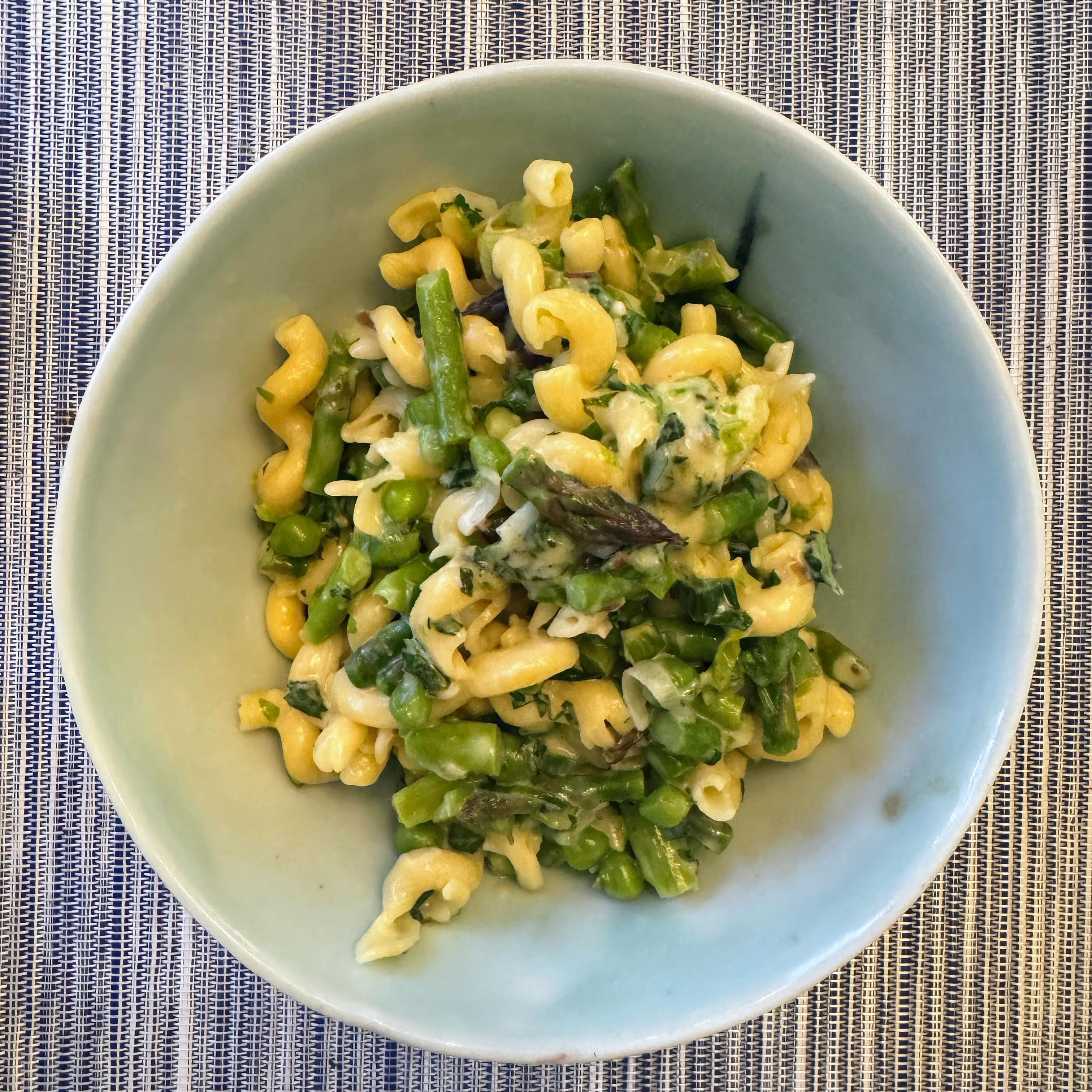
Spring Pasta Primavera
Cooking the alliums gently draws out their sweetness without obscuring the delicate green garlic. A little cream and pasta water carry the Parmesan through the pasta while briefly cooked asparagus and peas retain their texture.
Ingredients
- 12 oz gluten-free Banza cavatappi
- 1 lb asparagus, woody ends trimmed, stems cut into 1-inch pieces and tips kept separate
- 1 cup shelled fresh peas or frozen peas
- 3 spring onions, bulbs and tender greens thinly sliced and kept separate
- 2 stalks green garlic, roots and tough tops removed, tender white and pale-green parts thinly sliced
- 1 tbsp ghee
- 1/3 cup heavy cream
- 3 oz Parmigiano Reggiano, finely grated, divided
- 1 tbsp unsalted butter
- 1 tsp finely grated lemon zest
- 1 tbsp fresh lemon juice, plus more to taste
- 1/4 cup chopped flat-leaf parsley
- to taste kosher salt and freshly ground black pepper
Instructions
- Bring a large pot of salted water to a boil. Have all the vegetables cut and the cheese grated before starting the pasta.
- Heat the ghee in a wide, deep skillet over medium heat. Add the spring onion bulbs, green garlic, and a pinch of salt. Cook gently for 4–5 minutes, stirring, until softened and fragrant but not browned.
- Add the asparagus stems and 1/4 cup water to the skillet. Cover and cook for 2 minutes. Add the asparagus tips, peas, and spring onion greens; cook uncovered for another 2–3 minutes, until bright green and just tender. Add a splash of water if the pan dries out.
- Meanwhile, cook the cavatappi according to the package directions, checking early so it remains firm enough to finish in the skillet. Reserve 1 1/2 cups cooking water before draining; do not rinse.
- Add the cream and 1/3 cup reserved pasta water to the vegetables. Bring to a gentle simmer, then fold in the drained pasta and toss over medium-low heat for 30–60 seconds.
- Remove the skillet from the heat. Add the butter, lemon zest, and about two-thirds of the Parmesan, folding gently until glossy. Add more warm pasta water a few tablespoons at a time until the sauce lightly coats the pasta rather than clumping.
- Fold in the parsley and lemon juice. Taste for salt, pepper, and additional lemon. Serve immediately with the remaining Parmesan.
Notes
- Green garlic can hold grit between its layers; split thick stalks lengthwise and rinse before slicing. Discard any fibrous outer layers.
- For unusually large fresh peas, add them with the asparagus stems; frozen peas need only the final 1–2 minutes of vegetable cooking.
- Keep the sauce slightly looser than you want on the plate: chickpea pasta absorbs liquid quickly. If it tightens, fold in warm water off heat rather than adding more cheese.
- For a vegetarian version, use a vegetarian-rennet Parmesan-style cheese in place of Parmigiano Reggiano.
Overall Timing / Workflow
Preparing everything before cooking lets the pasta and vegetables finish together without overcooking either.
Instructions
- 0:00 — Put the pasta water on to heat, then trim and slice the vegetables, grate the cheese, and prepare the lemon and parsley.
- 0:20 — Start softening the spring onions and green garlic. Add the pasta to the boiling water, adjusting its start to the package cooking time.
- 0:25 — Cook the asparagus and peas while the pasta boils.
- 0:30–0:40 — Reserve pasta water, drain, and finish the pasta in the vegetable cream sauce. Fold in butter, cheese, lemon, and parsley off heat, then serve.
Plating
Warm, shallow bowls keep the sauce fluid and show the generous proportion of spring vegetables.
Instructions
- Divide the pasta among four warm bowls, distributing the peas and asparagus evenly.
- Position a few asparagus tips on top and finish with the reserved Parmesan and a little black pepper. Serve while the sauce is glossy.
Leftover Path
Gentle reheating with a little water loosens the absorbed sauce without making the pasta oily or breaking the curls.
Instructions
- Refrigerate leftovers in an airtight container within 2 hours and use within 3 days.
- Reheat in a covered skillet over low heat with 2–3 tablespoons water per serving, folding gently until steaming hot throughout.
- Finish with a small squeeze of lemon to refresh the flavor. Avoid prolonged simmering, which softens the pasta and dulls the vegetables.