Steelhead Trout Piccata with Roasted Cabbage and Sweet Potato Fries
Golden steelhead gets a generous spoonful of lemon–caper butter sauce, with enough left over to catch in the folds of roasted cabbage. Thick sweet potato fries bring caramelized edges and a little sweetness against the briny sauce—a bright, satisfying plate for a cool evening.
By Jonathan Katzman · Cooked and photographed · Recipe updated
Serves: 4 servings
Tags: gluten-free, nut-free, pescatarian
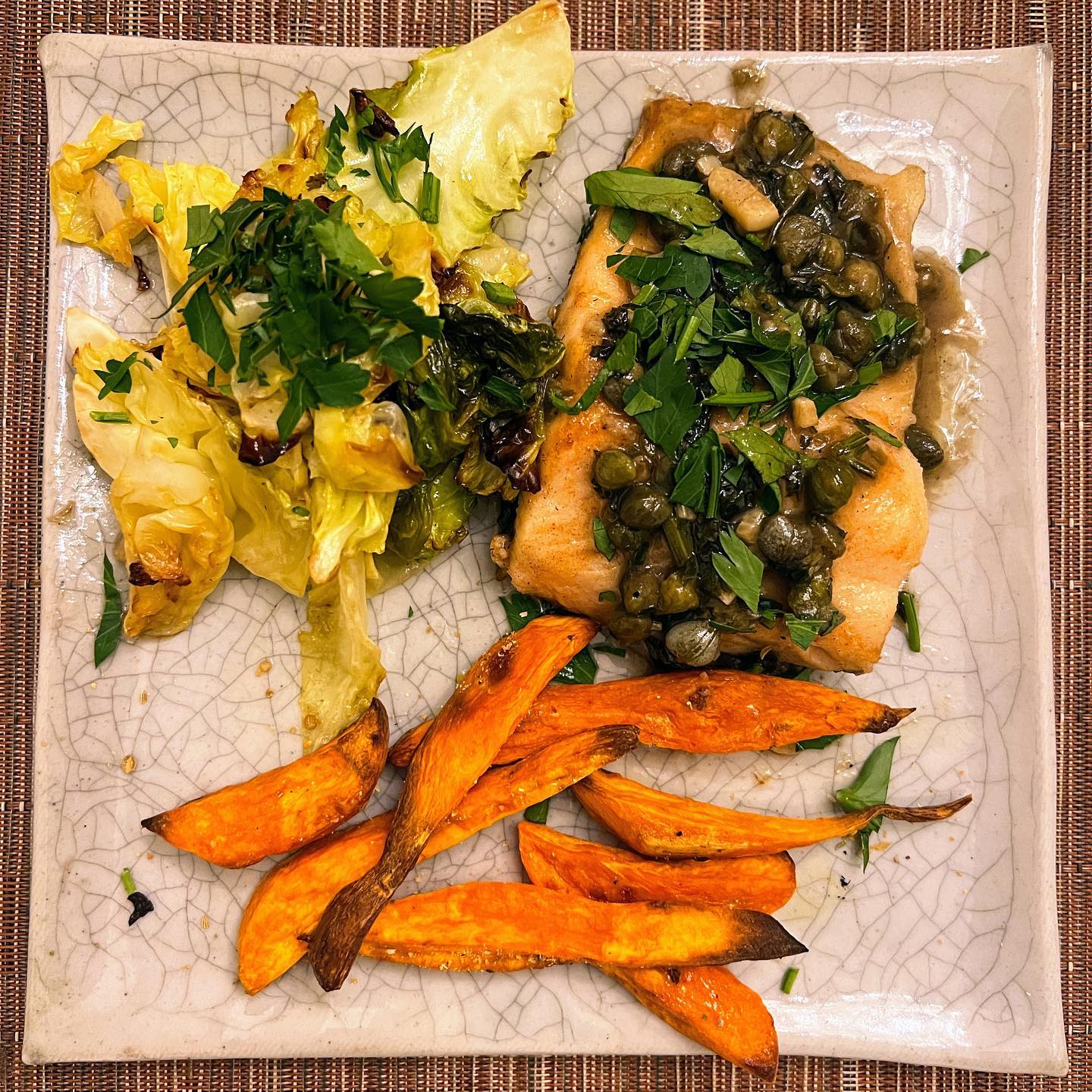
Pan-Seared Steelhead Trout
A thin cassava coating helps the trout brown quickly while leaving the interior moist. Its lightly crisp surface catches the piccata sauce without a heavy crust.
Ingredients
- 4 portions skinless steelhead trout, 5–6 ounces each, pin bones removed
- 3 tablespoons cassava flour
- 1/2 teaspoon kosher salt, plus more to taste
- 1/4 teaspoon freshly ground black pepper
- 2 tablespoons ghee, divided
Instructions
- Pat the trout very dry. Season with salt and pepper just before cooking, then dust lightly with cassava flour and shake off all visible excess.
- Heat a large skillet over medium-high heat. Add 1 tablespoon ghee, then add two trout portions, presentation side down. Sear without moving for 3–4 minutes, until golden and easily released.
- Turn carefully, reduce the heat to medium, and cook for another 1–3 minutes, depending on thickness. For fully cooked fish, the thickest part should reach 145°F and separate into moist flakes.
- Transfer to a warm plate. Repeat with the remaining ghee and fish, adjusting the heat to keep the flour residue golden rather than burnt. Reserve the skillet for the sauce.
Notes
- If using skin-on trout, dry the skin thoroughly and sear skin-side down first, spending most of the cooking time on that side.
- Do not cover the cooked fish tightly while making the sauce; trapped steam softens the crust.
Lemon–Caper Piccata Sauce
Wine and lemon loosen the browned pan juices, while cold butter turns the reduction into a glossy sauce. A generous quantity of capers seasons both the rich fish and the sweet roasted cabbage.
Ingredients
- 2 cloves garlic, thinly sliced
- 1/2 cup dry white wine
- 1/2 cup water
- 3 tablespoons fresh lemon juice, plus more to taste
- 1/3 cup capers, drained and rinsed if very salty
- 4 tablespoons cold unsalted butter, cubed
- 1/2 cup loosely packed flat-leaf parsley, roughly chopped, divided
- to taste kosher salt and freshly ground black pepper
Instructions
- After searing the trout, pour off excess fat, leaving about 1 teaspoon and the golden pan residue. Wipe away any blackened flour. Reduce the heat to medium-low.
- Add the garlic and stir for 20–30 seconds, just until fragrant. Pour in the wine, scrape up the browned bits, and simmer until reduced by about half, 2–3 minutes.
- Add the water, lemon juice, and capers. Simmer for 2–3 minutes, until slightly concentrated but still fluid.
- Turn the heat to very low or remove the skillet from the burner. Swirl in the cold butter a few cubes at a time until the sauce is glossy. Do not boil after adding the butter.
- Stir in half the parsley. Taste before adding salt, then adjust with pepper and lemon as needed. Spoon over the fish and cabbage, reserving the remaining parsley for finishing.
Notes
- If the sauce becomes too sharp or salty, loosen it with a tablespoon or two of water. If it separates, take it off the heat and whisk in a teaspoon of cold water.
Roasted Cabbage
Roasting thick, loosely intact wedges gives the cabbage tender centers and browned, crisp leaf edges. The folds hold the same lemon–caper sauce used on the fish.
Ingredients
- 1 medium head green cabbage, about 2 pounds
- 2 tablespoons olive oil
- 1/2 teaspoon kosher salt
- 1/4 teaspoon freshly ground black pepper
Instructions
- Heat the oven to 425°F with racks in the upper and lower thirds. Remove any damaged outer cabbage leaves.
- Cut the cabbage into 8 wedges, leaving a little core attached to hold them together. Coat with olive oil, salt, and pepper, working a little oil between the outer leaves.
- Arrange on a large rimmed baking sheet with a cut side down. Roast for 15–20 minutes, then turn carefully and continue roasting for 10–15 minutes, until the thick parts are tender and the outer leaves have dark golden edges.
- Separate the cooked wedges into a few broad, loose pieces if desired. Keep warm and dress with some of the piccata sauce just before serving.
Notes
- Leave room between the wedges so they roast rather than steam.
Roasted Sweet Potato Fries
Thick wedges develop caramelized tips while staying creamy inside. Keeping their seasoning simple lets their sweetness balance the lemon and capers.
Ingredients
- 2 pounds orange-fleshed sweet potatoes, scrubbed
- 2 tablespoons olive oil
- 3/4 teaspoon kosher salt
- 1/4 teaspoon freshly ground black pepper
Instructions
- Cut the sweet potatoes lengthwise into wedges about 1/2–3/4 inch thick at their widest point. Pat dry.
- Toss with olive oil, salt, and pepper. Spread on a separate large rimmed baking sheet, cut sides down, with space between the wedges.
- Roast at 425°F for 20 minutes. Turn the wedges, rotate the sheet, and roast for another 10–20 minutes, until tender inside with browned edges and tips.
- Taste for salt and serve promptly, keeping the fries out of the sauce so their roasted edges stay distinct.
Notes
- These are substantial oven-roasted fries with creamy centers, not brittle deep-fried shoestrings. Use two sheets if necessary to avoid crowding.
Overall Timing / Workflow
The vegetables roast while the fish and sauce are prepared on the stovetop. Making the sauce last keeps its butter emulsion glossy and the fish from sitting too long.
Instructions
- 0:00 — Heat the oven to 425°F. Cut and season the sweet potatoes and cabbage.
- 0:15 — Put both vegetables in the oven on separate sheets. Prepare the garlic, lemon juice, capers, butter, and parsley.
- 0:35 — Turn the vegetables and swap the sheets between racks. Pat the trout dry and set out the cassava flour.
- 0:40 — Begin searing the trout in batches. Check the vegetables and remove each sheet when browned and tender.
- 0:50 — Make the piccata sauce in the fish skillet while the trout rests briefly.
- 0:58 — Plate the fish and vegetables, spoon sauce over the trout and cabbage, and finish with parsley.
Notes
- Allow about 55–65 minutes total, depending on oven performance and fish thickness.
Plating
Keeping the fries separate preserves their roasted edges, while the fish and cabbage share a generous, cohesive sauce.
Instructions
- Place a trout portion on one side of each warm plate and arrange the roasted cabbage alongside it.
- Spoon the lemon–caper sauce generously over the trout, distributing the capers evenly. Let a little sauce run onto the cabbage.
- Arrange the sweet potato fries in a loose pile away from the sauce. Scatter the reserved parsley over the fish and cabbage and serve immediately.
Leftover Path
Gentle reheating protects the trout, while dry oven heat restores some texture to the vegetables.
Instructions
- Refrigerate leftovers in covered containers within 2 hours, keeping the fries separate from the fish and sauce. Use within 3 days.
- Reheat cabbage and fries on a baking sheet at 400°F for 10–15 minutes, checking the thinner pieces early.
- Warm the trout gently in a covered skillet with a splash of water until heated through; for reheated leftovers, target 165°F. Warm any separate sauce over very low heat with a little water, stirring rather than boiling.
- Alternatively, flake the chilled trout over a parsley-and-lemon salad with chopped leftover cabbage, and serve the reheated fries alongside.