Ribeye with Roasted Torpedo Onions, Early Girl Tomatoes and Basil, Summer Vegetables, and Duck-Fat Potatoes
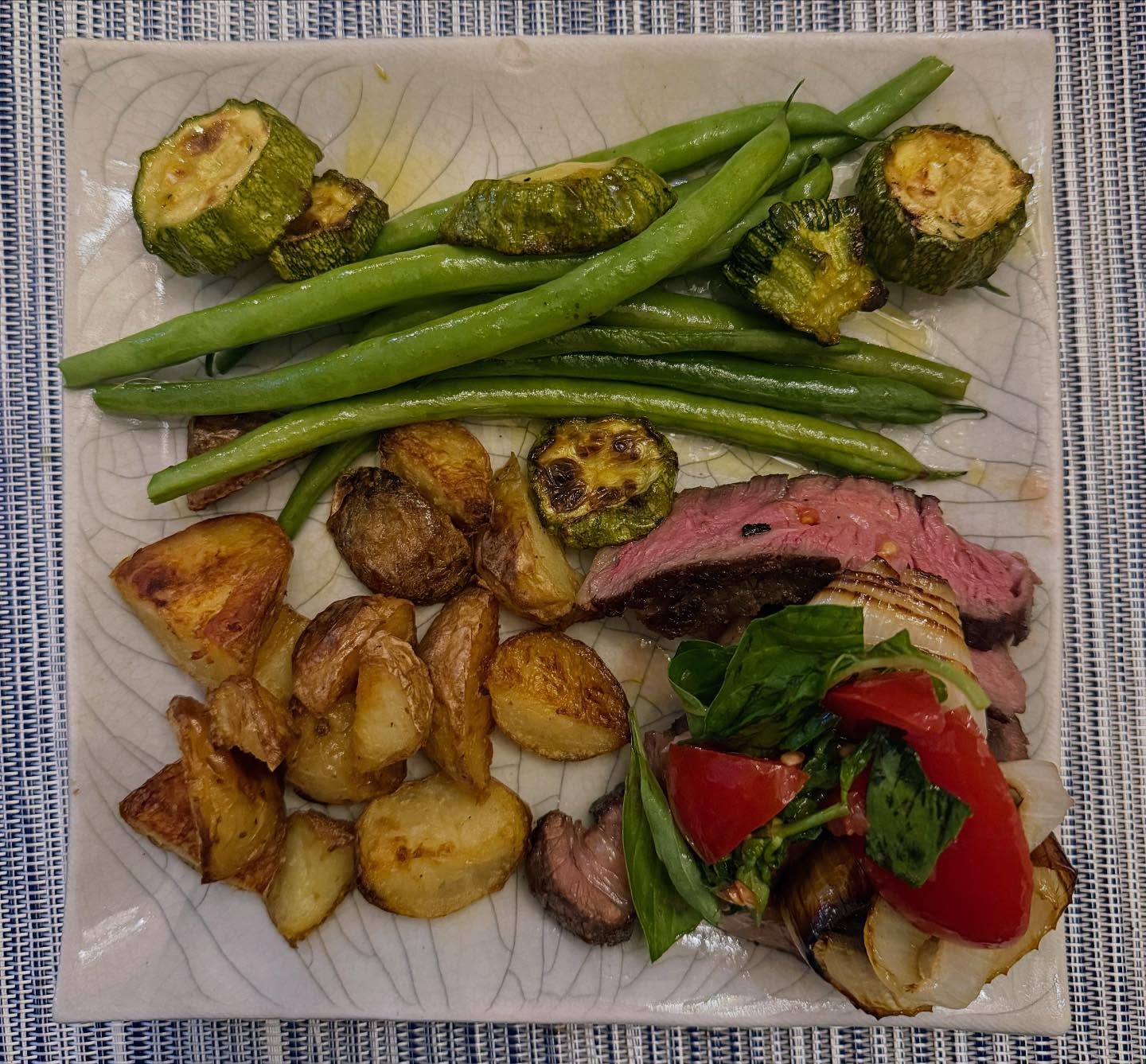
Rosy ribeye, sweet roasted torpedo onions, and juicy Early Girls make a late-summer Shabbat plate, with plenty of basil to brighten the beef. Crisp duck-fat potatoes, browned summer squash, and snappy string beans round it out without competing for attention.
By Jonathan Katzman · Cooked and photographed · Recipe updated
Serves: 4 servings
Tags: gluten-free, nut-free
Speed-Vide Ribeye, Seared and Seam-Carved
A hotter-than-target water bath brings the center up quickly, while a core thermometer prevents overcooking. Thorough drying and a brief, hot sear build a crust without sacrificing the pink interior.
Ingredients
- 2 lb thick boneless ribeye steaks, about 1½–2 inches thick, preferably Stemple Creek
- 8 g kosher salt
- 1 tbsp ghee
- ½ tsp freshly ground black pepper
- to taste flaky salt
Instructions
- Salt the steaks evenly. If time allows, refrigerate uncovered for 1–12 hours; otherwise proceed immediately.
- Heat a circulating water bath to 149°F / 65°C. Fit the core probe into the thermal center of the thickest steak, using a manufacturer-approved, watertight sous vide setup. Bag the steaks in a single layer and keep their thickness reasonably similar.
- Cook while continuously monitoring core temperature. Remove each steak when its center reaches 122–124°F / 50–51°C; begin checking early rather than relying on a fixed time. Do not leave the steaks in this hotter bath after reaching the target.
- Remove from the bags and pat extremely dry. Let surface steam dissipate for about 3 minutes while heating a heavy skillet until very hot.
- Add the ghee and sear the steaks for 45–60 seconds per broad side, then briefly sear the fatty edges. Work in batches if needed. Aim for a finished center of 129–133°F / 54–56°C, shortening the sear if the temperature rises quickly.
- Rest for 3–5 minutes. Follow the natural fat seams to separate the cap, eye, and smaller attached sections, removing tough seam tissue. Divide into approximately five sections where the anatomy permits, rather than cutting arbitrary strips to reach a number.
- Slice each section across its own grain. Finish with black pepper and a little flaky salt.
Notes
- Accelerated sous vide requires reliable continuous core-temperature monitoring; the hotter bath will eventually overcook the steak if left unattended. Follow the thermometer manufacturer's immersion and sealing instructions.
- Without a suitable probe setup, use a conventional 131°F / 55°C bath for about 2–3 hours for steaks of this thickness, then dry and sear briefly.
- This medium-rare method is not a pasteurization schedule. Use intact, non-mechanically-tenderized beef; for higher-risk diners, cook to 145°F / 63°C and rest at least 3 minutes.
Roasted Torpedo Onions
Roasting concentrates the onions' sweetness and browns their cut faces. Their soft layers catch tomato juices and the beef's resting juices.
Ingredients
- 4 medium torpedo onions
- 1½ tbsp extra-virgin olive oil
- ½ tsp kosher salt
- ¼ tsp black pepper
Instructions
- Heat the oven to 425°F / 220°C. Peel the onions, trim the roots minimally, and halve lengthwise; quarter any particularly large onions through the root.
- Toss with olive oil, salt, and pepper. Arrange cut-side down on a metal baking sheet.
- Roast for 25 minutes, then turn and roast for another 5–15 minutes, until deeply browned at the edges and tender through the center.
- Keep warm, leaving the pieces mostly intact for plating.
Early Girl Tomatoes and Basil
Fresh tomatoes supply the acidity and juice that rich ribeye needs. Adding basil at the last moment keeps its leaves fragrant and lively.
Ingredients
- 1 lb ripe Early Girl tomatoes
- 1 cup loosely packed fresh basil leaves
- 1½ tbsp extra-virgin olive oil
- 1 tsp red wine vinegar
- ¼ tsp kosher salt, plus more to taste
- to taste freshly ground black pepper
Instructions
- Cut the tomatoes into generous wedges, retaining their juices.
- About 10 minutes before serving, toss with olive oil, vinegar, salt, and pepper.
- Just before plating, fold in the basil, leaving small leaves whole and tearing only very large ones.
- Taste the juices and adjust the salt or vinegar sparingly.
Notes
- Very tart tomatoes may need only a few drops of vinegar.
Bright String Beans
A brief blanch keeps the beans green and crisp-tender. A light olive-oil and lemon finish contrasts with the roasted vegetables.
Ingredients
- 1 lb green string beans, stem ends trimmed
- 1 tbsp extra-virgin olive oil
- 1 tsp fresh lemon juice
- as needed kosher salt
- to taste black pepper
Instructions
- Bring a large pot of generously salted water to a boil.
- Add the beans and cook for 3–5 minutes, until bright green and tender with a slight bite; thicker beans may take another minute.
- Drain thoroughly and toss immediately with olive oil, lemon juice, and black pepper. Taste before adding more salt.
- Serve warm, keeping the beans whole.
Notes
- For advance preparation, chill the blanched beans in ice water, drain well, and briefly rewarm in boiling water before dressing.
Roasted Summer Squash
Thick rounds and an uncrowded hot pan give summer squash browned faces while keeping the centers juicy rather than collapsed.
Ingredients
- 1¼ lb small green summer squash, such as Costata Romanesco or zucchini
- 1½ tbsp extra-virgin olive oil
- ½ tsp kosher salt
- ¼ tsp black pepper
Instructions
- Heat the oven to 425°F / 220°C. Cut the squash into rounds about ¾ inch thick and blot the cut surfaces dry.
- Toss with olive oil, salt, and pepper just before roasting. Spread in a single layer on a metal baking sheet with space between the pieces.
- Roast for 15–18 minutes, until the undersides are well browned. Flip and roast for 8–12 minutes more, until tender but still holding their shape.
- Serve promptly rather than covering tightly, which would soften the browned surfaces.
Duck-Fat Roasted Potatoes
Parboiling and roughing up the edges create a starchy exterior that turns crisp in hot duck fat. Skin-on chunks stay creamy inside and develop plenty of golden edges.
Ingredients
- 2 lb Yukon Gold potatoes, scrubbed and cut into 1½-inch chunks
- ¼ cup duck fat
- 1 tsp kosher salt, plus more for the cooking water
- ¼ tsp freshly ground black pepper
Instructions
- Heat the oven to 425°F / 220°C. Put the potatoes in a pot, cover with cold water, and salt generously.
- Bring to a boil, then simmer for 8–12 minutes, until the outer edges soften but the centers still resist a knife.
- Drain and let steam-dry for 5 minutes. Shake gently in the pot to roughen the edges without breaking up the chunks.
- Heat the duck fat on a sturdy rimmed baking sheet in the oven for 3–5 minutes. Carefully add the dry potatoes, turn to coat, and season with the measured salt and pepper.
- Roast for 40–50 minutes, turning after about 25 minutes, until deeply golden, crisp outside, and creamy within. Give them space; use a second sheet if crowded.
- Taste and add a final pinch of salt while hot.
Notes
- The potatoes can wait uncovered in a warm oven briefly; covering them traps steam and softens the crust.
Overall Timing / Workflow
The potatoes set the pace, while the onions and squash share their oven temperature. Finish the beans and tomato salad while the steak dries and sears.
Instructions
- Up to a day ahead: Salt the steaks and refrigerate uncovered.
- 0:00 - Heat the oven to 425°F / 220°C and the water bath to 149°F / 65°C. Prepare and start parboiling the potatoes; trim the onions, squash, and beans.
- 0:15 - Drain and steam-dry the potatoes, then transfer to the hot duck-fat tray. Start roasting the onions on a separate tray.
- 0:20 - Start the probe-monitored steaks. Their finish time depends on thickness and starting temperature; core temperature takes priority over this timeline.
- 0:35 - Turn the potatoes as needed and put the squash in the oven. Rotate trays if browning is uneven.
- 0:50 - Check the onions and remove when tender. Cut and dress the tomatoes, holding back the basil. Bring the bean water to a boil.
- As the steak reaches its target: Remove it from the bath, dry thoroughly, and heat the skillet. Finish the potatoes and squash; hold briefly, uncovered, if necessary.
- Final 10 minutes - Blanch and dress the beans, sear and rest the steak, fold basil into the tomatoes, then seam-carve and plate.
Notes
- Three roasting trays need airflow. If the oven is crowded, roast the onions first, then replace their tray with the squash; rewarm the onions briefly before serving.
Plating
Keeping the crisp potatoes separate from tomato juices protects their texture. Placing the tomatoes and onions beside and partly over the beef makes a fresh, light accompaniment without a separate sauce.
Instructions
- Arrange several slices from different ribeye sections along one side of each warm plate.
- Nestle roasted torpedo onions beside and partly over the beef. Spoon the tomatoes, basil, and a little of their dressing over the onions.
- Pile the duck-fat potatoes in a separate area so they stay crisp.
- Lay the beans across the remaining space and scatter roasted squash rounds among them. Serve immediately.
Leftover Path
Storing the fresh topping separately preserves its flavor and lets the roasted vegetables regain their crisp edges. Gentle reheating keeps the steak from turning gray throughout.
Instructions
- Refrigerate leftovers within 2 hours in separate shallow containers. Keep tomato-basil salad apart from the beef and roasted vegetables.
- Use the tomato-basil salad within 1 day; refrigerate the cooked beef and vegetables for no more than 3–4 days.
- Re-crisp potatoes and squash on a preheated baking sheet at 425°F / 220°C for 10–15 minutes, checking the squash earlier.
- Serve thinly sliced leftover steak cold with the onions and tomatoes, or warm it gently in a covered low oven with a spoonful of water or reserved juices.
- Turn the remaining beans, potatoes, onions, and sliced steak into a substantial lunch salad with olive oil and a little vinegar.