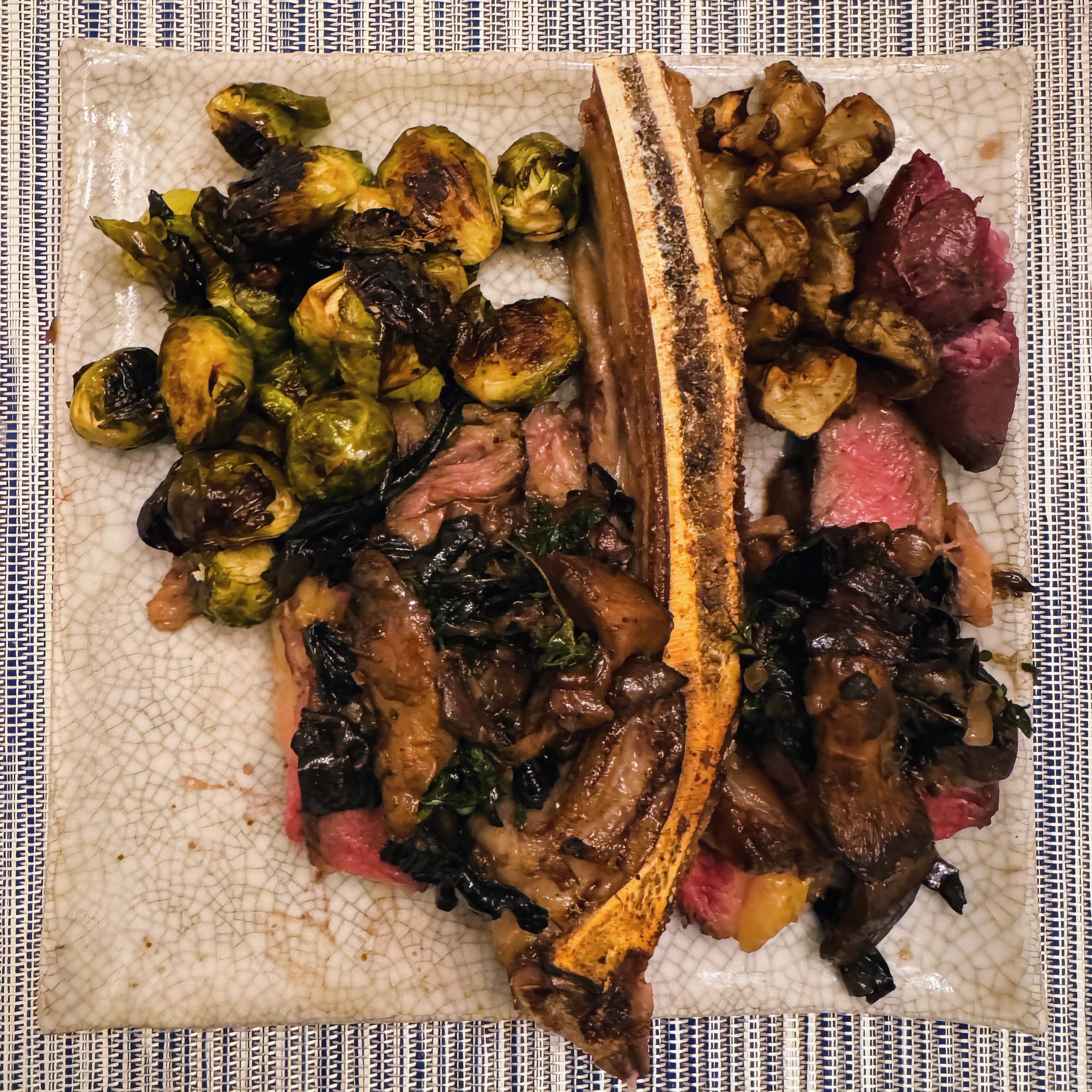
Rib Eye with Chanterelles and Black Trumpets, Balsamic Brussels Sprouts, Sunchokes and Smashed Fingerlings
Rosy rib eye and glossy wild mushrooms anchor this winter Shabbat platter, with black trumpets adding depth and chanterelles bringing their delicate, woodsy sweetness. Balsamic Brussels sprouts cut through the richness, while roasted sunchokes and crisp smashed fingerlings catch the steak juices.
By Jonathan Katzman · Cooked and photographed · Recipe updated
Serves: 4 servings
Tags: gluten-free, nut-free
Pan-Seared Bone-In Rib Eye
A hard sear builds a savory crust, while a short oven finish gives thick steaks an evenly rosy center. Resting before slicing preserves their juices.
Ingredients
- 2 bone-in rib eye steaks, about 1½ inches thick and 3–3½ pounds total
- 2½ tsp Diamond Crystal kosher salt, or an equivalent amount by weight
- 1 tsp freshly ground black pepper
- 2 tbsp ghee
- 1 tbsp unsalted butter
- 2 garlic cloves, lightly crushed
- 4 sprigs thyme
Instructions
- Salt the steaks on all sides and refrigerate uncovered for at least 45 minutes or up to overnight. Pat very dry before cooking and season with pepper.
- Heat the oven to 425°F. Heat a large ovenproof heavy skillet over medium-high heat, then add the ghee. Use two skillets or cook sequentially if the steaks would crowd the pan.
- Sear the steaks for 2–3 minutes per broad side until deeply browned. Hold the fatty edges against the pan with tongs for 30–60 seconds to render and brown them.
- Lower the heat, add the butter, garlic, and thyme, and baste for 30 seconds. Transfer the skillet to the oven.
- Begin checking the center after 5 minutes, inserting the thermometer away from the bone. Pull at 125–128°F for medium-rare, generally after 6–12 minutes in the oven; the temperature should rise to about 130–135°F during resting.
- Transfer to a warm board and rest for 10 minutes. Reserve the resting juices for the mushrooms. Remove the meat from the bones and slice across the grain into ½-inch-thick pieces.
Notes
- Temperature matters more than timing; thickness and bone size substantially change the cooking time.
- For a more conservative food-safety endpoint, cook to 145°F and rest at least 3 minutes.
Chanterelles and Black Trumpet Mushrooms
Cooking the mushrooms in batches evaporates their moisture before browning. A small butter finish and steak juices make them glossy without burying their flavor in a heavy sauce.
Ingredients
- 12 oz fresh chanterelles
- 4 oz fresh black trumpet mushrooms
- 1½ tbsp ghee, divided
- 1 small shallot, finely minced
- 1 garlic clove, finely minced
- 1 tsp thyme leaves
- 2 tbsp water, plus more as needed
- 1 tbsp unsalted butter
- 2 tbsp chopped flat-leaf parsley
- 1 tsp fresh lemon juice
- to taste kosher salt and freshly ground black pepper
- as available resting juices from the rib eye
Instructions
- Trim the mushrooms, split the black trumpets lengthwise to check for grit, and tear large chanterelles into generous pieces. Briefly rinse if necessary, then dry thoroughly.
- Heat a wide skillet over medium-high heat. Add half the ghee and the chanterelles in a loose layer. Cook for 6–8 minutes, stirring occasionally, until their released moisture evaporates and the edges begin to brown. Transfer to a bowl.
- Add the remaining ghee and the black trumpets. Cook for 3–5 minutes until tender and their moisture has mostly evaporated.
- Return the chanterelles to the skillet. Lower the heat to medium, add the shallot, and cook for 2 minutes. Add the garlic and thyme and cook for 30 seconds.
- Add the water and scrape up the browned mushroom juices. Turn the heat low and stir in the butter and steak resting juices until glossy.
- Fold in the parsley and lemon juice. Season with salt and pepper and serve over the sliced steak.
Notes
- If using dried black trumpets, replace the fresh trumpets with ½ ounce dried, soak in warm water for 20 minutes, lift out, rinse away grit, and drain well. A little finely filtered soaking liquid can replace the water.
- If the pan becomes dry before the mushrooms are tender, add water a tablespoon at a time.
Roasted Brussels Sprouts with Balsamic Vinegar
Roasting cut-side down gives the sprouts dark, crisp faces and tender centers. Adding balsamic after roasting keeps its acidity bright and prevents scorching.
Ingredients
- 1½ lb Brussels sprouts, trimmed and halved
- 2½ tbsp extra-virgin olive oil
- ¾ tsp Diamond Crystal kosher salt
- ¼ tsp freshly ground black pepper
- 1½ tbsp balsamic vinegar
Instructions
- Heat the oven to 425°F. Dry the sprouts thoroughly, then toss with the olive oil, salt, and pepper.
- Arrange cut-side down on a heavy rimmed baking sheet with room between the pieces. Roast for 25–35 minutes, until the cut faces are deep brown and the cores yield to a knife.
- Check loose leaves early and remove them if they become crisp before the larger pieces are done.
- Toss the hot sprouts with the balsamic vinegar. Taste and adjust the salt before serving.
Notes
- Use balsamic vinegar rather than a sweetened glaze; the sprouts should taste tangy, not candied.
Roasted Sunchokes
A hot roast browns the sunchokes' skins while their interiors turn creamy and nutty. A little lemon at the end balances their sweetness.
Ingredients
- 1 lb sunchokes
- 1½ tbsp extra-virgin olive oil
- ½ tsp Diamond Crystal kosher salt
- ¼ tsp freshly ground black pepper
- 1 tsp thyme leaves
- 1 tsp fresh lemon juice
Instructions
- Heat the oven to 425°F. Scrub the sunchokes well, trim damaged spots, and leave the skins on. Cut into roughly 1-inch pieces.
- Toss with the olive oil, salt, pepper, and thyme. Spread on a rimmed baking sheet with a cut surface against the metal.
- Roast for 35–45 minutes, turning after about 25 minutes, until browned and completely tender when pierced.
- Toss with the lemon juice just before serving.
Notes
- Sunchokes vary greatly in shape; cut thick pieces smaller so everything cooks evenly.
Crisp Smashed Fingerling Potatoes
Boiling first produces creamy centers; smashing and roasting creates craggy edges that crisp in olive oil.
Ingredients
- 1¼ lb fingerling potatoes
- 2½ tbsp extra-virgin olive oil, divided
- as needed kosher salt for the cooking water
- ½ tsp Diamond Crystal kosher salt, plus more to taste
- ¼ tsp freshly ground black pepper
Instructions
- Put the potatoes in a saucepan, cover with cold water by 1 inch, and salt the water generously. Bring to a boil, then simmer for 15–20 minutes, until a knife slides easily through the thickest potato.
- Drain and let steam-dry for 5 minutes. Heat the oven to 425°F.
- Brush a heavy rimmed baking sheet with 1 tablespoon of the olive oil. Place the potatoes on the sheet and gently press each with the base of a glass to about ½ inch thick, keeping them mostly intact.
- Drizzle with the remaining oil and season with the measured salt and pepper.
- Roast for 30–40 minutes, turning carefully after about 20 minutes, until crisp and golden on both sides. Taste for salt and serve hot.
Notes
- Keep space around the potatoes; crowding traps steam and softens the edges.
Overall Timing / Workflow
One oven temperature handles all the roasted components and the steak finish. The mushrooms can be mostly cooked ahead and finished while the steaks rest.
Instructions
- 0:00 — Salt the steaks and refrigerate uncovered. Start the potatoes in salted water and heat the oven to 425°F.
- 0:05 — Scrub and cut the sunchokes, trim the sprouts, and clean the mushrooms.
- 0:20 — Drain and steam-dry the potatoes. Put the sunchokes in the oven.
- 0:25 — Smash and oil the potatoes and put them in the oven. Use separate uncrowded trays; rotate between racks as needed.
- 0:35 — Put the Brussels sprouts in the oven. Begin cooking the mushrooms on the stovetop, stopping before the butter, parsley, lemon, and steak juices are added.
- 0:45 — Pat the steaks dry and heat their skillet. Sear, baste, and transfer to the oven. Remove vegetable trays as they become ready to make room; they can wait uncovered briefly.
- 1:00–1:10 — Pull the steaks when they reach the target temperature and rest for 10 minutes. Give any vegetables that need more color a final few minutes in the oven.
- During the rest, finish the mushrooms with butter, steak juices, parsley, and lemon. Dress the sprouts with balsamic and the sunchokes with lemon.
- Slice the steak and assemble the platter immediately.
Notes
- Allow extra time if your oven cannot accommodate three vegetable trays without crowding. Roast the sunchokes first, then reheat them briefly while the steak rests.
Plating
Keeping the crisp vegetables beside the steak rather than beneath it preserves their texture. Mushrooms and their juices belong directly over the beef.
Instructions
- Warm a large serving platter or four dinner plates.
- Fan the sliced rib eye across the center and spoon the mushrooms and their glossy juices over part of the meat, leaving some rosy slices visible.
- For a shared platter, place the rib bones alongside or lengthwise through the sliced steak.
- Arrange the Brussels sprouts to one side and the sunchokes and smashed fingerlings nearby, keeping the crisp potatoes mostly clear of the mushroom juices.
- Serve immediately.
Leftover Path
Separate storage lets the vegetables regain their crispness without overcooking the steak. The mushrooms can become a quick warm dressing for thinly sliced beef.
Instructions
- Refrigerate the steak, mushrooms, and vegetables in separate shallow airtight containers within 2 hours. Use within 3–4 days.
- Reheat the potatoes and sunchokes at 425°F for 10–15 minutes; add the Brussels sprouts for the final 5–8 minutes.
- Warm the mushrooms gently in a skillet with a splash of water. Add thin slices of steak off heat and toss just long enough to take off the chill, or serve the steak cold with the hot mushrooms.
- For another meal, chop the roasted vegetables and crisp them in a skillet with ghee, then top with the mushrooms and thinly sliced steak.
Notes
- For a food-safety-focused hot reheat, bring leftovers to 165°F; the steak will lose its rosy center.