Fennel–Sumac Swordfish, Za’atar Cauliflower and Parsnip Fries with Chocolate–Persimmon Pudding
Sumac-bright swordfish and fennel sit alongside golden cauliflower, lemony tahina, fiery green zhug, and warmly spiced parsnip fries. Finish with dense chocolate-avocado pudding, jammy Hachiya persimmon, tart pomegranate, and toasted coconut—a good late-autumn dinner with plenty of contrast.
By Jonathan Katzman · Cooked and photographed · Recipe updated
Serves: 4 servings
Tags: gluten-free, paleo, nut-free, pescatarian
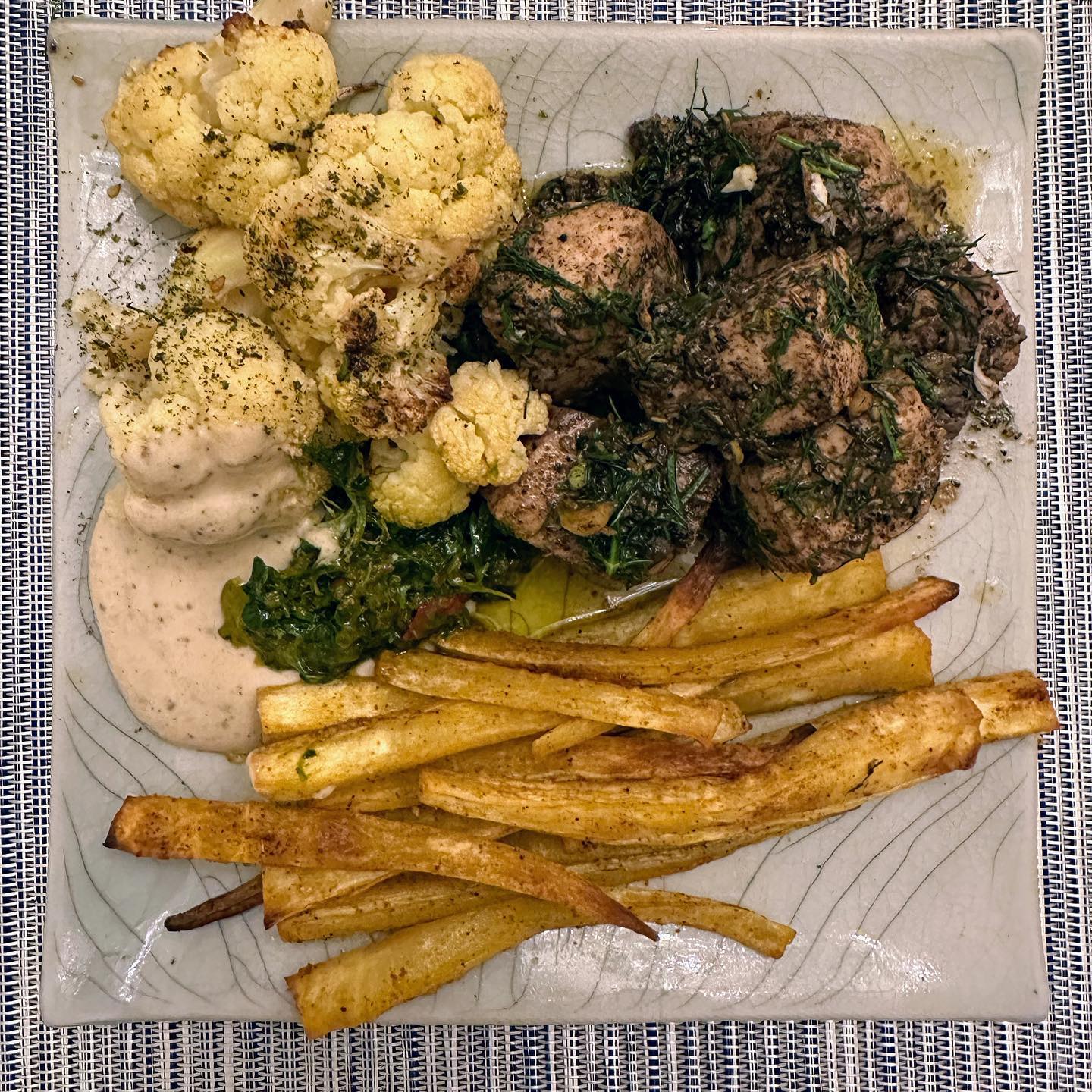
Pan-Seared Swordfish with Fennel and Sumac
Large pieces let the swordfish brown without drying out. Fennel fronds and sumac give the meaty fish a fresh, tart finish.
Ingredients
- 1.5 lb swordfish, skin and bloodline removed, cut into 1½-inch chunks
- 1 tablespoon ground sumac, divided
- 1 teaspoon fennel seeds, lightly crushed
- 0.75 teaspoon kosher salt, plus more to taste
- 0.25 teaspoon freshly ground black pepper
- 1.5 tablespoons ghee
- 3 cloves garlic, thinly sliced
- 0.5 cup loosely packed fennel fronds, roughly chopped
- 1 tablespoon extra-virgin olive oil
- 1 tablespoon lemon juice
Instructions
- Pat the swordfish very dry. Season with 2 teaspoons sumac, the fennel seeds, salt, and pepper just before cooking.
- Heat a large heavy skillet over medium-high heat. Add the ghee, then arrange the fish in one layer with space between pieces; work in batches if necessary.
- Sear undisturbed for 2–3 minutes, until browned and releasing readily. Turn and cook another 2–3 minutes, then turn onto additional sides as needed.
- Reduce the heat to medium-low. Add the sliced garlic to the fat and cook for 30–60 seconds, stirring so it becomes fragrant without burning. Cook the fish until the center of the largest piece reaches 145°F; remove individual pieces as they finish.
- Off the heat, gently toss with the fennel fronds, olive oil, lemon juice, and remaining teaspoon of sumac. Taste the pan juices and adjust salt. Serve immediately.
Notes
- Use a probe inserted sideways into a thick piece; swordfish becomes dry when held over heat after it is cooked.
- Swordfish is high in mercury and is not recommended for pregnant or breastfeeding people or young children.
Roasted Cauliflower with Za’atar
Large florets retain a tender, juicy center while their cut faces brown. Adding most of the za’atar near the end preserves its herbal aroma.
Ingredients
- 1 large head cauliflower, about 2 lb, cut into large florets
- 2.5 tablespoons olive oil
- 0.75 teaspoon kosher salt
- 1.5 tablespoons gluten-free za’atar, divided
- 2 teaspoons lemon juice
Instructions
- Heat the oven to 425°F. Toss the cauliflower with olive oil, salt, and 1 teaspoon of the za’atar.
- Spread on a heavy baking sheet with flat surfaces against the pan and room between florets.
- Roast for 25–35 minutes, turning after about 20 minutes, until browned at the edges and easily pierced through the stems.
- Toss with the remaining za’atar and lemon juice. Serve with the tahina and zhug.
Notes
- If the za’atar contains salt, reduce the added salt.
Lemony Tahina Sauce
Lemon and cold water turn sesame paste into a light, creamy sauce that rounds out the cauliflower and hot zhug.
Ingredients
- 0.33 cup tahini, thoroughly stirred
- 2.5 tablespoons lemon juice
- 1 small clove garlic, finely grated
- 0.25 teaspoon kosher salt
- 0.25–0.33 cup cold water, as needed
Instructions
- Whisk the tahini with lemon juice, garlic, and salt; it will initially become stiff.
- Whisk in cold water a tablespoon at a time until smooth, pale, and thickly pourable.
- Taste and adjust with a little more lemon or salt. Let stand for 5 minutes before checking the consistency again.
Notes
- Tahini varies in thickness. Add water rather than extra oil to make a sauce that flows gently around the cauliflower.
Green Zhug
Fresh herbs, chile, and warm spices cut through the sesame sauce and roasted vegetables. A coarse texture keeps the sauce lively rather than pasty.
Ingredients
- 1 cup packed cilantro leaves and tender stems
- 0.5 cup packed flat-leaf parsley leaves
- 1–2 serrano chiles, roughly chopped
- 1 clove garlic
- 0.5 teaspoon ground cumin
- 0.25 teaspoon ground coriander
- 1 pinch ground cardamom
- 0.25 teaspoon kosher salt, plus more to taste
- 1 tablespoon lemon juice
- 0.25 cup extra-virgin olive oil
Instructions
- Pulse the herbs, chiles, garlic, spices, and salt in a small food processor until finely chopped, scraping down the bowl as needed.
- Add the lemon juice and olive oil and pulse briefly to make a coarse, spoonable green sauce.
- Taste and adjust salt and lemon. Let stand for 10 minutes for the flavors to mingle.
Notes
- Begin with one serrano and add the second to taste. Removing the seeds and internal ribs reduces the heat.
Ras al Hanout Parsnip Fries
Parsnips develop sweet centers and browned edges in a hot oven. Ras al hanout adds warmth without competing with the tart fish and herb sauces.
Ingredients
- 1.5 lb parsnips, peeled
- 2 tablespoons olive oil
- 1.5 teaspoons gluten-free ras al hanout without added sugar
- 0.75 teaspoon kosher salt
Instructions
- Heat the oven to 425°F. Cut the parsnips into long batons about ½ inch thick, removing any hard, woody cores from large parsnips.
- Dry well, then toss with olive oil, ras al hanout, and salt.
- Spread in a single layer on a large baking sheet, leaving space between the pieces.
- Roast for 30–40 minutes, turning after 20 minutes, until deeply golden on the edges and tender inside. Remove thinner pieces early if needed.
- Taste for salt and serve promptly, uncovered, to preserve the browned edges.
Notes
- These are tender roasted fries with crisp edges, not the uniformly crunchy texture of deep-fried potatoes.
Chocolate-Avocado Pudding with Hachiya Persimmon, Pomegranate, Cocoa Nibs and Coconut
Avocado makes a dense, silky chocolate pudding without cream. Soft persimmon adds honeyed fruit, while pomegranate, cocoa nibs, and toasted coconut bring acidity and crunch.
Ingredients
- 2 large ripe avocados, about 300–350 g flesh
- 0.33 cup unsweetened cocoa powder
- 0.25 cup maple syrup
- 2–4 tablespoons water, as needed
- 1 teaspoon vanilla extract
- 1 pinch fine sea salt
- 2 fully ripe Hachiya persimmons
- 0.75 cup pomegranate arils
- 2 tablespoons unsweetened cocoa nibs
- 0.33 cup unsweetened coconut flakes
Instructions
- Blend the avocado flesh, cocoa powder, maple syrup, 2 tablespoons water, vanilla, and salt until completely smooth. Scrape the bowl several times so no avocado pieces remain.
- Add more water only as needed for a dense, scoopable pudding. Taste and adjust sweetness with a little additional maple syrup if desired.
- Transfer to a covered container and refrigerate for at least 1 hour.
- Toast the coconut in a dry skillet over medium-low heat for 3–5 minutes, stirring frequently, until pale golden. Immediately transfer to a plate and cool.
- Remove the persimmon stems and scoop the soft flesh from the skins. Break up gently with a spoon, keeping its jammy texture.
- Divide the pudding and persimmon among four bowls in separate generous spoonfuls. Add pomegranate arils, cocoa nibs, and toasted coconut in distinct clusters.
Notes
- Hachiya persimmons must feel like water balloons and be jelly-soft throughout; firm fruit is unpleasantly astringent.
- Keep the coconut dry and separate until serving so it stays crisp.
Overall Timing / Workflow
The dessert chills while the sauces and vegetables are prepared. Cooking the fish last keeps it juicy and brings the savory meal to the table hot.
Instructions
- 0:00 — Blend the pudding and refrigerate. Toast the coconut and set aside to cool.
- 0:15 — Heat the oven to 425°F with racks in the upper and lower thirds. Prepare the parsnips and cauliflower on separate baking sheets.
- 0:30 — Put both vegetables in the oven. Make the tahina and zhug while they roast.
- 0:50 — Turn the vegetables and swap the baking sheets between racks. Prepare the fennel fronds, garlic, and swordfish.
- 1:00 — Check the vegetables. Once nearly done, begin searing the swordfish; allow 8–12 minutes, longer if working in batches.
- 1:10 — Finish the vegetables and fish, then plate immediately. Keep the pudding chilled until dessert and add its fruit and crunchy toppings just before serving.
Notes
- Use separate, uncrowded trays for the vegetables; crowding makes them steam instead of brown.
Plating
Keeping the sauces and vegetables partly separate preserves their textures and lets each bite have a different balance.
Instructions
- Spoon a generous pool of tahina onto one side of each warm plate. Nestle cauliflower partly into it and add a smaller spoonful of zhug alongside.
- Arrange the swordfish beside the cauliflower and spoon its fennel, garlic, and lemony pan juices over the fish.
- Lay the parsnip fries across the remaining space, keeping most of them clear of the sauces.
- For dessert, use shallow bowls and leave the chocolate pudding, orange persimmon, ruby pomegranate, and pale coconut visibly distinct.
Leftover Path
Separate storage prevents the roasted vegetables from becoming soggy and keeps fresh sauces and dessert toppings at their best.
Instructions
- Refrigerate the fish, roasted vegetables, sauces, pudding, and prepared fruit in separate airtight containers within 2 hours. Keep toasted coconut and cocoa nibs dry.
- Use the swordfish within 2 days. Serve cold, flaked over leftover cauliflower with tahina and zhug, or reheat gently, covered, with a splash of water until it reaches 165°F.
- Use the roasted vegetables within 3–4 days. Reheat on a sheet pan at 400°F for 8–12 minutes, until hot and the edges have firmed up again.
- Use the tahina and zhug within 3–4 days; loosen the tahina with water and stir the zhug before serving.
- Use the pudding and scooped persimmon within 2 days. Add pomegranate, cocoa nibs, and coconut only when serving.