Seared Halibut with Eggplant Caponata, Tuna Crudo, and Summer Salads
Golden halibut sits over silky, sweet-sour eggplant caponata, with parsley and toasted pine nuts for freshness and crunch. Tuna crudo and two bright summer salads bring cool cucumber, creamy avocado, juicy nectarines, ripe tomatoes, and plenty of basil to the table.
By Jonathan Katzman · Cooked and photographed · Recipe updated
Serves: 4 servings
Tags: gluten-free, pescatarian
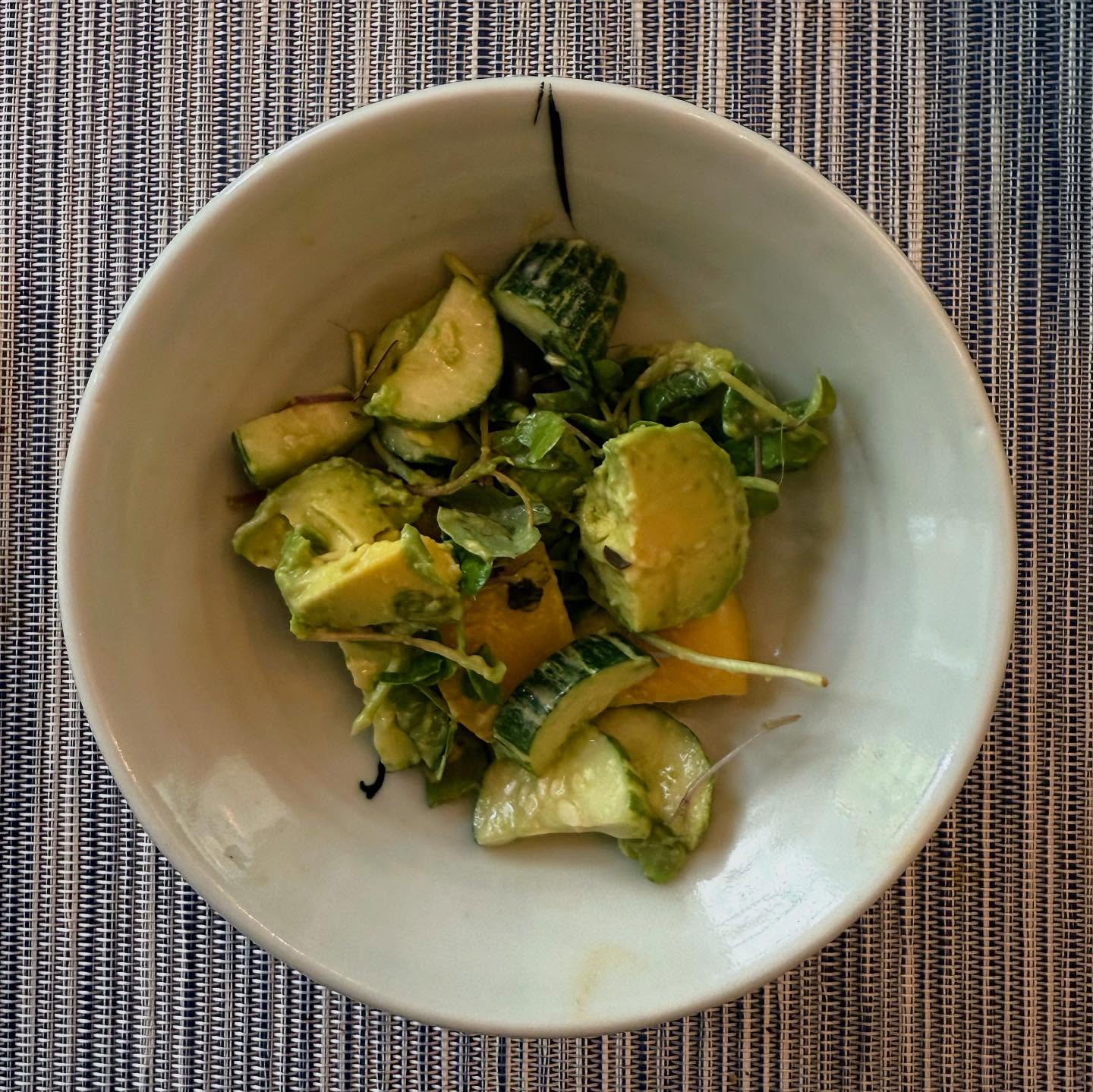
Cucumber, Avocado, and Mango Salad
Crisp cucumber and tangy lime keep the avocado and sweet mango refreshing rather than heavy. Tossing gently lets a little avocado enrich the dressing without turning the salad into a mash.
Ingredients
- 3 Persian cucumbers, cut into thick half-moons
- 2 ripe but firm avocados, cut into large chunks
- 1 ripe mango, peeled and cut into broad bite-size pieces
- 2 cups tender baby greens or mild microgreens
- 2 tablespoons fresh lime juice
- 1 tablespoon extra-virgin olive oil
- to taste fine sea salt
Instructions
- Whisk the lime juice, olive oil, and a generous pinch of salt in a large bowl.
- Add the cucumber and mango and toss. Fold in the avocado and greens just before serving, using broad, gentle turns.
- Taste and adjust the salt and lime. Serve while the cucumber is crisp and the greens are lively.
Notes
- Dry the greens thoroughly so the dressing clings rather than pooling in the bowl.
Pan-Seared Halibut
Dry fish and a hot pan produce the golden surface shown while preserving a moist, flaky interior. A restrained seasoning lets the caponata provide the acidity and savory depth.
Ingredients
- 4 skinless halibut portions, about 6 ounces each and 1–1½ inches thick
- 1½ tablespoons ghee
- to taste fine sea salt and freshly ground black pepper
Instructions
- Pat the halibut very dry and season with salt and pepper. Heat the oven to 375°F.
- Heat an ovenproof skillet over medium-high heat. Add the ghee, then lay in the fish presentation-side down, leaving space between portions.
- Sear without moving for 3–4 minutes, until the underside is golden and releases readily. Turn carefully and cook for 1 minute.
- Transfer the skillet to the oven as needed and cook for another 3–7 minutes, depending on thickness, until the center reaches 145°F. The flesh should separate into moist flakes rather than feel firm and dry.
- Serve immediately over the warm caponata.
Notes
- Use a thin fish spatula and avoid repeatedly turning the portions.
Eggplant Caponata with Pine Nuts and Parsley
Roasting concentrates the eggplant without requiring a large amount of frying oil. Tomato, vinegar, olives, and capers create a glossy sweet-sour relish that complements the mild fish.
Ingredients
- 1½ pounds eggplant, cut into ¾-inch chunks
- 5 tablespoons extra-virgin olive oil, divided
- 1 small yellow onion, diced
- 1 celery stalk, thinly sliced
- 2 garlic cloves, finely chopped
- 1 cup cherry tomatoes, halved
- 1 tablespoon tomato paste
- ⅓ cup pitted green olives, roughly chopped
- 1 tablespoon drained capers
- 2 tablespoons red wine vinegar
- 1 teaspoon honey
- ⅓ cup water, plus more as needed
- 3 tablespoons pine nuts
- ¼ cup flat-leaf parsley leaves
- to taste fine sea salt and freshly ground black pepper
Instructions
- Heat the oven to 425°F. Toss the eggplant with 3 tablespoons olive oil and salt. Spread on a large sheet pan and roast for 25–30 minutes, turning once, until browned and completely tender.
- Toast the pine nuts in a dry skillet over medium-low heat for 3–4 minutes, stirring frequently. Transfer to a plate.
- Heat the remaining olive oil in a wide saucepan over medium heat. Add the onion and celery with a pinch of salt and soften for 8–10 minutes without deeply browning.
- Add the garlic and tomato paste and stir for 1 minute. Add the tomatoes and cook for 5 minutes, until beginning to collapse.
- Fold in the eggplant, olives, capers, vinegar, honey, and water. Simmer gently for 8–10 minutes, until glossy and cohesive but still chunky.
- Adjust the salt, pepper, and vinegar. Fold in the pine nuts shortly before serving and scatter the parsley over the finished dish.
Notes
- If the relish becomes dry, add water a tablespoon at a time; it should spoon easily without becoming soupy.
- Caponata can be made a day ahead. Reserve the pine nuts and parsley until serving.
Tuna Crudo with Green Olives, Walnuts, and Basil
Thin tuna slices need only good olive oil and a small amount of acid. Crushed olives add briny richness, while toasted walnuts and torn basil provide texture and aroma.
Ingredients
- 10 ounces tuna loin suitable for raw consumption, purchased from a trusted fishmonger
- ¼ cup walnut halves
- ⅓ cup pitted green olives, lightly crushed
- 3 tablespoons extra-virgin olive oil
- 2 teaspoons fresh lemon juice
- ¼ cup basil leaves, torn
- 1 pinch mild red chile flakes
- to taste flaky sea salt
Instructions
- Toast the walnuts in a dry skillet over medium-low heat for 4–5 minutes, until fragrant. Cool completely and break into small pieces.
- Keep the tuna refrigerated until slicing. With a very sharp knife, cut thin slices across the grain and arrange loosely on a chilled platter.
- Distribute the crushed olives and walnuts over the tuna. Drizzle with olive oil and lemon juice, then finish with basil, chile flakes, and a restrained sprinkle of salt.
- Serve immediately, before the lemon begins to change the surface texture of the fish.
Notes
- Tell the fishmonger the tuna will be eaten raw and confirm appropriate species, handling, and parasite controls; do not rely on a 'sushi-grade' label alone. Keep at or below 40°F until preparation.
- Raw fish is not appropriate for pregnant people, young children, older adults, or immunocompromised diners.
Heirloom Tomato and Nectarine Salad with Feta and Basil
Peak-summer tomatoes and nectarines provide enough sweetness and juice to make their own dressing with olive oil. Firm feta adds a salty counterpoint without obscuring the fruit.
Ingredients
- 1 pound ripe heirloom tomatoes, cut into irregular wedges
- 3 ripe but firm yellow nectarines, pitted and cut into wedges
- 4 ounces block feta, broken into broad pieces
- ½ cup basil leaves, larger leaves torn
- 2 tablespoons extra-virgin olive oil
- 1 teaspoon balsamic vinegar
- to taste flaky sea salt and freshly ground black pepper
Instructions
- Arrange the tomatoes and nectarines on a broad platter, alternating their colors and shapes.
- Season the tomatoes lightly with salt. Scatter the feta and basil over the fruit.
- Drizzle with olive oil and a few drops of balsamic vinegar. Finish with black pepper and let stand for 5 minutes before serving.
Notes
- Use modest salt at first; the feta will season the tomato juices as the salad sits.
Overall Timing / Workflow
The caponata tolerates waiting, while the fish and dressed salads are best finished at the last moment. Serving the crudo first keeps raw-fish preparation separate from the hot main course.
Instructions
- 0:00 — Heat the oven to 425°F, prepare the eggplant, and begin roasting. Start the caponata aromatics while it cooks.
- 0:15 — Toast the pine nuts and walnuts separately. Prepare the salad produce, keeping avocado uncut and all greens dry.
- 0:30 — Finish the caponata and hold over very low heat. Lower the oven to 375°F.
- 0:35 — Slice and dress the tuna on a chilled platter and serve as the first course. Clean and sanitize the knife, board, and work surface afterward.
- 0:45 — Sear and finish the halibut. While it cooks, arrange the tomato salad and cut the avocado.
- 0:55 — Toss the cucumber salad, finish the caponata with pine nuts and parsley, and serve the hot fish with both salads.
Plating
Separate platters preserve the distinct textures and temperatures. A shallow bowl contains the caponata juices beneath the fish.
Instructions
- Serve the tuna spread in a thin, loose layer on a chilled platter, with its olives, nuts, and basil distributed across the slices.
- Spoon warm caponata into four shallow bowls. Set a halibut portion along one side, golden face upward, leaving some relish visible.
- Serve the cucumber salad in small bowls and the tomato–nectarine salad on a broad communal platter. Keep the fruit and cheese in generous pieces rather than finely chopping them.
Leftover Path
Separate storage protects the fish from overcooking during reheating and keeps the vegetables from soaking in excess dressing.
Instructions
- Refrigerate cooked fish and caponata separately within 2 hours. Keep the fish for up to 2 days and caponata for up to 4 days.
- Warm the caponata in a saucepan with a splash of water. Reheat the fish gently, covered, until it reaches 165°F, or serve the chilled cooked fish flaked over leftover caponata.
- Refrigerate the salads promptly and eat within 1 day; expect the avocado to darken and the tomatoes to release juice.
- Prepare only as much dressed crudo as will be eaten immediately. Do not save served raw-fish leftovers; cook any unused, continuously refrigerated tuna promptly.