Sunday Shakshuka with Sauerkraut and Cilantro
Soft eggs settle into a thick tomato-and-pepper sauce scented with cumin and paprika. A generous handful of cilantro and cool, tangy sauerkraut cut through the richness, making this a bright, satisfying Sunday brunch.
By Jonathan Katzman · Cooked and photographed · Recipe updated
Serves: 4 servings
Tags: vegetarian, gluten-free, paleo, dairy-free, nut-free
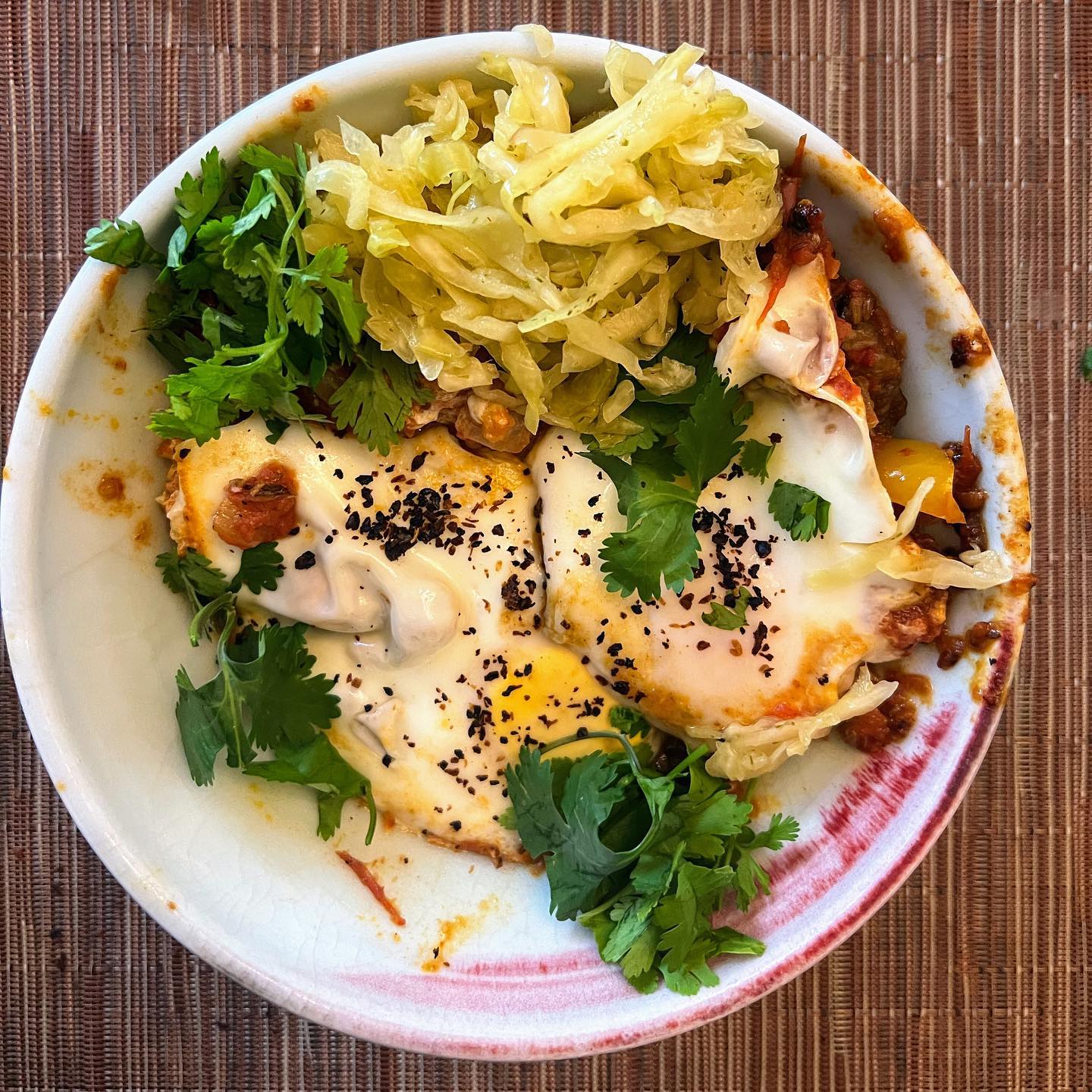
Tomato-Pepper Shakshuka
Reducing the vegetables and tomatoes before adding the eggs gives the sauce enough body to hold distinct pockets of tender whites and soft yolks.
Ingredients
- 3 tbsp extra-virgin olive oil
- 1 medium yellow onion, diced
- 1 large yellow bell pepper, seeded and cut into short strips
- 3 cloves garlic, thinly sliced
- 2 tbsp tomato paste
- 1 tsp ground cumin
- 1 tsp sweet paprika
- 1/4 tsp crushed red pepper flakes
- 1 28-oz can whole peeled tomatoes with their juices, crushed by hand
- 3/4 tsp fine sea salt, plus more to taste
- 8 large eggs
- 1/2 tsp coarsely ground black pepper
Instructions
- Heat the olive oil in a wide, deep 12-inch skillet over medium heat. Add the onion, bell pepper, and salt. Cook for 10–12 minutes, stirring occasionally, until softened and beginning to color.
- Add the garlic and cook for 1 minute. Stir in the tomato paste, cumin, paprika, and red pepper flakes; cook for another minute, until fragrant and the paste darkens slightly.
- Add the tomatoes and their juices. Simmer uncovered over medium-low heat for 15–18 minutes, stirring occasionally, until thick enough that a spoon drawn through the sauce leaves a brief trail. Taste and adjust the salt, keeping the salty cabbage topping in mind.
- Make eight shallow wells in the sauce. Crack each egg into a small cup, then slip it into a well. Sprinkle with the black pepper.
- Cover and cook over low heat for 5–8 minutes, checking early, until the whites are opaque and just set while the yolks still wobble. Avoid a vigorous simmer, which can toughen the bottoms before the tops set.
- Remove from the heat and uncover promptly to limit carryover cooking. Serve immediately.
Notes
- If the sauce becomes too dry before the eggs go in, loosen it with water, 1 tablespoon at a time.
- For diners who need fully cooked eggs, continue cooking until the yolks are firm; pasteurized eggs are another option when serving soft yolks.
Sauerkraut and Fresh Cilantro
Cool fermented cabbage brings acidity and crunch, while whole cilantro leaves keep the rich tomato-and-egg dish fresh.
Ingredients
- 1 1/2 cups plain gluten-free sauerkraut, drained
- 1 large bunch cilantro, leaves and tender stems
Instructions
- Drain the sauerkraut well without squeezing it completely dry. Taste; if exceptionally salty or sharp, rinse briefly and drain again.
- Wash and thoroughly dry the cilantro. Keep the leaves and tender stems in loose sprigs.
- Hold both separately until serving so the cabbage stays crisp and the herbs do not wilt.
Notes
- Use plain cabbage sauerkraut without added sugar or strongly flavored seasonings.
Overall Timing / Workflow
Finish all cold garnishes while the sauce reduces so the eggs can go straight from skillet to table.
Instructions
- 0:00 — Chop the onion, pepper, and garlic; gather the remaining sauce ingredients.
- 0:10 — Start cooking the onion and pepper. Crush the tomatoes and prepare the cilantro and sauerkraut.
- 0:25 — Add the tomatoes and reduce the sauce. Set out warm shallow bowls.
- 0:40 — Add the eggs and cover. Begin checking after 5 minutes, then plate and serve as soon as the whites set.
Plating
Keeping the cabbage in a distinct mound preserves its temperature and texture, giving each bite a choice of rich sauce or bright crunch.
Instructions
- Use a broad spoon to transfer two eggs and their surrounding sauce into each warm shallow bowl, keeping the yolks intact.
- Add a loose mound of drained sauerkraut along one side rather than covering all the eggs.
- Scatter cilantro generously around and over the eggs, leaving some yolks visible. Serve immediately.
Leftover Path
The sauce reheats well, but freshly cooked eggs retain a much better texture than reheated soft eggs.
Instructions
- If planning for leftovers, reserve some sauce before adding the eggs and cook only the eggs needed for the current meal.
- Refrigerate sauce or cooked shakshuka within 2 hours in a covered container and use within 3–4 days. Store sauerkraut and cilantro separately.
- Reheat reserved sauce in a small skillet with a splash of water until bubbling, then make wells and cook fresh eggs as above.
- If reheating already-cooked eggs and sauce, cover and heat gently until the leftovers reach 165°F; expect firmer yolks. Add the cold cabbage and fresh cilantro only after reheating.