Swordfish with Fennel Fronds, Garlicky Broccoli Rabe, and Roasted Kabocha
Gently cooked swordfish gets a fragrant finish of fennel fronds, lemon, and olive oil. Garlicky broccoli rabe brings a pleasantly bitter edge, while roasted kabocha adds sweet, dense flesh and caramelized edges—a simple early-autumn plate with plenty of contrast.
By Jonathan Katzman · Cooked and photographed · Recipe updated
Serves: 4 servings
Tags: gluten-free, paleo, nut-free, pescatarian
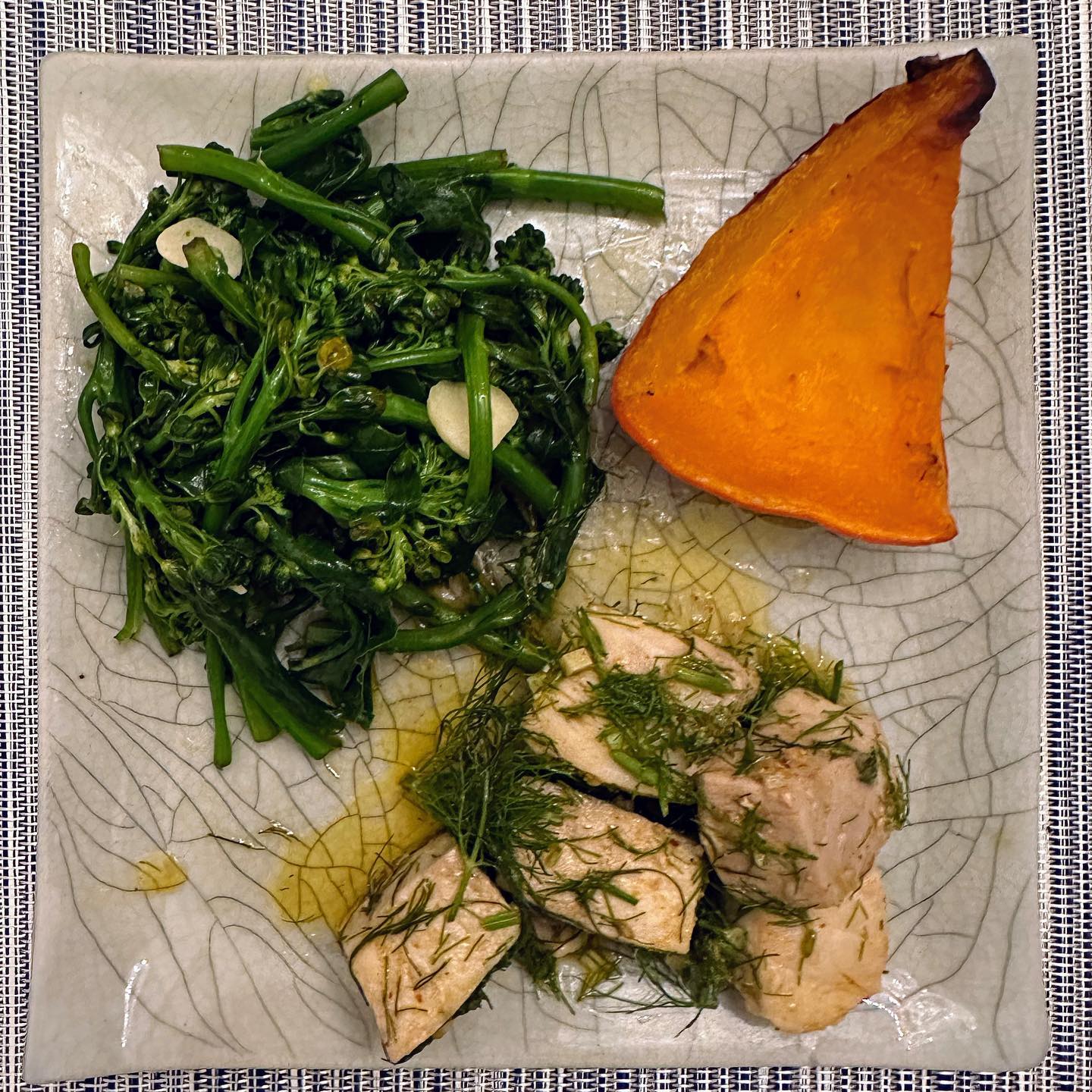
Gently Poached Swordfish with Fennel Fronds
A shallow, barely simmering poach cooks the thick fish pieces without a tough exterior. Fennel fronds and lemon keep the olive-oil cooking juices fragrant and bright.
Ingredients
- 1.5 lb swordfish steaks, about 1 inch thick, skin and tough dark bloodline removed
- 3 tbsp extra-virgin olive oil
- 1/3 cup water
- 1 lemon, finely zested and juiced
- 1/2 cup loosely packed tender fennel fronds and fine stems, roughly chopped
- 1/2 tsp fine sea salt, plus more to taste
- 1/4 tsp freshly ground black pepper
Instructions
- Cut the swordfish into large, roughly 2-inch pieces, keeping their thickness consistent. Pat dry and season with the salt and pepper.
- In a skillet just large enough to hold the fish in one layer, combine the olive oil, water, half the lemon zest, and 1 tablespoon lemon juice. Bring to a very gentle simmer over medium-low heat.
- Add the fish, cover, and reduce the heat to low. Cook for 6–10 minutes, turning the pieces carefully halfway through. Keep the liquid at a bare simmer rather than a boil.
- Check the thickest pieces with an instant-read thermometer; cook to 145°F. The centers should be opaque and moist, with the flesh separating under gentle pressure.
- Transfer the fish to a warm plate. If the liquid is watery, simmer it uncovered for 1–2 minutes, then turn off the heat. Stir in the fennel fronds and remaining lemon zest, and add more lemon juice or salt to taste.
- Return the fish to the pan briefly and spoon the herb-filled juices over it without further simmering.
Notes
- Use the fine, feathery fennel tops, not thick stalks, so the herbs remain tender.
- Swordfish is a high-mercury fish and should be avoided by people who are pregnant or breastfeeding and by young children.
Garlicky Broccoli Rabe
A brief blanch softens the stems and moderates bitterness. Gently heated garlic flavors the finishing fat without becoming harsh or burnt.
Ingredients
- 2 bunches broccoli rabe, about 1.5 lb total
- 1.5 tbsp ghee
- 4 cloves garlic, thinly sliced
- 2 tsp lemon juice
- to taste sea salt and freshly ground black pepper
Instructions
- Trim the dry stem ends. Cut the broccoli rabe into 4–5-inch lengths and split any especially thick stems lengthwise.
- Bring a large pot of salted water to a boil. Blanch the broccoli rabe for 2–3 minutes, until bright green and the stems are just tender. Drain thoroughly.
- Heat the ghee in a wide skillet over medium-low heat. Add the sliced garlic and cook for 1–2 minutes, stirring, until fragrant and just beginning to turn pale gold.
- Raise the heat to medium, add the drained broccoli rabe, and sauté for 2–3 minutes, tossing to coat and allowing excess water to evaporate.
- Finish with lemon juice, salt, and pepper. Keep the stems tender with a little bite rather than cooking the greens until limp.
Roasted Kabocha Wedges
Large wedges develop browned edges while retaining a dense, creamy interior. Minimal seasoning lets the squash's sweetness balance the bitter greens.
Ingredients
- 1 small kabocha squash, about 2 lb
- 1 tbsp extra-virgin olive oil
- 1/2 tsp fine sea salt
- 1/4 tsp freshly ground black pepper
Instructions
- Heat the oven to 425°F. Line a rimmed baking sheet with parchment.
- Scrub the squash, halve it, and scoop out the seeds. Cut into four substantial wedges, leaving the edible skin on.
- Rub the cut surfaces with olive oil and season with salt and pepper. Arrange on the sheet with a broad cut face down.
- Roast for 35–45 minutes, turning onto the other cut face after about 20 minutes. The edges should be browned and a knife should slide easily through the thickest flesh.
Notes
- For easier, safer cutting, microwave the whole squash for 2–3 minutes, let it cool enough to handle, then cut it on a stable board.
Overall Timing / Workflow
The squash can wait briefly once roasted; the greens and fish are best finished just before serving.
Instructions
- 0:00 — Heat the oven, prepare the squash, and put it in to roast.
- 0:10 — Trim the broccoli rabe, slice the garlic, chop the fennel fronds, and prepare the lemon.
- 0:20 — Turn the squash and bring the blanching water to a boil. Cut and season the swordfish.
- 0:25 — Blanch and drain the broccoli rabe.
- 0:30 — Start the swordfish. While it gently poaches, finish the broccoli rabe in its skillet.
- 0:40 — Check the squash and fish for doneness. Finish the fish juices with fennel and lemon, then plate everything hot.
Plating
Separate groupings preserve the contrast between sweet squash, bitter greens, and delicate fish, while the fennel juices tie the plate together.
Instructions
- Place one roasted kabocha wedge on each warm plate.
- Arrange a generous mound of broccoli rabe alongside it, keeping a few garlic slices visible.
- Cluster the swordfish pieces in the remaining space. Spoon the fennel-rich cooking juices over the fish and around its base, leaving the squash's browned surfaces exposed.
Leftover Path
Storing the fish with its juices protects it from drying out, while separate vegetables can be reheated according to their texture.
Instructions
- Refrigerate within 2 hours in separate airtight containers, keeping the fish with its cooking juices. Use the fish within 2 days and the vegetables within 3–4 days.
- For a cold lunch, flake the swordfish over the broccoli rabe and add a little fresh lemon juice; serve the squash alongside.
- To serve hot, warm the squash in a 350°F oven for 10–15 minutes and reheat the greens in a covered skillet with a splash of water. Reheat the fish gently in its juices, covered, to 165°F, avoiding a vigorous boil.