Toulouse Sausage with Roasted Delicata, Bloomsdale Spinach, Mustard & Sauerkraut
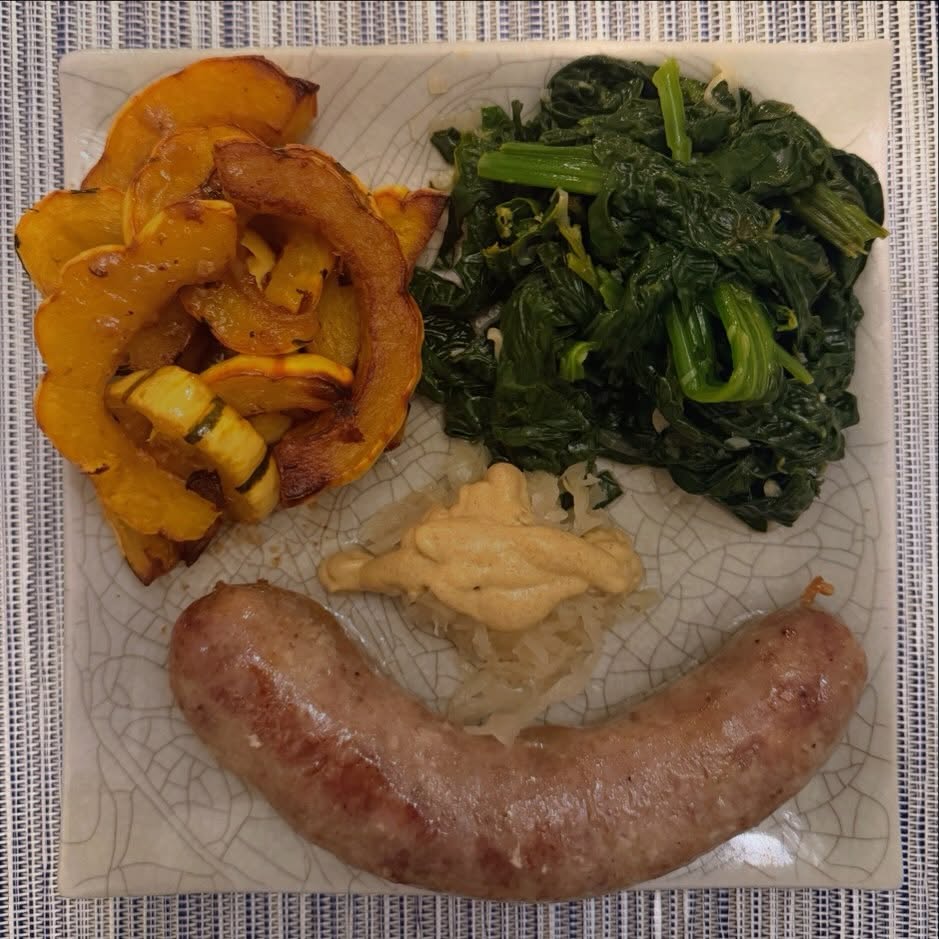
A proper grown-up happy meal: juicy Toulouse sausage, sweet caramelized delicata, and a generous heap of garlicky winter spinach. Sharp mustard and tangy sauerkraut keep the richness in balance, with everything served simply on one plate.
By Jonathan Katzman · Cooked and photographed · Recipe updated
Serves: 4 servings
Tags: gluten-free, nut-free
Pan-Browned Toulouse Sausage
A gentle covered cook brings the sausage up to temperature without splitting the casing. Browning it afterward develops a savory crust while keeping the interior juicy.
Ingredients
- 4 large links fresh Toulouse pork sausage, about 1½ pounds total, gluten-free
- 2 teaspoons ghee
- ½ cup water
Instructions
- Arrange the sausages in a wide skillet and add the water. Bring to a gentle simmer over medium heat, then cover and reduce the heat to medium-low.
- Cook for 10–14 minutes, turning once, until the sausages are mostly cooked through. Keep the water at a gentle simmer rather than a vigorous boil.
- Uncover and allow the remaining water to evaporate. Add the ghee and brown over medium heat for 6–10 minutes, turning regularly so the casings develop golden patches without scorching.
- Check the center of each sausage with an instant-read thermometer; fresh pork sausage must reach 160°F. Rest for 3 minutes before serving.
Notes
- Do not prick the casings; use tongs rather than a fork when turning.
- Check the sausage ingredient list for gluten-containing fillers or seasonings.
Roasted Delicata Squash
A hot oven and an uncrowded pan give the squash browned edges and a creamy interior. Keeping the tender skin on helps the crescents hold their shape.
Ingredients
- 2 medium delicata squash, about 2 pounds total
- 2 tablespoons olive oil
- ½ teaspoon fine sea salt
- ¼ teaspoon freshly ground black pepper
Instructions
- Heat the oven to 425°F. Scrub and dry the squash, trim the ends, then halve lengthwise and scoop out the seeds.
- Cut into ½-inch-thick crescents. Toss with olive oil, salt, and pepper.
- Spread in a single layer on a large rimmed sheet pan, using two pans if necessary to avoid crowding.
- Roast for 15 minutes, flip, and roast for another 10–15 minutes, until deeply golden at the edges and completely tender.
Notes
- Dry the squash well before oiling so it roasts rather than steams.
Garlicky Bloomsdale Spinach
Bloomsdale spinach has substantial, crinkled leaves that stay pleasantly textured when wilted. A little garlic and lemon bring brightness without covering its earthy flavor.
Ingredients
- 1½ pounds Bloomsdale spinach
- 1 tablespoon ghee
- 3 cloves garlic, thinly sliced
- ¼ teaspoon fine sea salt, plus more to taste
- 1 teaspoon lemon juice
Instructions
- Wash the spinach thoroughly in several changes of water, paying attention to grit trapped in the crinkled leaves. Trim tough stem ends and drain well.
- Heat the ghee in a large skillet or wide pot over medium heat. Add the garlic and stir for 30–45 seconds, until fragrant but not browned.
- Add the spinach in batches, turning each addition until it collapses enough to make room for the next. Add the salt.
- Increase the heat to medium-high and cook uncovered, tossing, until the leaves are tender, the stems retain a little bite, and excess liquid has evaporated, about 3–5 minutes.
- Remove from the heat, add the lemon juice, and adjust the salt. Serve with a slotted spoon if any liquid remains.
Notes
- Keep the spinach off the heat once tender; prolonged holding dulls its color and softens the stems.
Sauerkraut & Dijon Mustard
Fermented cabbage and sharp mustard cut through the sausage's richness and contrast with the sweet squash.
Ingredients
- 1 cup plain sauerkraut, gluten-free, lightly drained
- ¼ cup smooth Dijon mustard, gluten-free
Instructions
- Drain the sauerkraut lightly without squeezing it dry.
- Divide into four small mounds and top or accompany each with 1 tablespoon of mustard.
Overall Timing / Workflow
The squash roasts while the sausage cooks, leaving the spinach until the last few minutes so it reaches the table freshly wilted.
Instructions
- 0:00 — Heat the oven to 425°F and prepare the squash.
- 0:10 — Put the squash in the oven. Start the sausages in their covered skillet.
- 0:15 — Wash and trim the spinach, slice the garlic, and portion the sauerkraut and mustard.
- 0:25 — Flip the squash. Uncover the sausages, evaporate the water, and brown them in ghee.
- 0:32 — Check the sausage temperature and begin cooking the spinach in a separate pan.
- 0:40–0:45 — Rest the fully cooked sausages briefly, finish the spinach with lemon, and plate with the hot squash and condiments.
Plating
Keeping the components distinct preserves the squash's roasted edges and makes it easy to pair each bite of sausage with something sweet, green, or sharp.
Instructions
- Place one whole sausage along the lower edge of each warm plate.
- Arrange the roasted squash on one side and a generous mound of spinach on the other, leaving excess spinach liquid behind.
- Nestle the sauerkraut and mustard between the sausage and vegetables, echoing a simple grown-up happy face.
Leftover Path
Storing the condiments separately keeps their acidity fresh and prevents the roasted vegetables from becoming soggy.
Instructions
- Refrigerate cooked sausage, squash, and spinach in sealed containers within 2 hours; use within 3–4 days. Store mustard and sauerkraut separately according to their labels.
- Reheat sausage gently in a covered skillet with a splash of water until it reaches 165°F. Reheat squash in a 400°F oven for 8–12 minutes and warm the spinach briefly in a small pan.
- For another meal, slice the sausage and warm with the squash, then fold in the spinach just before serving. Add the mustard and sauerkraut at the table.