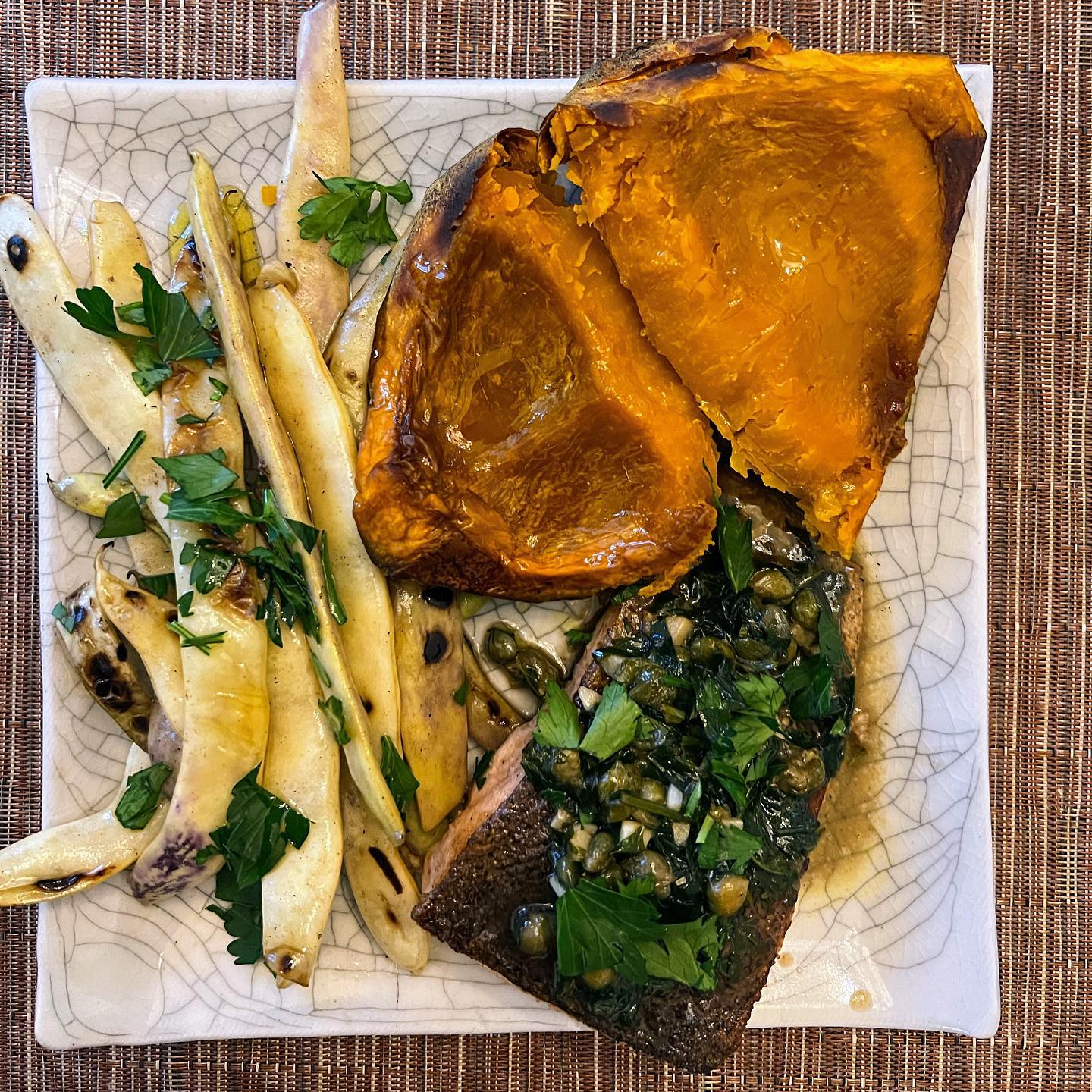
Trout Piccata with Blistered Dragon Tongue Beans and Olive Oil–Roasted Kabocha
Crisp-skinned trout gets a bright, buttery piccata sauce packed with capers and parsley. Blistered dragon tongue beans bring a little snap, while thick wedges of olive oil–roasted kabocha turn sweet and soft beneath their browned edges—a good plate for the turn into fall.
By Jonathan Katzman · Cooked and photographed · Recipe updated
Serves: 4 servings
Tags: gluten-free, nut-free, pescatarian
Crisp-Skinned Trout
Cooking mostly on the skin side renders the skin crisp while protecting the delicate flesh. An undredged surface keeps the fish light beneath the buttery sauce.
Ingredients
- 4 skin-on trout fillets, 5–6 ounces each, scaled and pin bones removed
- 1 tablespoon ghee, plus more if cooking in batches
- 3/4 teaspoon kosher salt, or to taste
- 1/4 teaspoon freshly ground black pepper
Instructions
- Pat the trout very dry, especially the skin. Season with salt and pepper just before cooking.
- Heat a large skillet over medium-high heat. Add the ghee, then lay the trout skin-side down, working in batches if necessary. Press gently with a fish spatula for the first 20–30 seconds to keep the skin flat.
- Reduce the heat to medium and cook for 4–6 minutes, until the skin is crisp, releases readily, and the flesh is mostly opaque up the sides.
- Turn and cook for another 30 seconds to 2 minutes, depending on thickness, until the thickest part reaches 145°F. Transfer to a warm plate skin-side up without covering tightly.
- Reserve the skillet for the piccata sauce. Pour off excess fat, leaving about 1 teaspoon, and remove any burnt fragments.
Notes
- Thin trout fillets cook quickly; check early with an instant-read thermometer inserted sideways into the thickest section.
Lemon-Caper Piccata Sauce
Reduced wine and lemon cut through the richness of trout and butter. Capers and a generous handful of parsley make the sauce briny and fresh rather than heavy.
Ingredients
- 1 small clove garlic, finely chopped
- 1/3 cup dry white wine
- 1/3 cup water
- 3 tablespoons drained capers, rinsed if very salty
- 2 tablespoons fresh lemon juice, plus more to taste
- 3 tablespoons cold unsalted butter, cubed
- 1/3 cup roughly chopped flat-leaf parsley
- to taste kosher salt and freshly ground black pepper
Instructions
- After removing the trout, lower the skillet heat to medium-low. Add the garlic to the remaining fat and stir for about 20 seconds without browning.
- Add the wine and scrape up the golden pan residue. Simmer until reduced by about half, 2–3 minutes.
- Add the water and capers. Simmer for 2 minutes, then stir in the lemon juice.
- Turn the heat to low and swirl in the cold butter a few pieces at a time until the sauce is glossy and lightly coats a spoon. Do not boil once the butter is incorporated.
- Fold in the parsley. Taste before adding salt, then adjust with pepper and additional lemon juice as needed. Serve immediately with the trout.
Notes
- If the sauce tastes too sharp or becomes too thick, swirl in water a tablespoon at a time. If it separates, take it off the heat and whisk in a teaspoon of cold water.
Blistered Dragon Tongue Beans
A brief covered steam softens the broad pods without making them limp, followed by dry, hot contact for blistered patches. Parsley and lemon keep the finish fresh.
Ingredients
- 1 pound young dragon tongue beans, stem ends trimmed
- 1 tablespoon ghee
- 2 tablespoons water
- 1/2 teaspoon kosher salt, or to taste
- 2 teaspoons fresh lemon juice
- 1/4 cup roughly chopped flat-leaf parsley
- to taste freshly ground black pepper
Instructions
- Wash the beans and dry thoroughly. Keep them whole unless particularly long.
- Heat a wide skillet over medium-high heat and add the ghee. Add the beans in a mostly single layer, working in batches if needed, and leave undisturbed for 2–3 minutes to develop browned spots.
- Turn the beans, season with salt, and carefully add the water. Cover for 2 minutes to steam briefly.
- Uncover and cook for another 3–5 minutes, tossing occasionally, until the water has evaporated and the beans are blistered but still have a little bite.
- Remove from the heat and toss with lemon juice, parsley, and black pepper. Taste and adjust the salt.
Notes
- The purple markings naturally fade with cooking. Use tenderness and browned patches, rather than preservation of the stripes, as your cues.
Séka Hills Olive Oil–Roasted Kabocha
Large wedges develop caramelized edges while staying dense and creamy inside. Olive oil and salt let the squash's natural sweetness carry the dish.
Ingredients
- 1 medium kabocha squash, about 2 1/2–3 pounds
- 2 tablespoons Séka Hills extra-virgin olive oil
- 1 teaspoon kosher salt, or to taste
- 1/4 teaspoon freshly ground black pepper
- 2 teaspoons Séka Hills extra-virgin olive oil, for finishing
Instructions
- Heat the oven to 425°F. Scrub the squash, halve it carefully, and scoop out the seeds. Cut into 8 large wedges, leaving the skin on.
- Coat the wedges with 2 tablespoons olive oil, salt, and pepper. Arrange on a rimmed baking sheet with a broad cut side against the pan.
- Roast for 20–25 minutes, then turn onto the other cut side. Roast for another 15–20 minutes, until deeply golden at the edges and a knife slides easily through the thickest flesh.
- Let rest for 5 minutes, then drizzle with the finishing olive oil.
Notes
- Kabocha skin is edible when tender; diners can leave any particularly tough sections on the plate.
Overall Timing / Workflow
The squash can wait briefly without losing quality, while the fish and butter sauce are best served straight from the stove.
Instructions
- 0:00 — Heat the oven to 425°F, cut and season the squash, and put it in to roast.
- 0:15 — Trim and dry the beans. Chop the parsley and garlic, measure the sauce ingredients, and check the trout for pin bones.
- 0:25 — Turn the squash and begin cooking the beans in a separate skillet.
- 0:35 — Transfer the finished beans to a warm serving dish. Sear the trout, timing it to finish as the squash comes out of the oven.
- 0:45 — Let the squash rest and keep the trout skin-side up while making the piccata sauce in its skillet.
- 0:50–0:55 — Finish the sauce with butter and parsley, plate all three dishes, and serve immediately.
Plating
Keeping the components distinct preserves the beans' texture and the squash's roasted edges while letting the piccata sauce season the fish.
Instructions
- Place a trout fillet skin-side up on each warm plate.
- Spoon the caper-parsley sauce along the center of the fish and around its edges, leaving some crisp skin exposed.
- Arrange the blistered beans alongside the trout and add two kabocha wedges per plate. Serve immediately.
Leftover Path
Separate storage keeps the sauce from soaking the vegetables, and gentle reheating limits drying of the trout.
Instructions
- Refrigerate the fish, sauce, beans, and squash in separate covered containers within 2 hours. Use the trout and sauce within 2 days and the vegetables within 3–4 days.
- Reheat squash at 375°F until hot, about 10–15 minutes. Warm beans briefly in a skillet with a splash of water.
- Warm trout gently in a covered skillet over low heat with a small splash of water until it reaches 165°F; the skin will soften.
- Warm the sauce separately over very low heat, whisking in a little water if needed, and spoon it over the reheated fish. Alternatively, flake chilled trout over the leftover beans and squash for a cold lunch with fresh lemon.