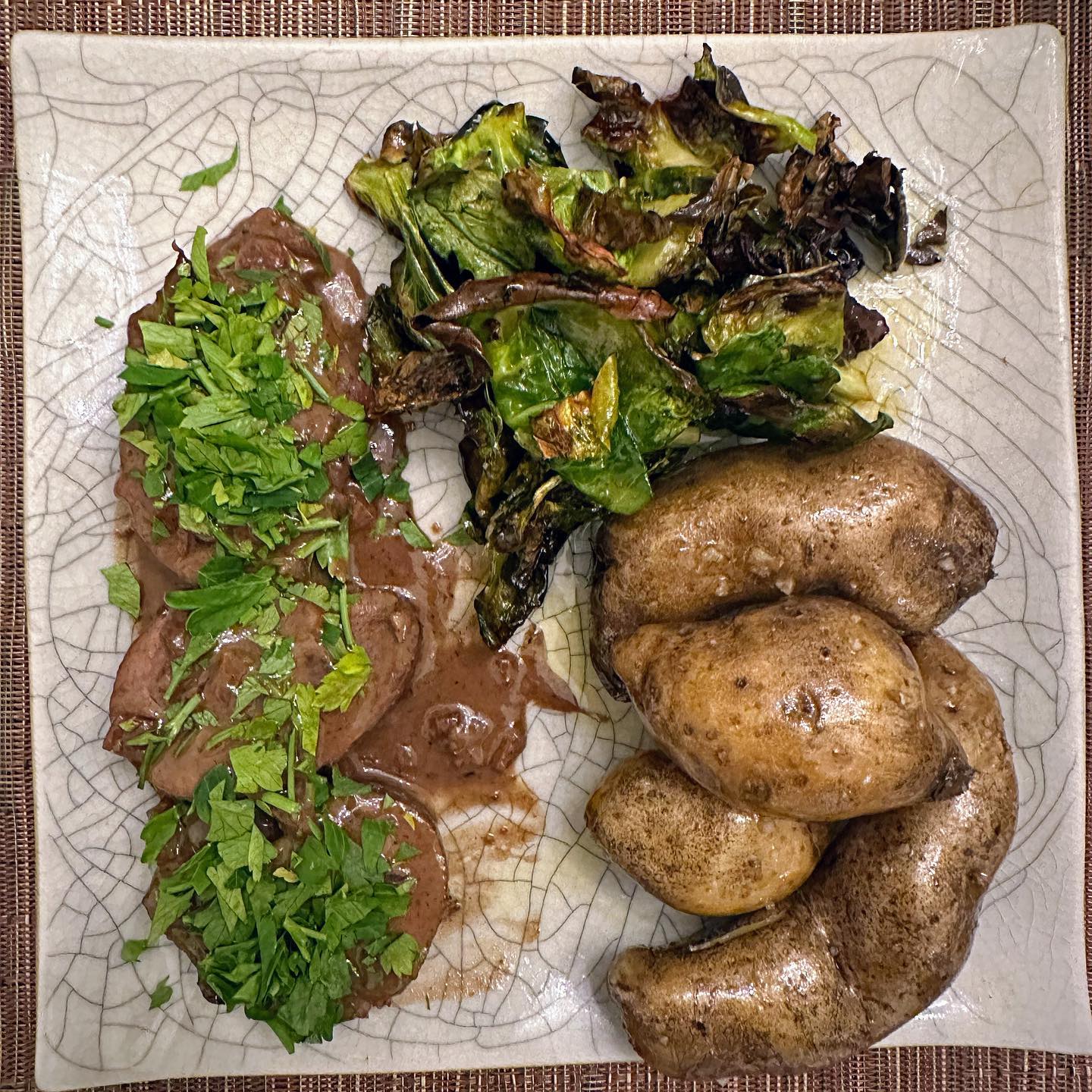
Venison Steak Diane with Russian Fingerling Potatoes and Brussels Sprout Chips
Tender venison medallions get a glossy Diane sauce with brandy, mustard, and a generous shower of parsley. Buttery fingerlings catch the extra sauce, while crisp Brussels sprout leaves bring a little bitterness and crunch to a rich winter dinner.
By Jonathan Katzman · Cooked and photographed · Recipe updated
Serves: 4 servings
Tags: gluten-free, nut-free
Pan-Seared Venison Medallions
A fast sear builds a savory crust without drying out lean venison. Resting the meat while making the sauce keeps the final cooking brief.
Ingredients
- 1½ lb trimmed venison loin, cut into 8 medallions about 1 inch thick
- 1 tsp kosher salt, or to taste
- ½ tsp freshly ground black pepper
- 1½ tbsp ghee
Instructions
- Pat the venison thoroughly dry and season with salt and pepper shortly before cooking.
- Heat a heavy stainless-steel skillet over medium-high heat. Add the ghee and, when shimmering, add the medallions with space between them; cook in batches if necessary.
- Sear for approximately 2–3 minutes per side, then check the center with an instant-read thermometer. Lower the heat if the fond starts turning black.
- For medium-rare venison, remove at 125–130°F and rest loosely covered for 5–8 minutes, aiming for a final temperature of 130–135°F. Carryover varies, so check rather than relying on time alone.
- Reserve the skillet and its browned fond for the Diane sauce. Save any resting juices.
Notes
- Medium-rare venison carries greater foodborne-illness risk. For the conservative food-safety target, cook whole-cut venison to 145°F and rest at least 3 minutes; use this target for higher-risk diners and follow any game-specific local guidance.
- Avoid heavily tenting the meat, which softens the crust and increases carryover cooking.
Brandy-Mustard Diane Sauce with Parsley
Brandy lifts the browned pan juices, while mustard and Worcestershire sharpen the cream. A restrained reduction gives the sauce enough body to coat the venison without burying its flavor.
Ingredients
- 1 tbsp unsalted butter
- 1 large shallot, finely minced
- 1 small clove garlic, finely minced
- ⅓ cup brandy or Cognac
- ¾ cup unsalted venison or beef stock, gluten-free
- 1 tbsp Dijon mustard, gluten-free
- 1 tbsp Worcestershire sauce, certified gluten-free
- 1 tsp tomato paste
- ⅓ cup heavy cream
- ½ cup loosely packed flat-leaf parsley, roughly chopped
- to taste salt and freshly ground black pepper
Instructions
- After removing the venison, reduce the skillet heat to medium-low. Leave approximately 1 teaspoon of cooking fat and the brown fond in the pan; discard any scorched bits.
- Add the butter and shallot. Cook for 2–3 minutes until softened, then add the garlic and cook for 30 seconds.
- Take the skillet off the heat and pour in the brandy. Return to the heat and simmer without igniting, scraping up the fond, until reduced by about half.
- Stir in the stock, mustard, Worcestershire, and tomato paste. Simmer for 3–5 minutes, until reduced and concentrated.
- Add the cream and simmer gently for 2–3 minutes, until the sauce lightly coats a spoon. Stir in the venison resting juices and season to taste.
- Return the medallions to the sauce off the heat, turning briefly to coat without cooking them further. Reserve the parsley for a generous finish on the plated meat.
Notes
- If too thick or salty, loosen with a little water or unsalted stock. If too thin, reduce before returning the venison.
- Measure the brandy away from the stove and never pour directly from the bottle into a hot pan.
Buttered Russian Fingerling Potatoes
Steaming keeps the thin skins intact and the centers creamy. Butter and a little salt are enough beside the assertive Diane sauce.
Ingredients
- 1½ lb Russian Banana fingerling potatoes, scrubbed
- 2 tbsp unsalted butter
- to taste kosher salt and freshly ground black pepper
Instructions
- Keep similarly sized fingerlings whole; halve only unusually large potatoes so they cook evenly.
- Set the potatoes in a steamer basket over simmering water, cover, and steam for 20–30 minutes, until a thin knife slides through the thickest potato without resistance.
- Remove the basket and let the potatoes steam-dry for 1–2 minutes.
- Transfer to a warm bowl and gently toss with the butter, salt, and pepper. Cover loosely and keep warm.
Notes
- Small yellow fingerlings work well if Russian Banana potatoes are unavailable.
Crisp Brussels Sprout Leaf Chips
Separating the leaves creates thin surfaces that crisp quickly. Dry leaves, light oil, and uncrowded pans prevent steaming.
Ingredients
- 2 lb large Brussels sprouts, to yield about 8 loosely packed cups of separated leaves
- 2 tbsp olive oil
- ½ tsp kosher salt, or to taste
- 1 tsp fresh lemon juice, for a light finishing sprinkle
Instructions
- Heat the oven to 400°F with racks in the upper and lower thirds.
- Trim the sprout stems and peel away the loose leaves, trimming the stem again as needed to release more. Reserve the tight centers for another meal.
- Wash the leaves if needed and dry completely, using a salad spinner followed by a towel. Toss with the olive oil and salt.
- Spread across two large sheet pans in loose single layers. Roast for 6 minutes, then rotate the pans and gently turn the leaves.
- Continue roasting for 4–10 minutes, removing individual leaves as they become crisp with browned edges and green centers. Do not wait for every leaf to finish at once.
- Just before serving, scatter over a few drops of lemon juice rather than tossing, which would soften the chips.
Notes
- Smaller loose leaves may finish several minutes before thicker inner leaves.
- Serve uncovered and promptly; trapped steam quickly softens them.
Overall Timing / Workflow
The potatoes tolerate a short warm hold, while the venison and chips benefit from finishing close together.
Instructions
- 0:00 — Heat the oven to 400°F, start the steamer, and scrub the potatoes.
- 0:05 — Start steaming the potatoes. Separate and dry the Brussels sprout leaves.
- 0:20 — Prepare the shallot, garlic, parsley, and measured sauce ingredients. Pat dry and season the venison.
- 0:25 — Put the sprout leaves in the oven and begin searing the venison.
- 0:30 — Check the potatoes; butter and hold warm when tender. Rotate the sprout pans and begin removing crisp leaves as ready.
- 0:35 — Rest the venison and make the Diane sauce in its skillet.
- 0:45–0:55 — Finish the sauce, briefly coat the meat, and plate immediately with the warm potatoes and crisp leaves.
Notes
- Use temperature and texture rather than the timeline to determine when each component is ready.
Plating
Keeping the chips clear of the sauce preserves the contrast between crisp leaves, creamy potatoes, and tender meat.
Instructions
- Use warm plates. Arrange two venison medallions down one side of each plate and spoon Diane sauce over and around them.
- Finish the venison generously with the chopped parsley.
- Group the whole fingerlings beside the meat and add a loose pile of Brussels sprout chips in the remaining space, away from the sauce.
- Serve immediately, with any remaining sauce alongside.
Leftover Path
Separate storage prevents the vegetables from soaking up sauce and allows gentler reheating of the lean meat.
Instructions
- Refrigerate the venison, sauce, potatoes, and cooled sprout chips in separate containers within 2 hours. Use the meat, sauce, and potatoes within 3–4 days; use the chips the next day for best texture.
- For hot leftovers, thin the sauce with a splash of water and gently reheat it with sliced venison until the leftovers reach 165°F; expect the meat to become more well done.
- Reheat potatoes covered in a 350°F oven until hot throughout. Recrisp the sprout leaves separately at 350°F for 3–5 minutes, checking frequently.
- Use the reserved raw Brussels sprout centers within several days: halve and roast them, or shave them thinly for a lemon-dressed salad.