Zucchini Pashtida with Walnuts and Balsamic, and Banza Pasta with Beef Ragù
A golden zucchini pashtida gets a little extra cheese, with walnuts and a sharp-sweet balsamic drizzle alongside. Short Banza pasta catches a slow-simmered beef ragù, finished with plenty of parsley and Parmesan—a generous dinner for the start of zucchini season.
By Jonathan Katzman · Cooked and photographed · Recipe updated
Serves: 4 servings
Tags: gluten-free
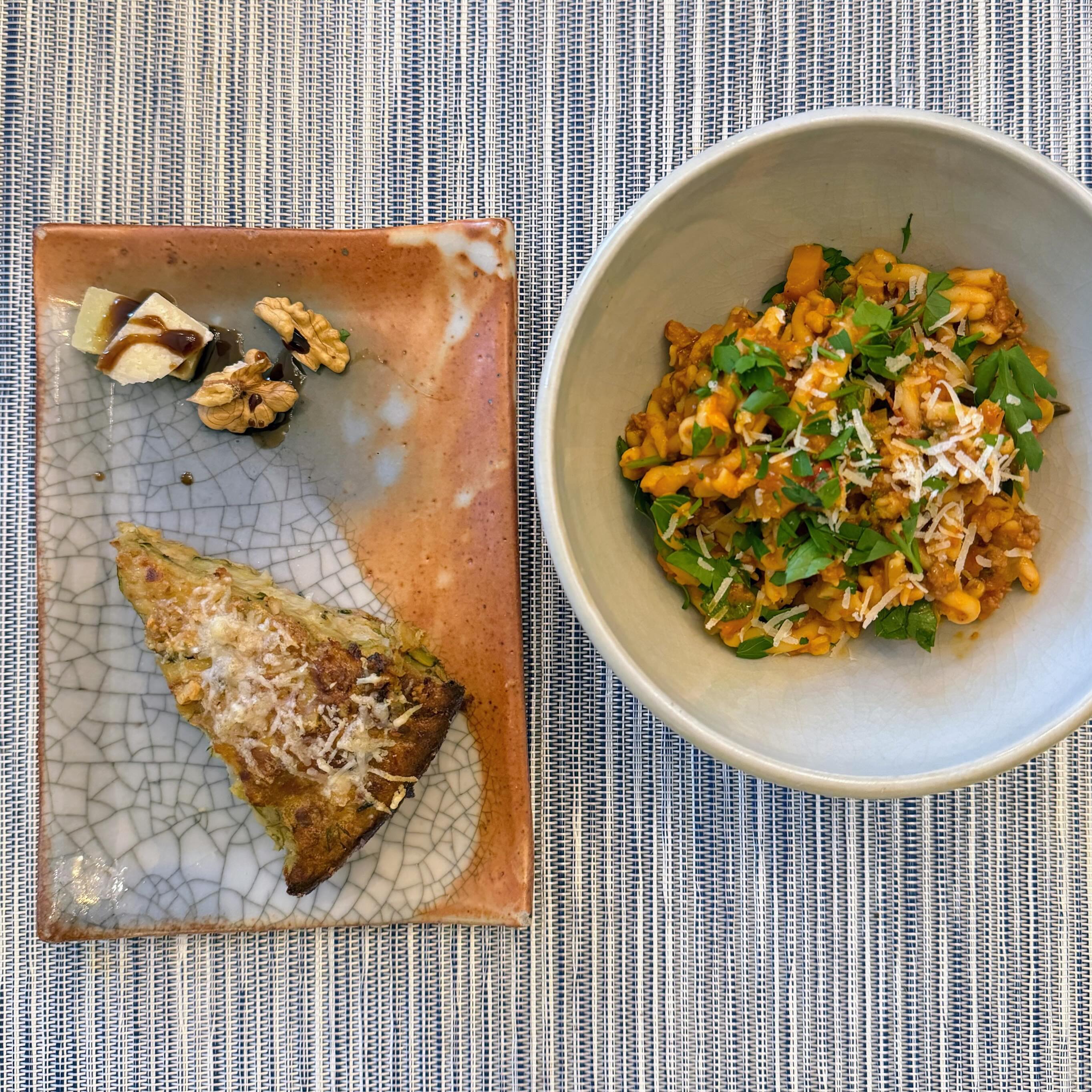
Zucchini and Cheese Pashtida
Salting and squeezing the zucchini concentrates its flavor and keeps the egg-and-cheese filling sliceable. A shallow baking dish gives plenty of browned edges without drying out the center.
Ingredients
- 1½ lb zucchini, coarsely grated
- 1 tsp kosher salt, divided, plus more to taste
- 1 tbsp olive oil, for the baking dish
- 4 large eggs
- ½ cup whole-milk ricotta, drained if watery
- ¾ cup finely grated Parmesan, divided
- 3 tbsp cassava flour
- 2 scallions, finely sliced
- 2 tbsp chopped flat-leaf parsley
- ¼ tsp freshly ground black pepper
Instructions
- Heat the oven to 375°F. Generously oil a 9-inch shallow baking dish and line its bottom with parchment if you want especially clean slices.
- Toss the zucchini with ¾ teaspoon salt in a colander. Let stand for 15 minutes, then squeeze very firmly in a clean kitchen towel, working in batches, until little liquid comes out.
- Whisk the eggs with the ricotta, ½ cup Parmesan, cassava flour, scallions, parsley, pepper and remaining ¼ teaspoon salt. Fold in the squeezed zucchini.
- Spread in the prepared dish and scatter over the remaining ¼ cup Parmesan. Bake for 35–45 minutes, until deeply golden at the edges, firm in the center and at least 160°F internally. If needed, broil briefly for additional surface color, watching closely.
- Rest for 10 minutes before cutting into four wedges. Serve warm rather than piping hot so the zucchini and cheese flavors come through.
Notes
- The squeezed zucchini should feel damp, not dripping. Excess moisture is the main cause of a loose pashtida.
Parmesan, Walnuts and Balsamic
Salty cheese and crunchy walnuts give the tender pashtida contrast. A restrained balsamic reduction adds acidity and sweetness without making the plate sugary.
Ingredients
- ⅓ cup walnut halves
- 2 oz Parmesan, broken into small pieces
- ¼ cup balsamic vinegar, gluten-free and without added thickeners
Instructions
- Toast the walnuts on a small tray at 375°F for 5–7 minutes, until fragrant and slightly darker. Cool.
- Simmer the balsamic vinegar in a small saucepan over low heat until reduced to about 2 tablespoons, 5–8 minutes. Stop while it is still pourable; it thickens as it cools.
- Arrange the cheese pieces and walnuts beside each pashtida wedge and drizzle sparingly with the cooled balsamic.
Notes
- If the reduction becomes sticky or too thick, stir in a few drops of warm water.
Beef Ragù
Browning the beef before adding the vegetables builds depth, while a slow simmer softens the meat and concentrates the tomato. Finely chopped aromatics produce a sauce that clings to short pasta.
Ingredients
- 1 tbsp ghee
- 1 lb ground beef, preferably 85–90% lean
- 1 small yellow onion, finely diced
- 1 small carrot, finely diced
- 1 stalk celery, finely diced
- 2 cloves garlic, minced
- 2 tbsp tomato paste
- ½ cup dry red wine
- 1 14–15 oz can crushed tomatoes
- ½ cup water, plus more as needed
- 1 bay leaf
- ¾ tsp kosher salt, plus more to taste
- ¼ tsp freshly ground black pepper
Instructions
- Heat the ghee in a heavy saucepan over medium-high heat. Add the beef and ½ teaspoon salt, press into a broad layer, and leave undisturbed for 3–4 minutes to brown. Break into small pieces and cook for another 3–4 minutes. Transfer to a bowl, leaving about 1 tablespoon fat in the pan.
- Reduce the heat to medium. Add the onion, carrot, celery and remaining ¼ teaspoon salt. Cook for 8–10 minutes, stirring, until softened and beginning to turn golden.
- Add the garlic and tomato paste. Cook for 2 minutes, stirring, until the paste darkens slightly. Pour in the wine, scrape up the browned bits, and simmer until reduced by about half.
- Return the beef and its juices. Add the tomatoes, water, bay leaf and pepper. Bring to a gentle simmer, then partially cover and cook over low heat for 45–60 minutes, stirring occasionally. Add small splashes of water if the sauce begins to catch.
- Remove the bay leaf. The finished ragù should be thick and spoonable, with tender meat and no watery ring around it. Adjust salt and pepper; loosen slightly with pasta water when combining with the pasta.
Notes
- For a softer ragù, simmer up to 90 minutes, adding water as necessary rather than letting the sauce dry out.
Banza Pasta with Parsley and Parmesan
Short chickpea pasta holds the chunky ragù well. Adding it to the sauce only briefly preserves its texture, while parsley keeps the rich bowl fresh.
Ingredients
- 8 oz gluten-free Banza short pasta
- to taste kosher salt, for the cooking water
- ½ cup roughly chopped flat-leaf parsley
- ⅓ cup freshly grated Parmesan
Instructions
- Bring a large pot of water to a boil and salt it moderately. Add the Banza pasta and cook according to its package directions, stirring gently and checking early for a tender but resilient center.
- Reserve 1 cup cooking water, then drain the pasta well. If the package directs rinsing, give it a brief warm-water rinse.
- Add the pasta to the hot ragù with 2–4 tablespoons reserved cooking water. Fold gently over low heat for 30–60 seconds, adding more water only as needed for a glossy coating.
- Fold in half the parsley. Divide among bowls and finish with the remaining parsley and Parmesan.
Notes
- Avoid prolonged simmering after adding chickpea pasta; it softens and breaks more readily than wheat pasta.
Overall Timing / Workflow
Starting the ragù first gives it time to develop while the pashtida bakes. Cooking the pasta last keeps both its texture and the finished meal at their best.
Instructions
- 0:00 — Chop the ragù aromatics, brown the beef and begin building the sauce.
- 0:20 — Once the ragù is simmering, heat the oven and salt the grated zucchini. Toast the walnuts and reduce the balsamic while the zucchini drains.
- 0:40 — Squeeze the zucchini, mix the pashtida and put it in the oven.
- 1:10 — Check the ragù for tenderness and seasoning. Bring the pasta water to a boil and prepare the parsley and finishing cheeses.
- 1:20 — Remove the pashtida when set and browned; let it rest. Cook the pasta according to its package timing.
- 1:30–1:40 — Toss the pasta with the ragù, slice the pashtida and serve with the cheese, walnuts and balsamic.
Plating
Separate plates preserve the pashtida's browned edges and keep the balsamic away from the ragù.
Instructions
- Serve the ragù-coated pasta in shallow bowls, with parsley and grated Parmesan scattered across the surface.
- Place a pashtida wedge on each side plate. Arrange the Parmesan pieces and walnuts beside it and drizzle the balsamic over the cheese and nuts rather than soaking the wedge.
Leftover Path
The pashtida reheats well with dry heat, while keeping pasta and ragù separate prevents the chickpea pasta from absorbing too much sauce.
Instructions
- Refrigerate the pashtida, ragù and any uncombined pasta in separate airtight containers within 2 hours. Use within 3–4 days; keep walnuts dry and separate.
- Reheat pashtida wedges in a 350°F oven for 10–15 minutes, until hot throughout. Add the cheese, walnuts and balsamic afterward.
- Reheat ragù gently with a splash of water until it reaches 165°F. For best texture, cook fresh pasta; otherwise fold refrigerated pasta into the hot sauce just long enough to heat through.
- Freeze extra ragù for up to 3 months. Thaw in the refrigerator before reheating.